Probability notes (SAT Math)
Calculate chances and outcomes.
The big question
🪙 + 🎲
What is the chance of two things happening? List all the outcomes!
Learn it, step by step
1. Sample space
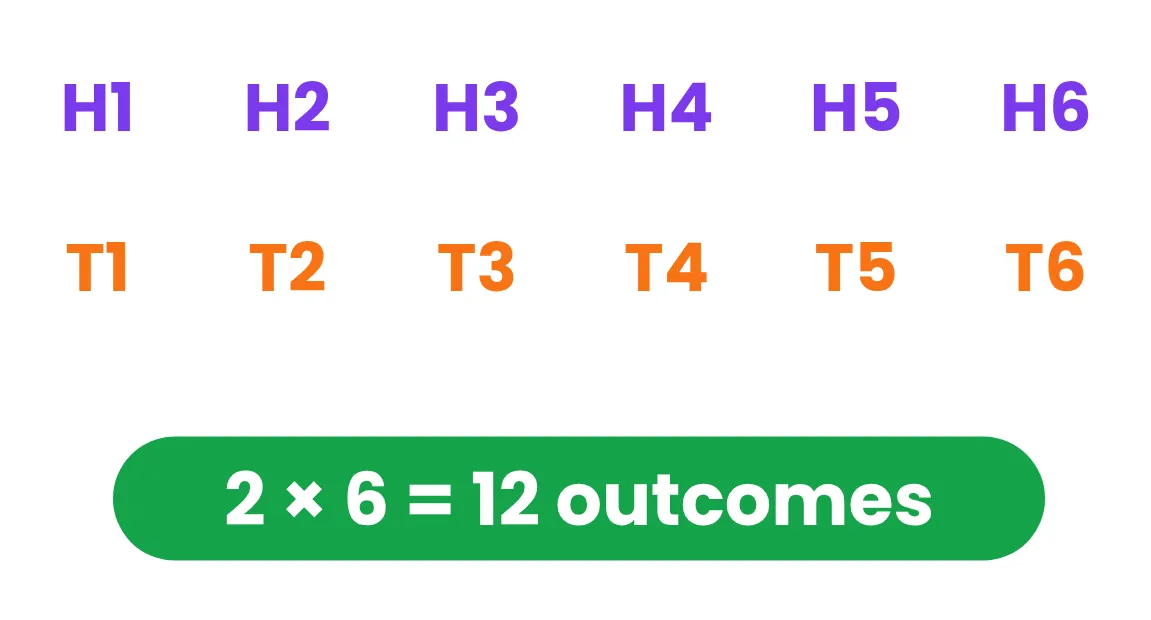
Flip a coin and roll a die. List every outcome: H1, H2, up to T6.
There are 2 × 6 = 12 equally likely outcomes.
2 × 6 = 12 outcomes
2. A tree diagram
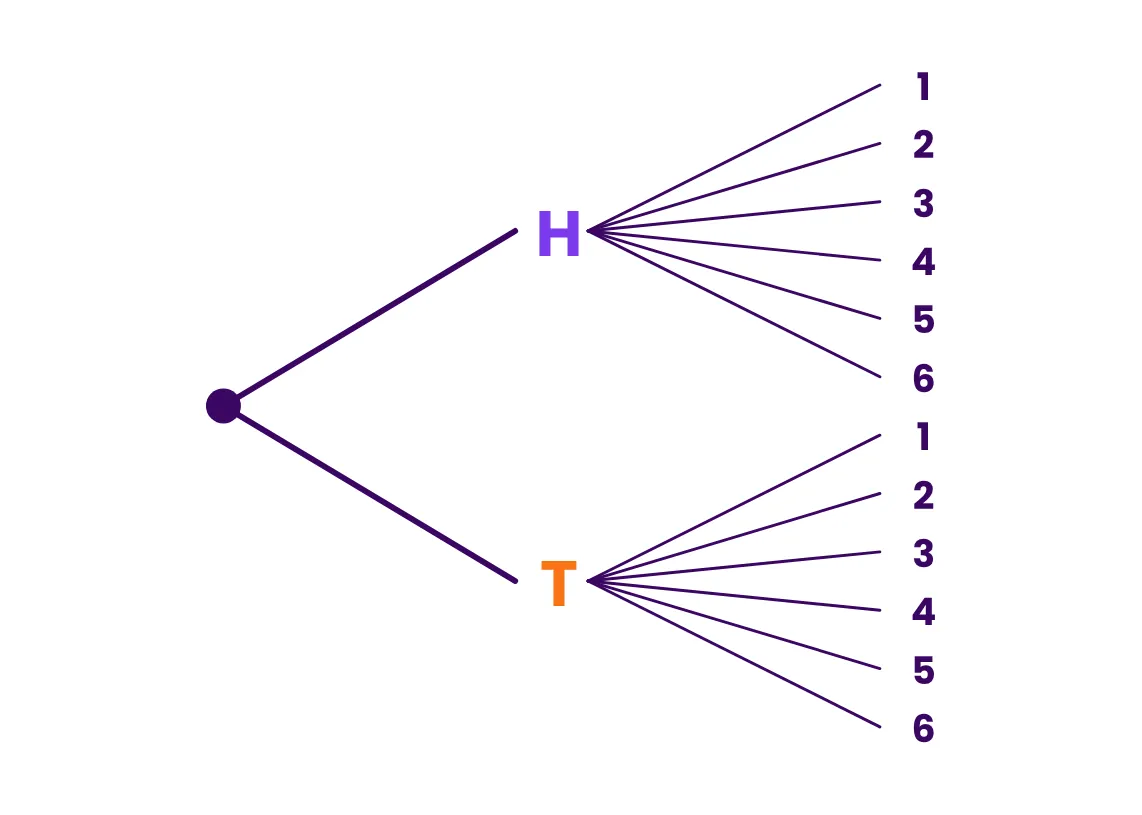
A tree shows choices step by step. Heads or tails, then 1 to 6.
Each path is one outcome.
3. Find the probability
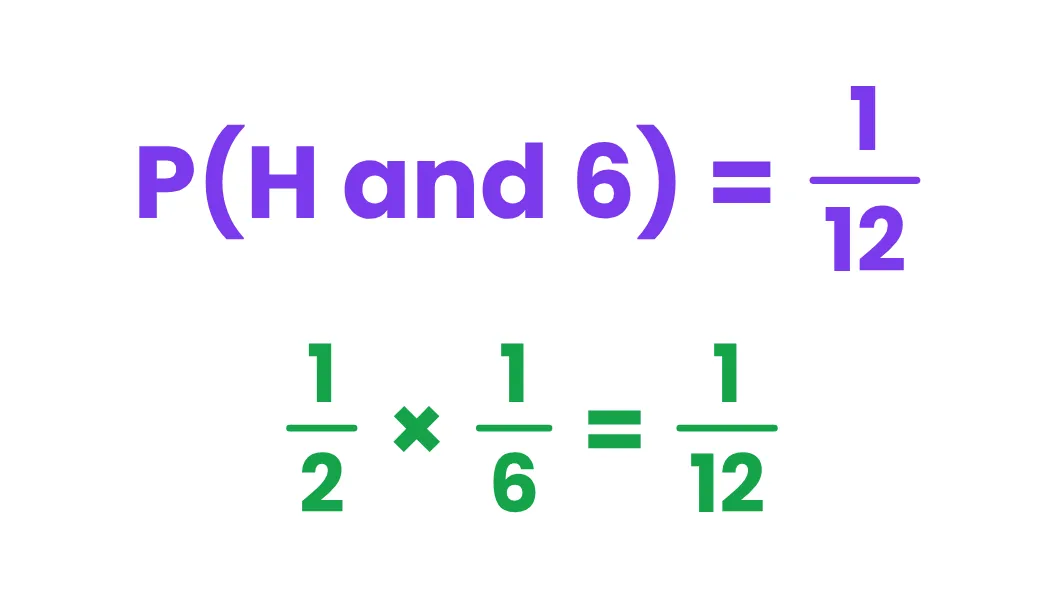
The probability of heads and a 6 is 1 outcome out of 12: one twelfth.
You can also multiply: one half × one sixth = one twelfth.
P(H and 6) = 1/12
1/2 × 1/6 = 1/12
4. One event: step by step
A bag has 6 red, 6 blue and 3 green marbles. You pick one without looking. What is the probability of red?
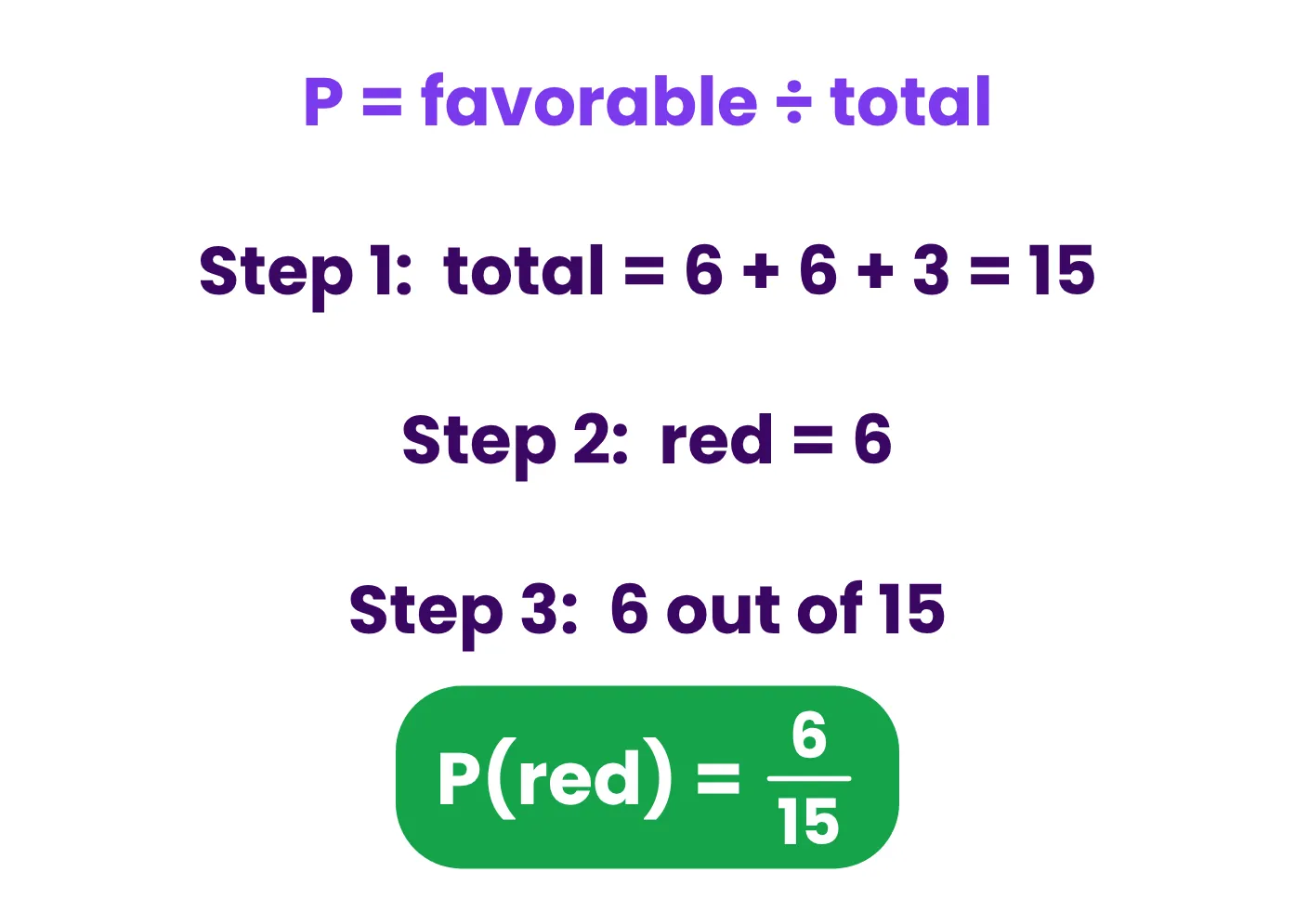
Step 1. Count every marble: 6 + 6 + 3 = 15.
Step 2. Count the ones you want: 6 red.
Step 3. Probability is the ones you want over the total: 6 over 15.
P = favorable ÷ total
Step 1: total = 6 + 6 + 3 = 15
Step 2: red = 6
Step 3: 6 out of 15
P(red) = 6/15
Watch out: HT and TH are different
Heads-tails and tails-heads are two different outcomes, so there are 4, not 3.
Wrong: HH, HT, TT: 3. Right: HH, HT, TH, TT: 4.
Your turn
Flip two coins. What is the probability of two heads?
HH HT TH TT
Answer: P(HH) = 1/4. Only 1 of the 4 is two heads. The probability is one fourth!
Remember
Step 1. List the sample space, or draw a tree.
Step 2. Probability is favorable outcomes ÷ total outcomes.
For independent events, you can also multiply the probabilities.
1. list every outcome
2. P = favorable ÷ total
P(A and B) = P(A) × P(B)
Watch the Probability lesson and practice · Printable worksheet