Angles & Triangles notes (SAT Math)
Work with angles and triangle properties.
The big question
∠ + ∠ = 180°
How are angle pairs related? Some add to 90, some to 180!
Learn it, step by step
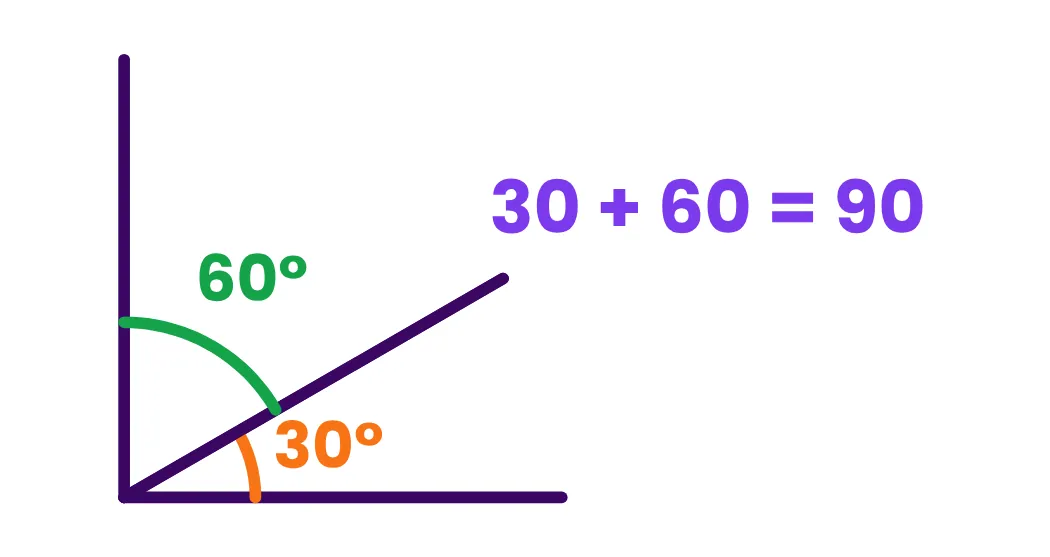
1. Complementary
Two angles that add to 90 degrees are complementary. 30 and 60 make a right angle.
30°
60°
30 + 60 = 90
2. Supplementary
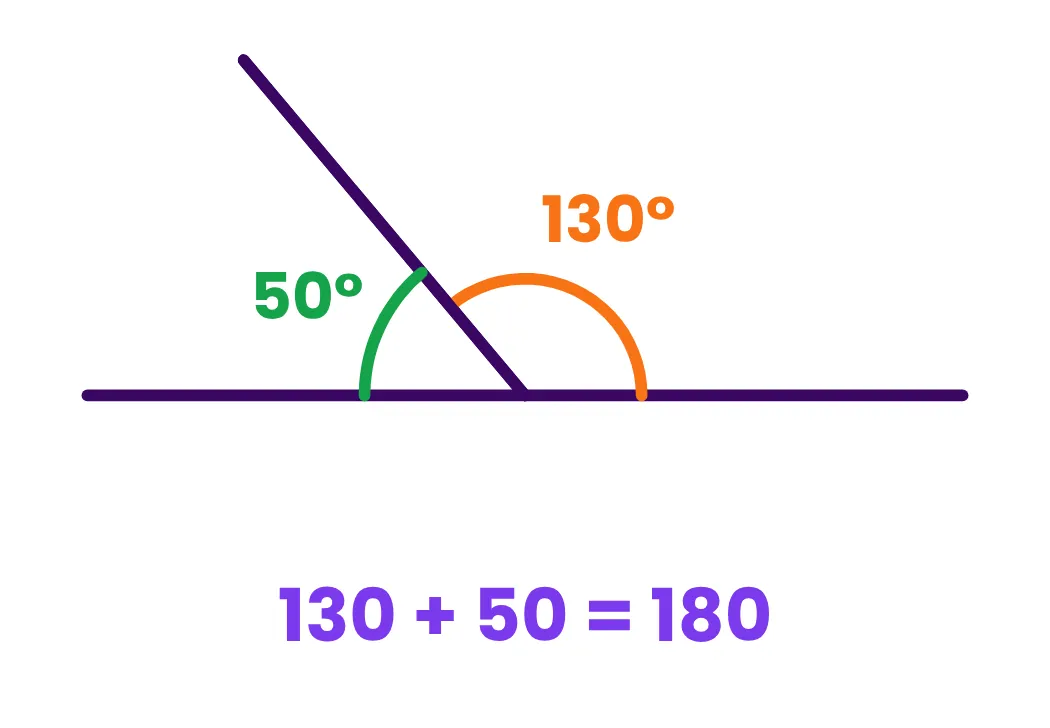
Two angles that add to 180 degrees are supplementary. They form a straight line.
130 and 50 are supplementary.
130°
50°
130 + 50 = 180
3. Vertical angles
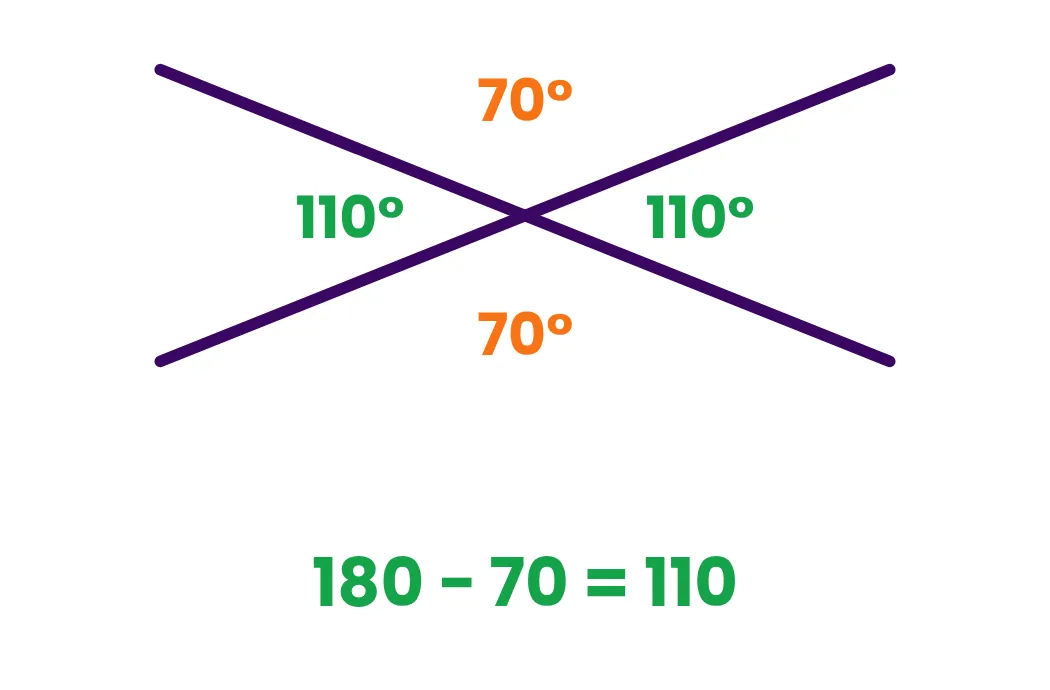
When two lines cross, the opposite angles are equal. These are vertical angles.
If one is 70 degrees, the opposite one is 70 too. The others are 180 − 70 = 110.
110°
70°
180 − 70 = 110
4. Find a missing angle: step by step
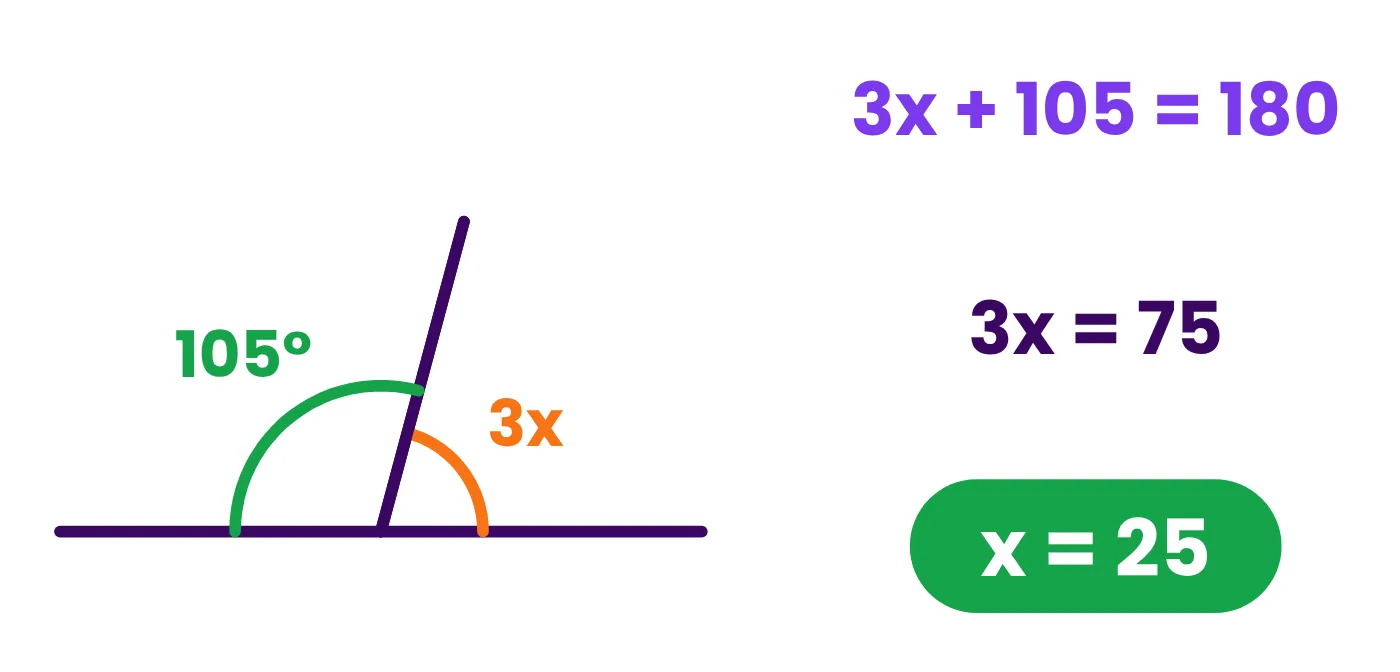
Two angles are supplementary. One is 3x and the other is 105. Step 1. Supplementary angles add to 180, so 3x + 105 = 180.
Step 2. Subtract 105 from both sides: 3x = 75.
Step 3. Divide both sides by 3: x = 25.
105°
3x + 105 = 180
3x = 75
x = 25
5. Triangle: the third angle
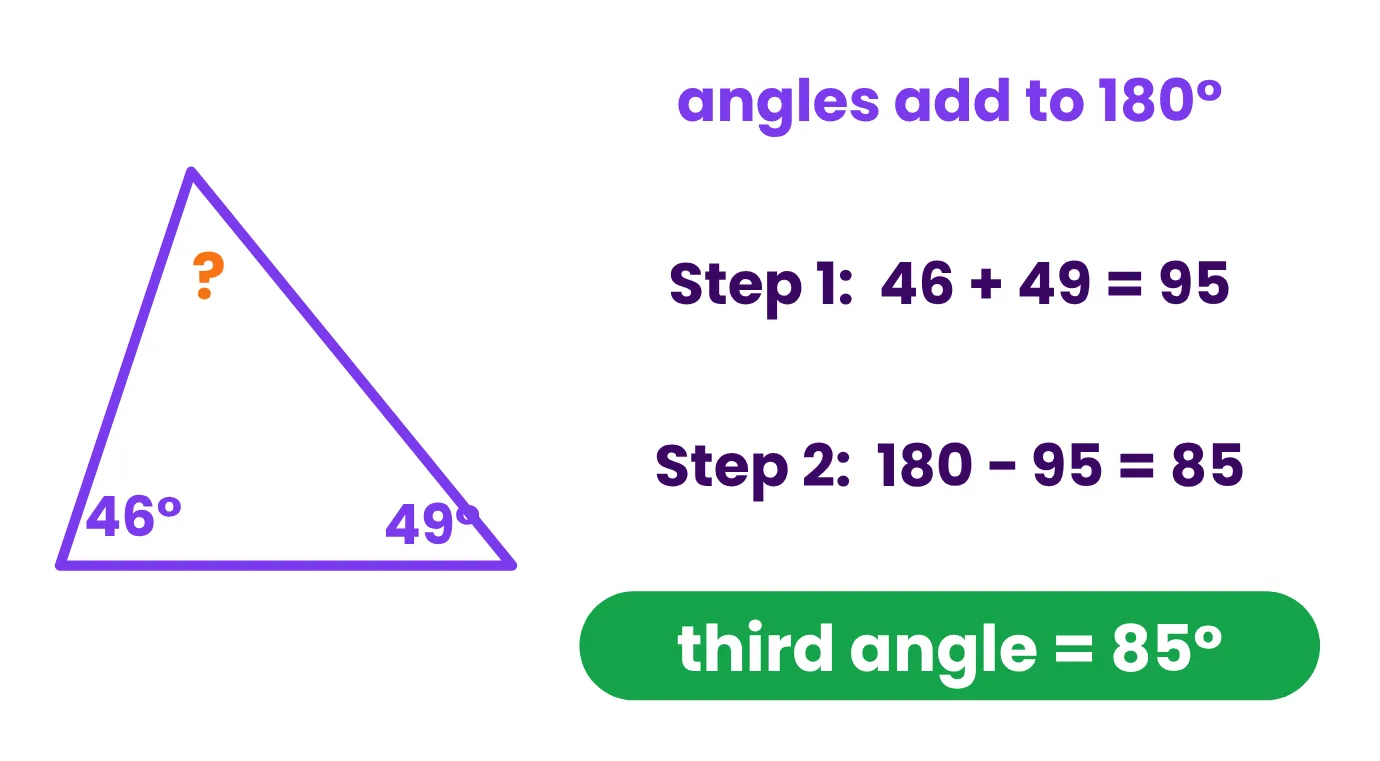
The three angles of a triangle always add to 180 degrees.
Two angles are 46 and 49 degrees. Step 1. Add them: 46 + 49 = 95.
Step 2. Subtract from 180: 180 − 95 = 85. The third angle is 85 degrees.
46°
49°
angles add to 180°
Step 1: 46 + 49 = 95
Step 2: 180 − 95 = 85
third angle = 85°
Watch out: 90 or 180?
Complementary is 90. Supplementary is 180. Think: S for straight.
Wrong: complement of 35 = 145. Right: complement of 35 = 55.
Your turn
An angle is 35 degrees. What is its complement?
35 + ? = 90
Answer: 55°. 90 − 35 = 55 degrees!
Remember
Complementary angles add to 90.
Supplementary angles add to 180.
Vertical angles are equal. Write an equation to find a missing angle.
complementary: add to 90°
supplementary: add to 180°
vertical angles: equal
Watch the Angles & Triangles lesson and practice · Printable worksheet