Exponent Rules notes (SAT Math)
Product, quotient, and power rules for exponents.
The big question
2³ × 2⁴
Is there a shortcut for powers? Yes: the exponent rules!
Learn it, step by step
1. First: what an exponent means
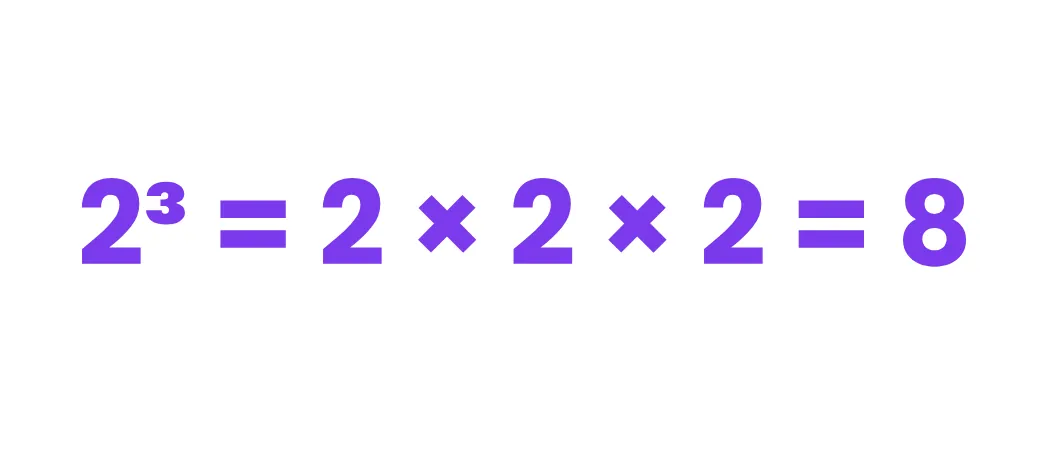
2 to the 3rd means 2 × 2 × 2. The exponent counts the factors.
2³ = 2 × 2 × 2 = 8
2. Multiply: add exponents
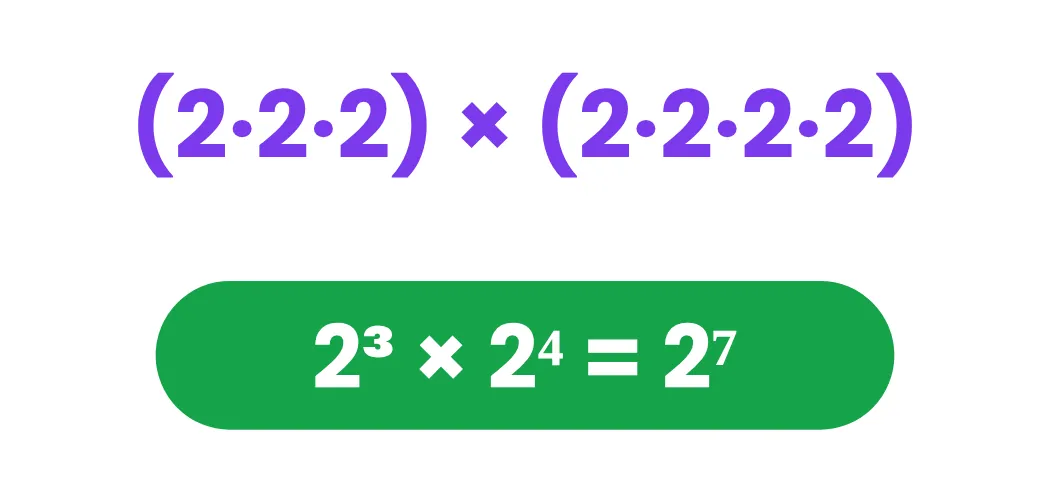
2³ × 2⁴ is three 2s times four 2s: seven 2s.
Same base, multiply: add the exponents. 2³ × 2⁴ = 2⁷.
(2·2·2) × (2·2·2·2)
2³ × 2⁴ = 2⁷
3. Divide: subtract exponents
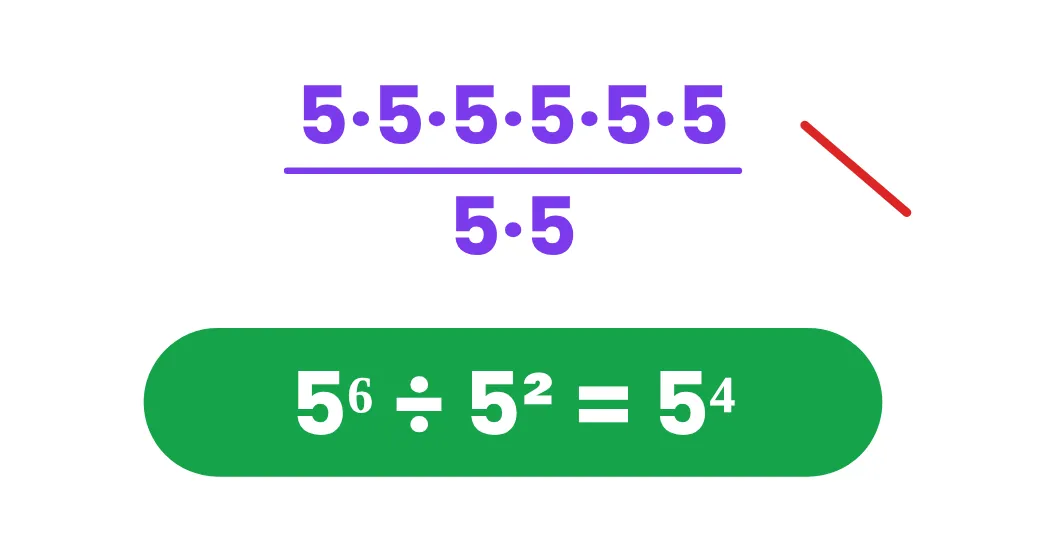
5⁶ ÷ 5² : two of the 5s cancel, leaving four.
Same base, divide: subtract. 5⁶ ÷ 5² = 5⁴.
5·5·5·5·5·5 / 5·5
5⁶ ÷ 5² = 5⁴
4. Power of a power
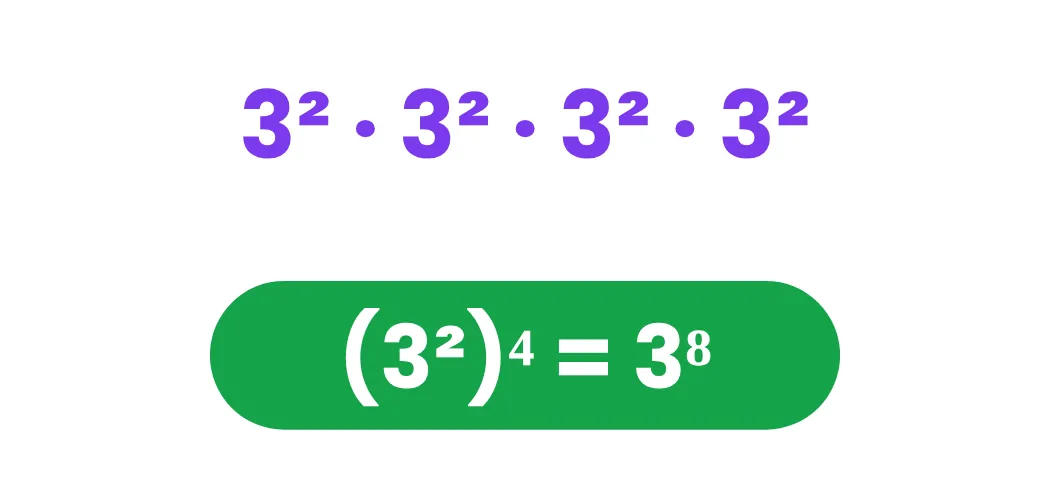
(3²)⁴ is 3² four times: 2 + 2 + 2 + 2 = 8.
Power of a power: multiply. (3²)⁴ = 3⁸.
3² · 3² · 3² · 3²
(3²)⁴ = 3⁸
5. Zero and negative
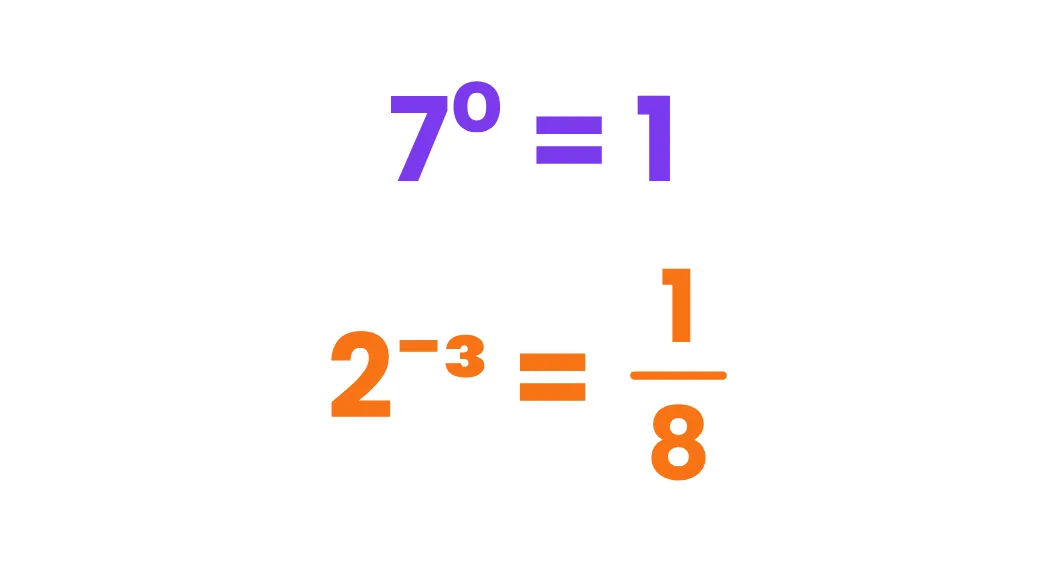
Any nonzero number to the zero power is 1: 7⁰ = 1.
A negative exponent means one over: 2⁻³ = 1/2³ = 1/8.
7⁰ = 1
2⁻³ = 1/8
Watch out: Don't multiply the bases
2³ × 2⁴ is 2⁷, not 4⁷. The base stays the same.
Wrong: 2³ × 2⁴ = 4⁷. Right: 2³ × 2⁴ = 2⁷.
Your turn
Simplify x⁵ × x³, then (x²)³.
x⁵ × x³ (x²)³
Answer: x⁸ and x⁶. x⁵ × x³ is x⁸. (x²)³ is x⁶!
Remember
Multiply: add exponents. Divide: subtract. Power of a power: multiply.
Anything to the zero is 1.
aᵐ·aⁿ = aᵐ⁺ⁿ
(aᵐ)ⁿ = aᵐⁿ
Watch the Exponent Rules lesson and practice · Printable worksheet