Consecutive Integer Problems notes (SAT Math)
Solve problems involving consecutive integers.
The big question
n, n+1, n+2
Three numbers in a row add to 48. What are they? Let's use algebra!
Learn it, step by step
1. Name them
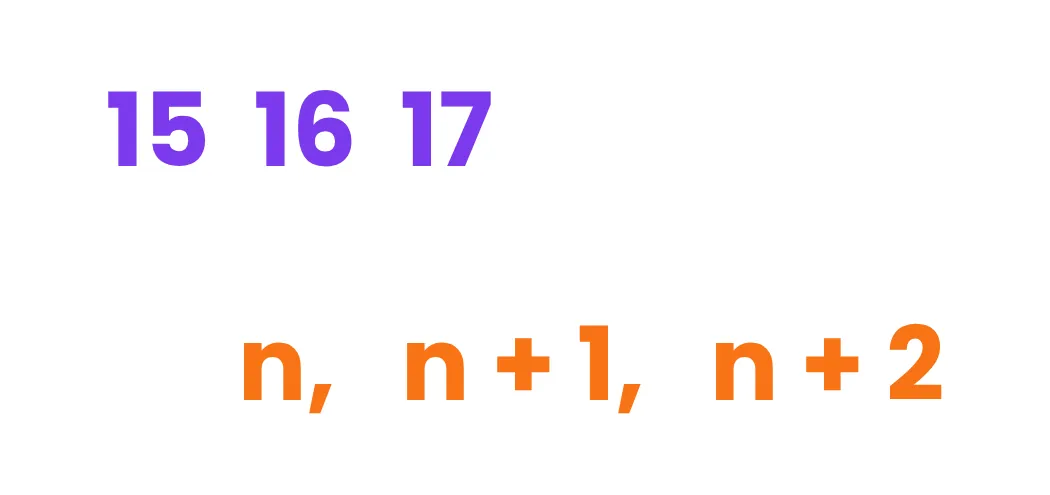
Consecutive integers come one after another: 15, 16, 17.
Call the first one n. The next are n + 1 and n + 2.
15 16 17
n, n + 1, n + 2
2. Write and solve
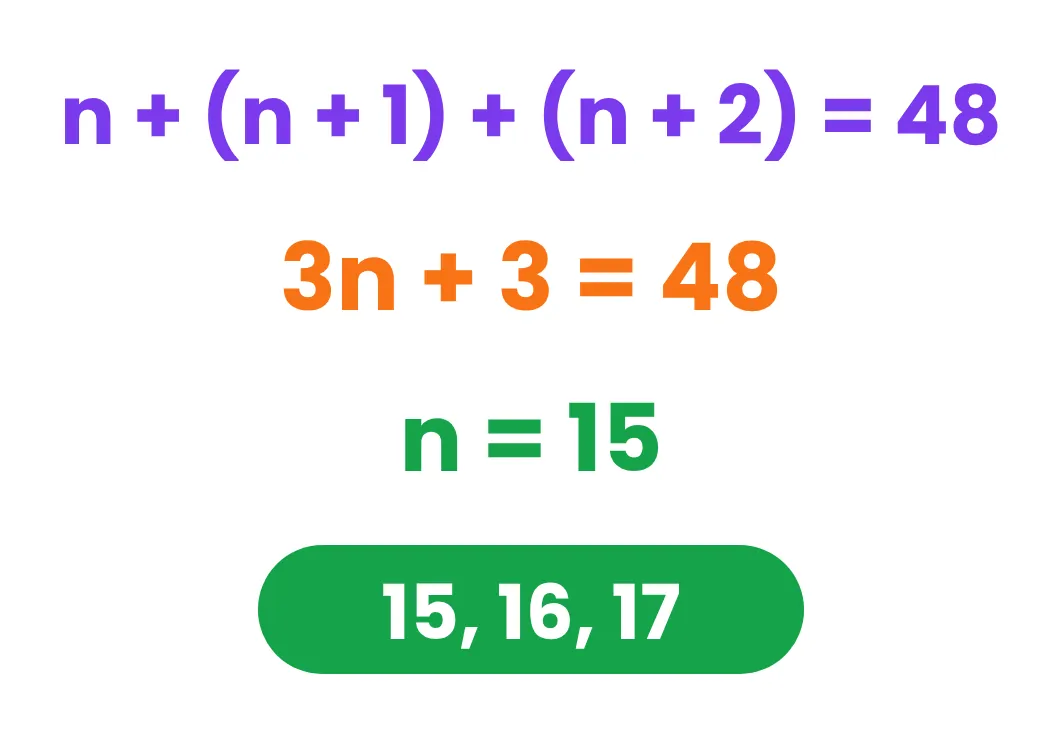
n + (n + 1) + (n + 2) = 48. That is 3n + 3 = 48.
3n = 45, so n = 15. The numbers are 15, 16 and 17.
n + (n + 1) + (n + 2) = 48
3n + 3 = 48
n = 15
15, 16, 17
3. Even or odd
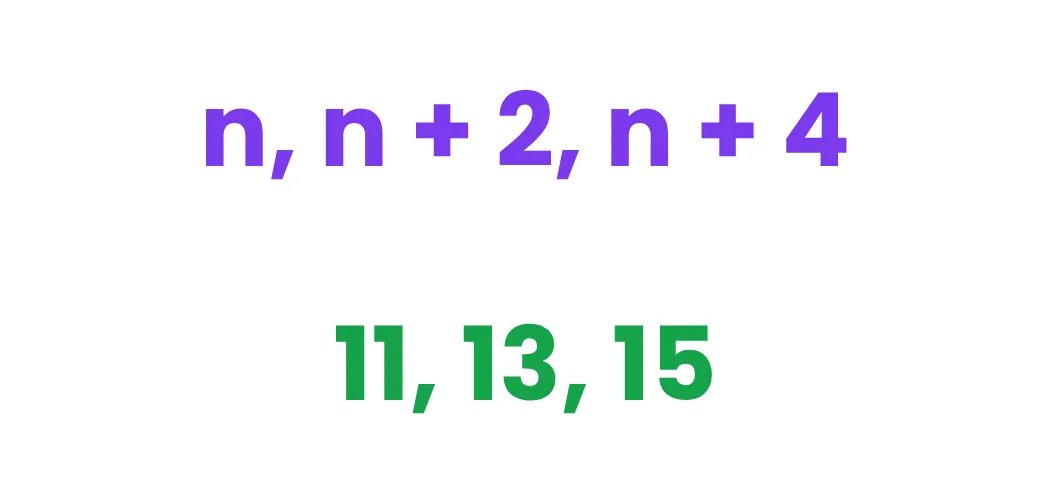
Consecutive even or odd numbers skip by 2: n, n + 2, n + 4.
Three consecutive odd numbers that add to 39: 3n + 6 = 39, n = 11. So 11, 13, 15.
n, n + 2, n + 4
11, 13, 15
Watch out: Even numbers skip 2
Consecutive even numbers are n and n + 2, not n and n + 1.
Wrong: evens: n, n + 1. Right: evens: n, n + 2.
Your turn
Two consecutive integers add to 55. What are they?
n + (n + 1) = 55
Answer: 27 and 28. n + n + 1 = 55. 2n = 54, so n = 27. The numbers are 27 and 28!
Remember
Call the first number n. Add 1 each time, or 2 for evens and odds.
Write the equation, solve, and list all the numbers.
n, n + 1, n + 2
Watch the Consecutive Integer Problems lesson and practice · Printable worksheet