Area & Perimeter notes (SAT Math)
Calculate area and perimeter of shapes.
The big question
½ × b × h
Where does the triangle formula come from? From rectangles!
Learn it, step by step
1. First: rectangle area
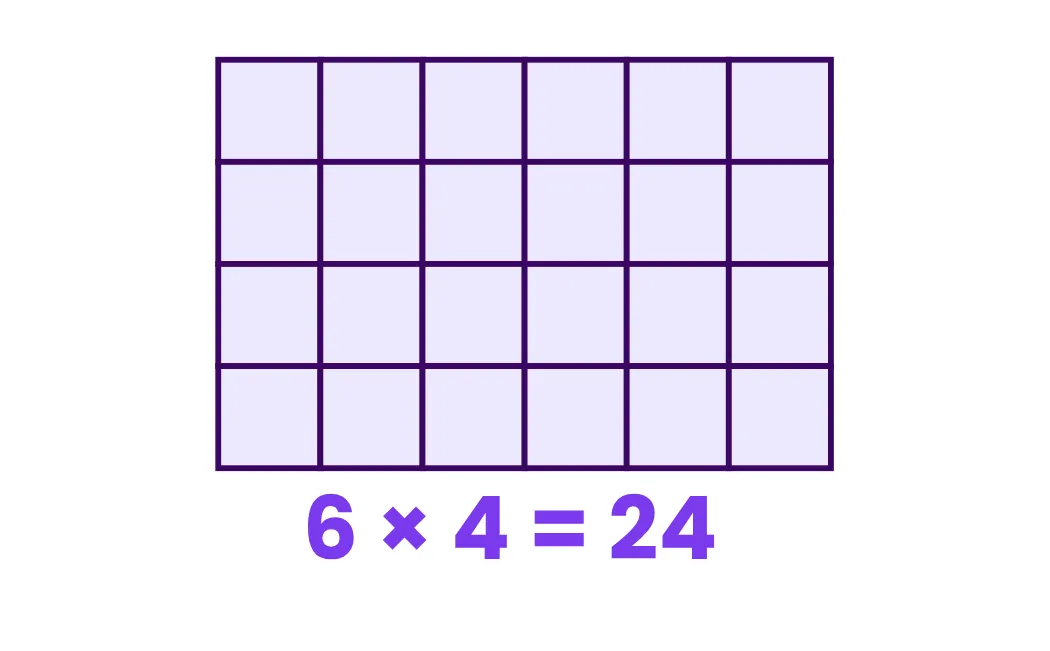
A rectangle's area is length × width: 6 × 4 is 24 square units.
6 × 4 = 24
2. Parallelogram
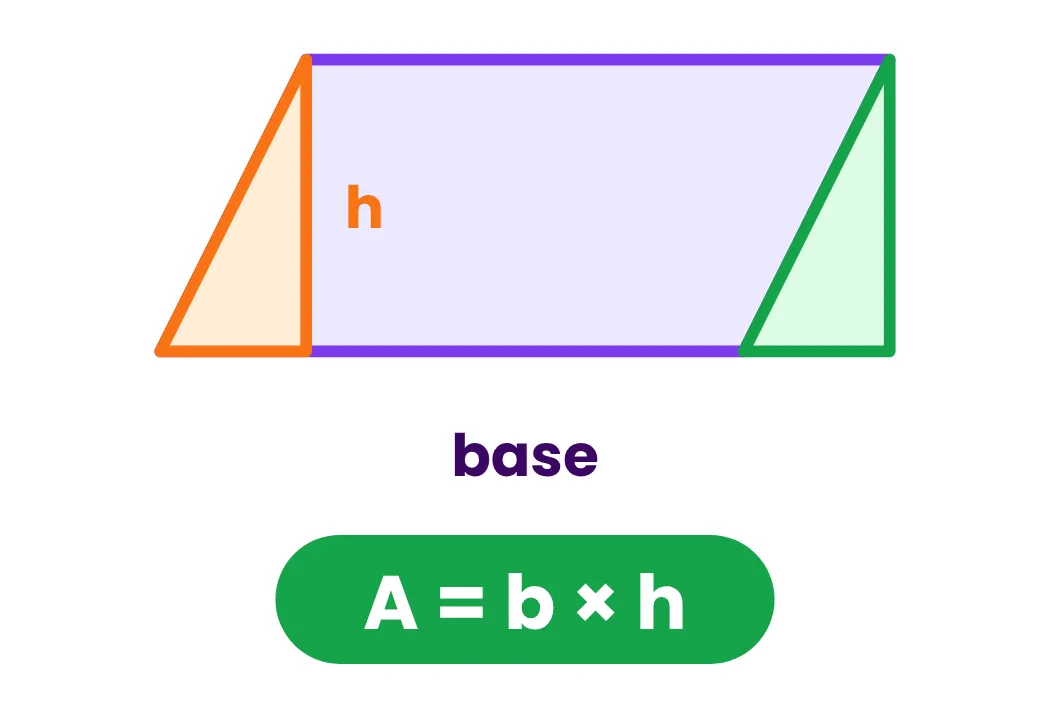
Cut a triangle off one end of a parallelogram and move it to the other end.
It becomes a rectangle! So area = base × height.
A = b × h
3. Triangle is half
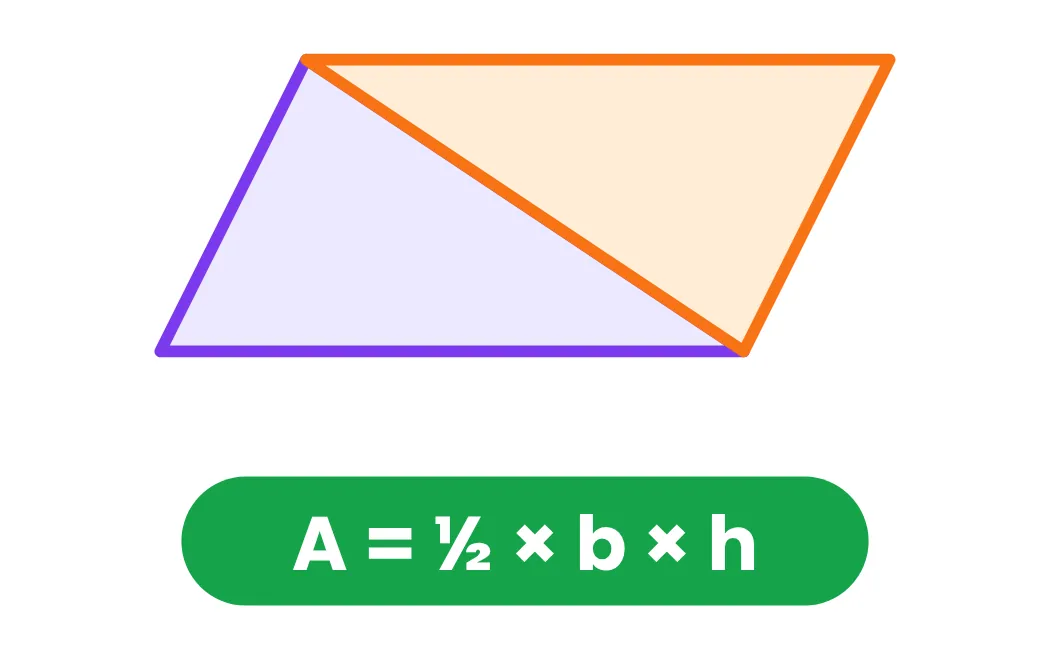
Two copies of the same triangle make a parallelogram.
So a triangle's area is half of base × height.
A = ½ × b × h
4. Example
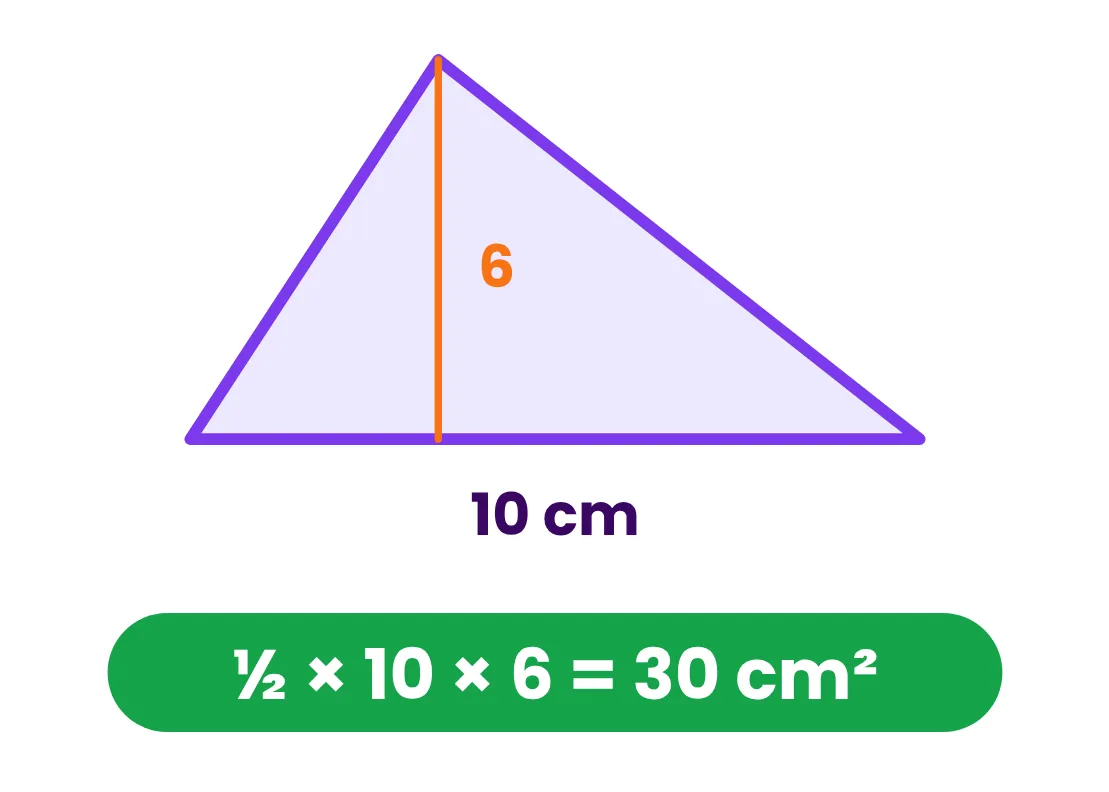
A triangle has base 10 cm and height 6 cm.
½ × 10 × 6 is 30 square centimeters.
10 cm
½ × 10 × 6 = 30 cm²
5. Perimeter: step by step
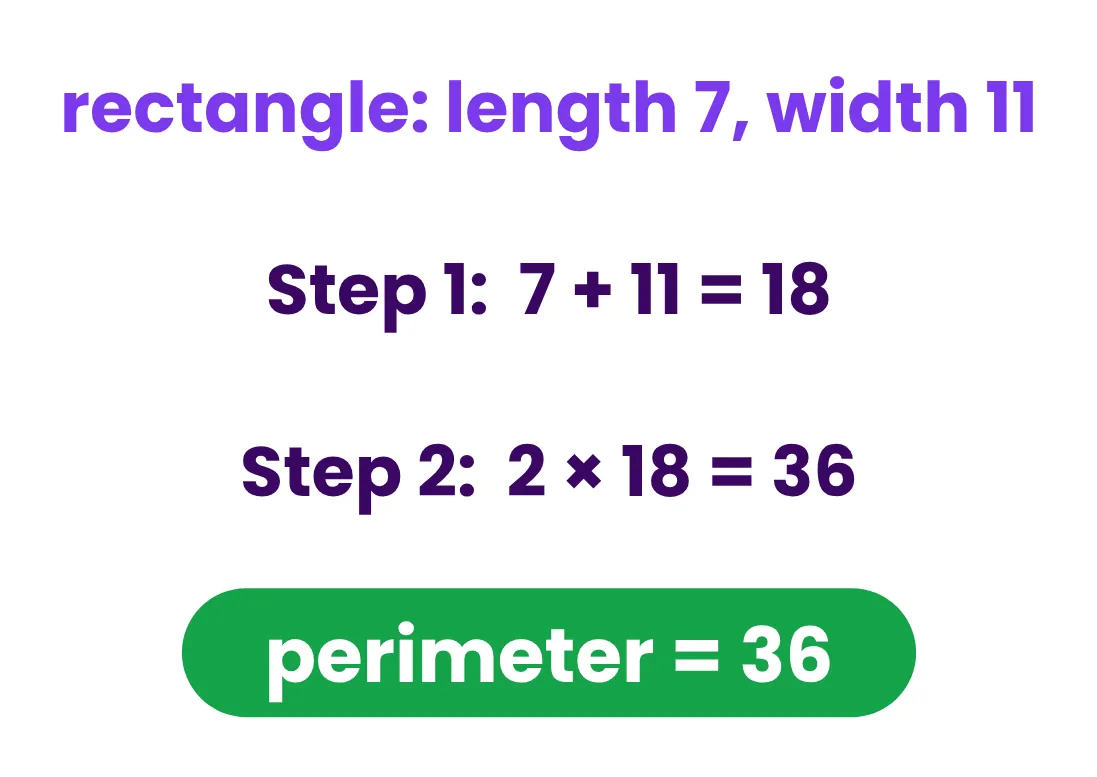
Perimeter is the distance around a shape. A rectangle is 7 long and 11 wide.
Step 1. Add the length and the width: 7 + 11 = 18.
Step 2. A rectangle has two of each, so double it: 2 × 18 = 36.
rectangle: length 7, width 11
Step 1: 7 + 11 = 18
Step 2: 2 × 18 = 36
perimeter = 36
6. Circumference: step by step
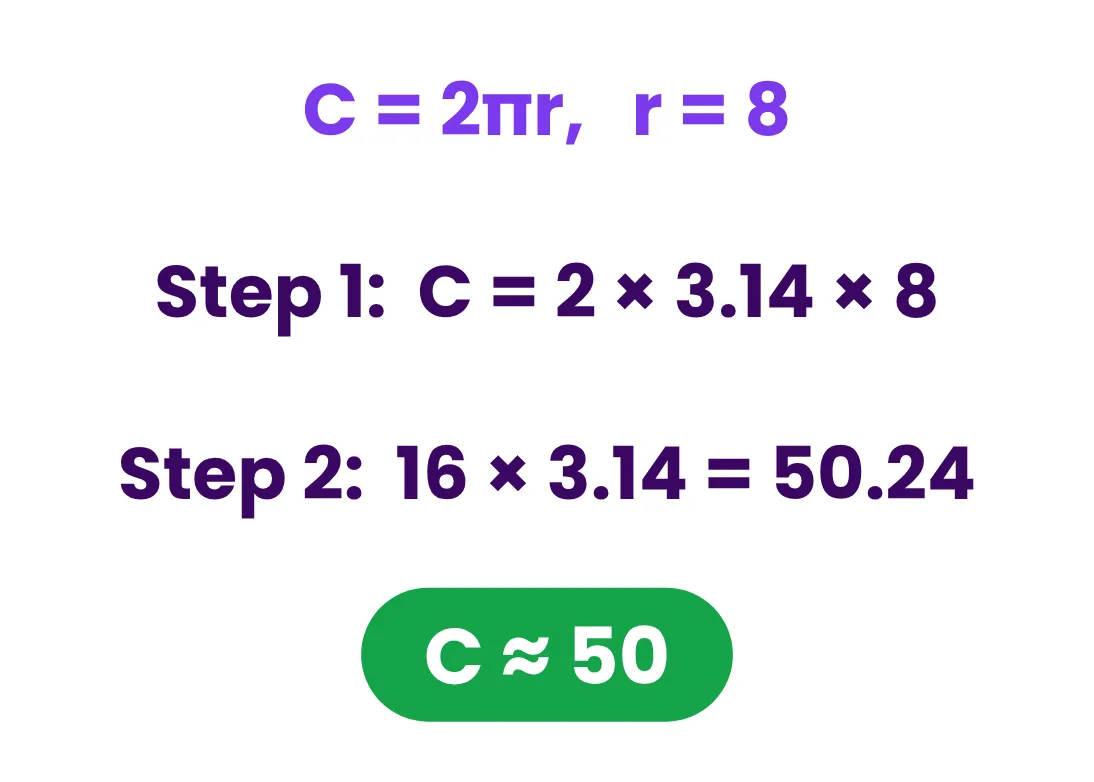
The distance around a circle is its circumference: C = 2 × π × r. Find it for radius 8.
Step 1. Put in the radius: C = 2 × 3.14 × 8.
Step 2. Multiply: 2 × 8 = 16, and 16 × 3.14 = 50.24. That is about 50.
C = 2πr, r = 8
Step 1: C = 2 × 3.14 × 8
Step 2: 16 × 3.14 = 50.24
C ≈ 50
Watch out: Use the height, not the slanted side
The height is the straight-up distance, perpendicular to the base. Not the slanted side.
Wrong: the slanted side. Right: the straight-up height.
Your turn
A parallelogram has base 8 m and height 5 m. Find its area.
Answer: 40 m². 8 × 5 = 40 square meters!
Remember
Parallelogram: base × height. Triangle: half of base × height.
Height is always perpendicular to the base.
A = b × h
A = ½ b h
Watch the Area & Perimeter lesson and practice · Printable worksheet