Comparing Numbers notes (Kindergarten math)
Greater than, less than, equal to.
The big question
5 or 3?
Which group has more? Let's match them up!
Learn it, step by step
1. Match them up
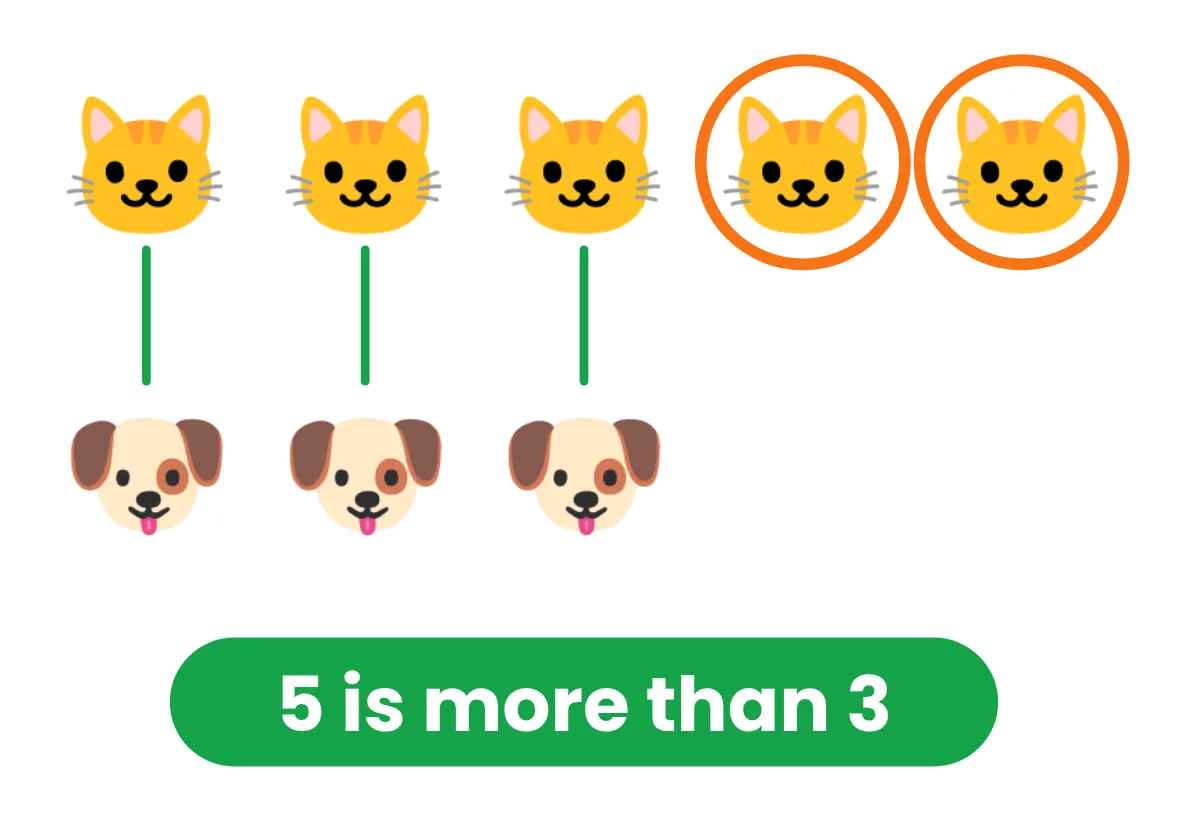
Here are 5 cats and 3 dogs.
Match each dog with a cat.
2 cats have no partner. So there are more cats!
5 is more than 3
2. Fewer
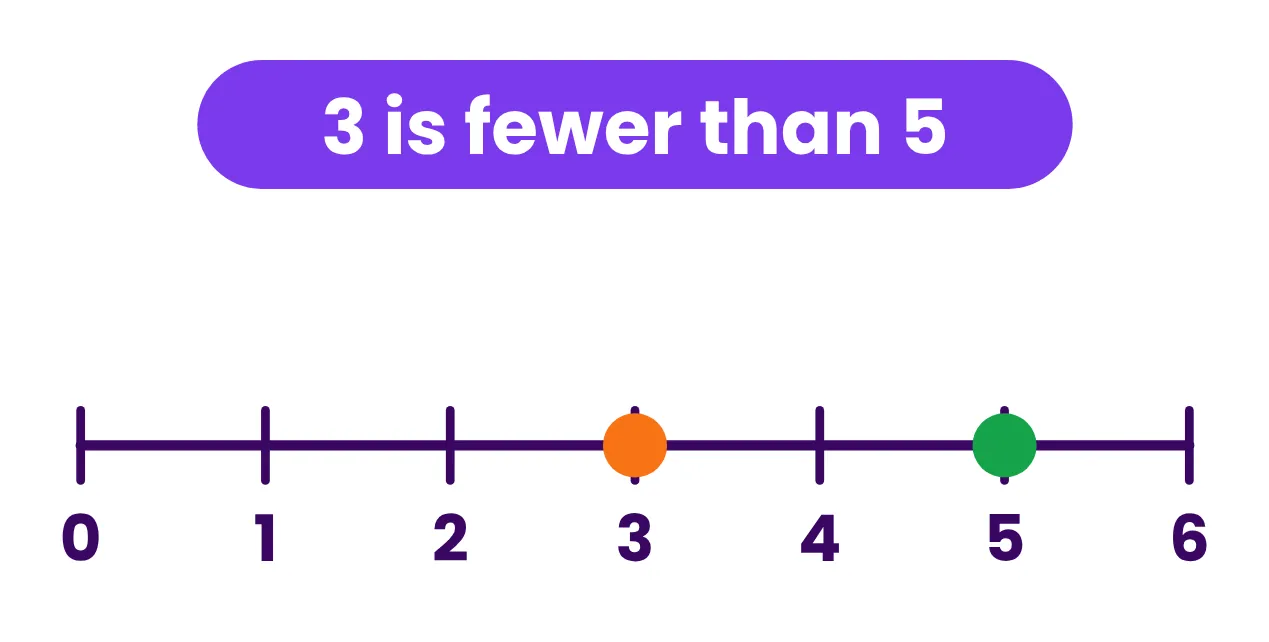
The dogs are the smaller group. 3 is fewer than 5.
On the number line, 3 comes before 5. Numbers get bigger as we go.
3 is fewer than 5
3. The same
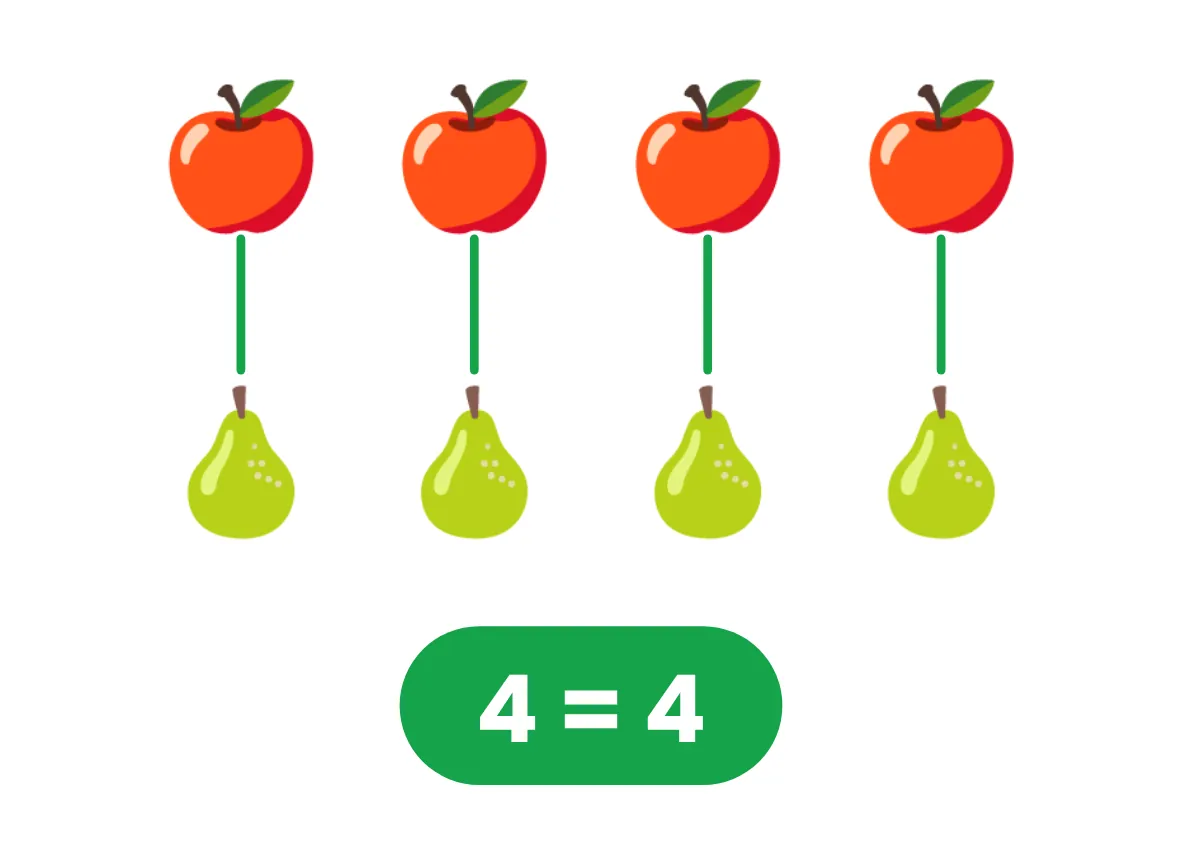
Here are 4 apples and 4 pears. Match them.
Every apple has a partner. They are equal, the same!
4 = 4
4. Compare with towers
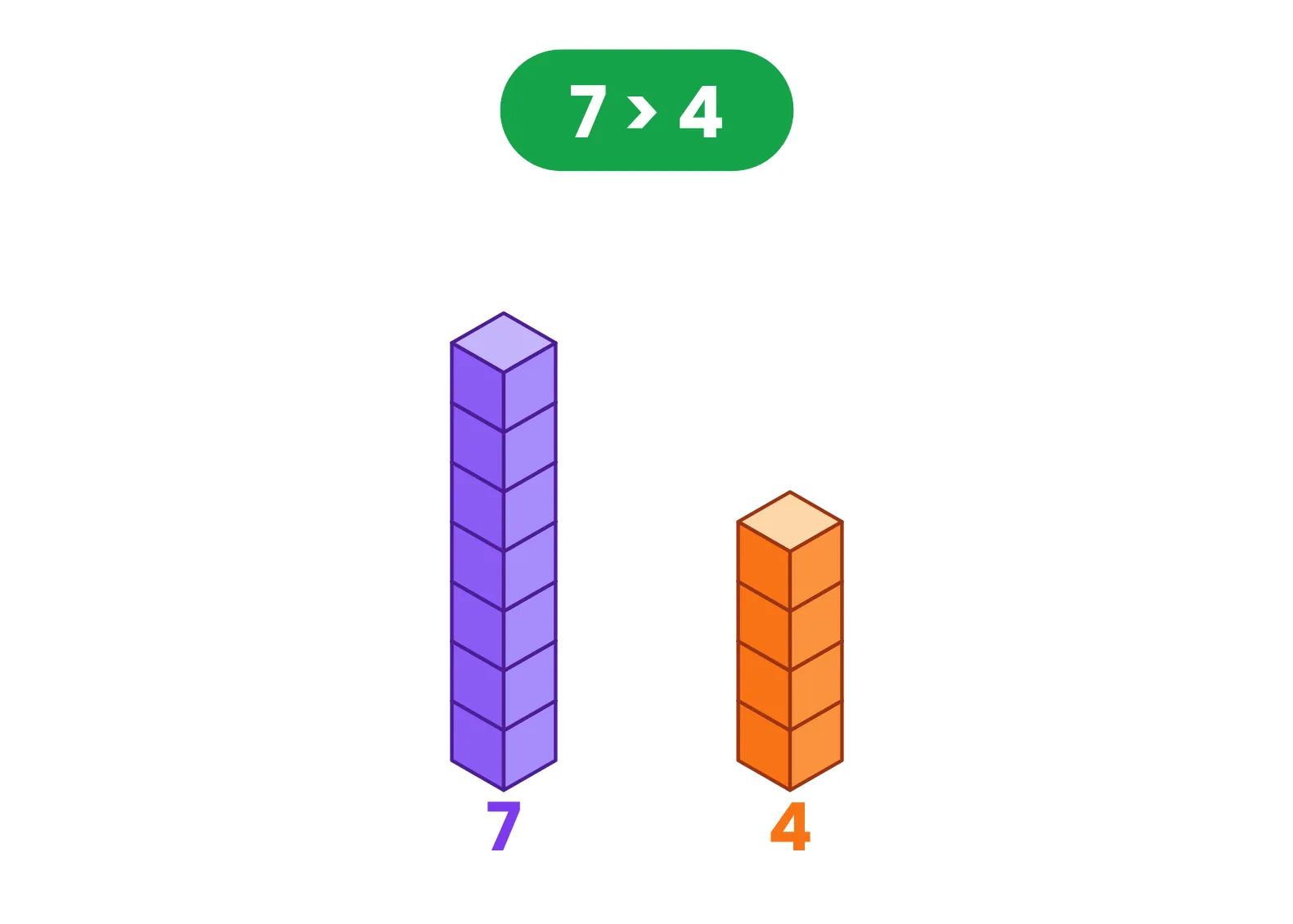
Build a tower for each number. 7 cubes and 4 cubes.
The taller tower has more. 7 is greater than 4.
7 > 4
5. One more, one less
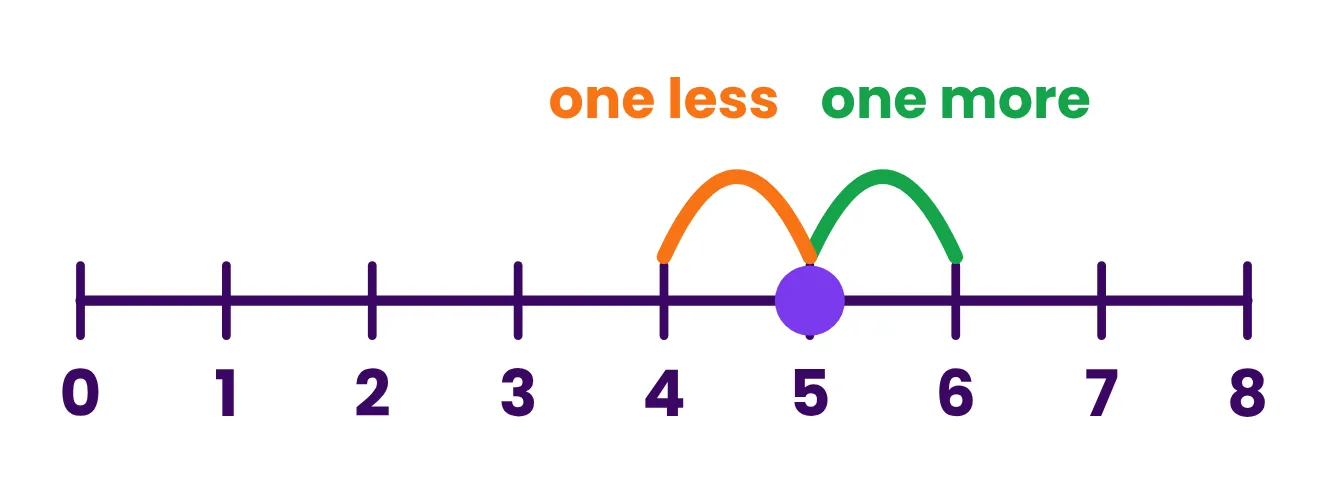
One more than 5 is 6. One less than 5 is 4.
One more is the next number. One less is the number before.
one more
one less
Watch out: Big things are not always more
3 elephants are big, but 5 mice are more. Count them. Don't look at how big they are.
Wrong: 🐘 🐘 🐘. Right: 🐭 🐭 🐭 🐭 🐭.
Your turn
Are there more bees or more flowers?
Answer: more bees. Each flower gets a bee, and 1 bee is left over. There are more bees!
Remember
Match them up. The group with extras has more.
If every one has a partner, they are the same.
4 is more than 3
Watch the Comparing Numbers lesson and practice · Printable worksheet