Number of Solutions notes (Algebra 1)
Determine if a system has one, none, or infinite solutions.
The big question
3 = 5 ?
Does every equation have one answer? Not always!
Learn it, step by step
1. One solution
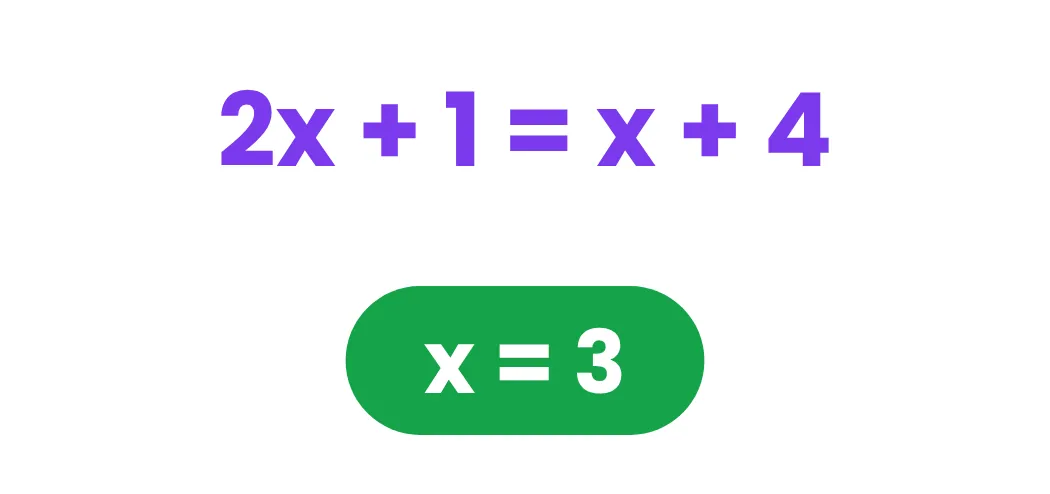
2x + 1 = x + 4 simplifies to x = 3. Exactly one solution.
2x + 1 = x + 4
x = 3
2. No solution
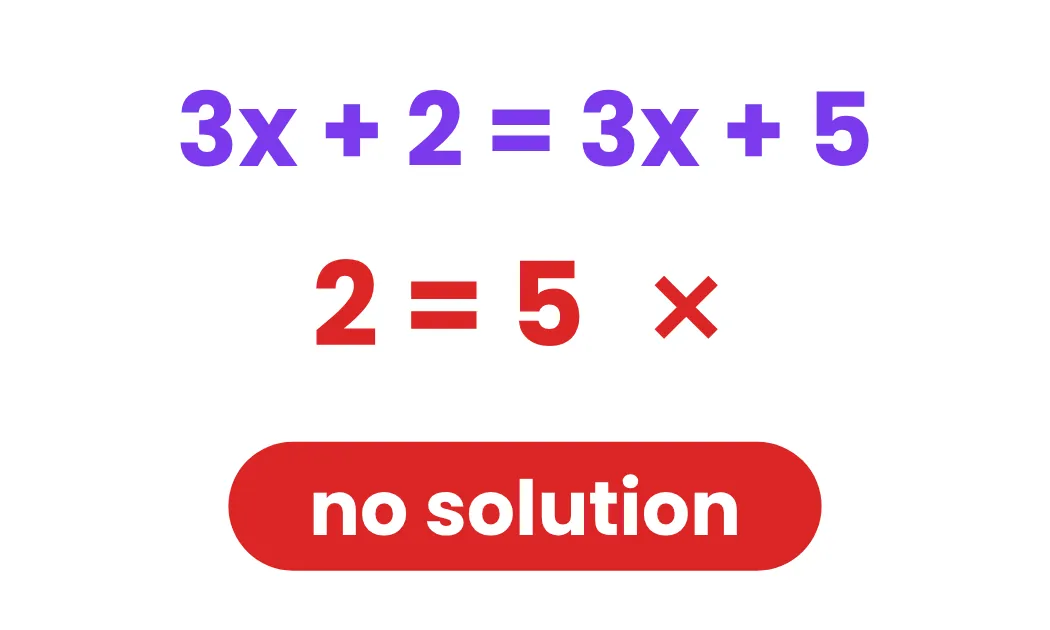
3x + 2 = 3x + 5. Subtract 3x: 2 = 5. That's never true.
No value of x works: no solution.
3x + 2 = 3x + 5
2 = 5 ✗
no solution
3. Infinitely many
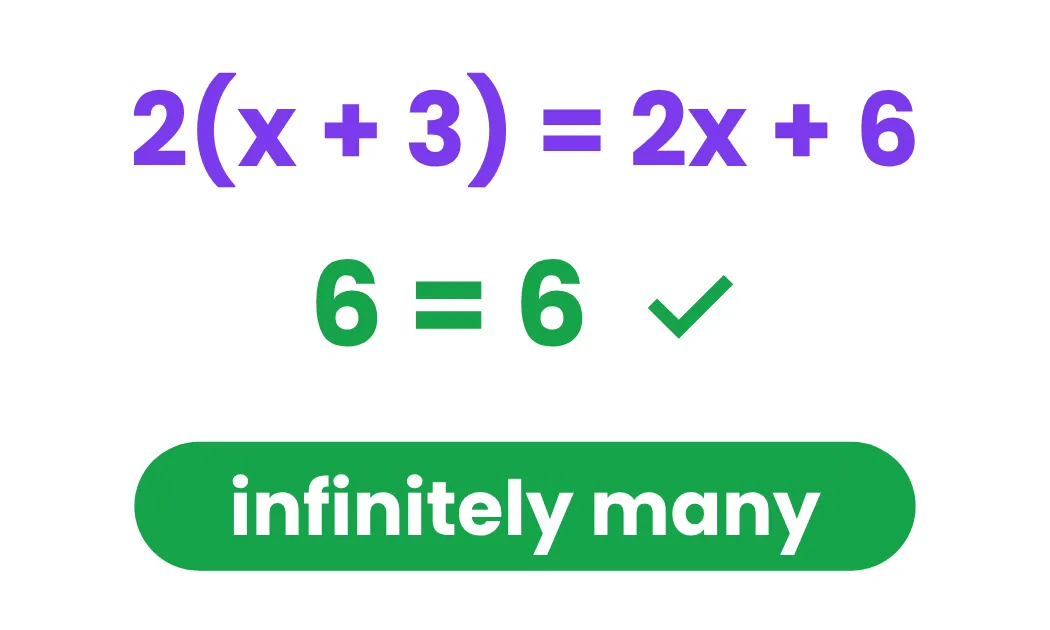
2(x + 3) = 2x + 6. Distribute: 2x + 6 = 2x + 6. Always true.
Every x works: infinitely many solutions.
2(x + 3) = 2x + 6
6 = 6 ✓
infinitely many
4. The quick test
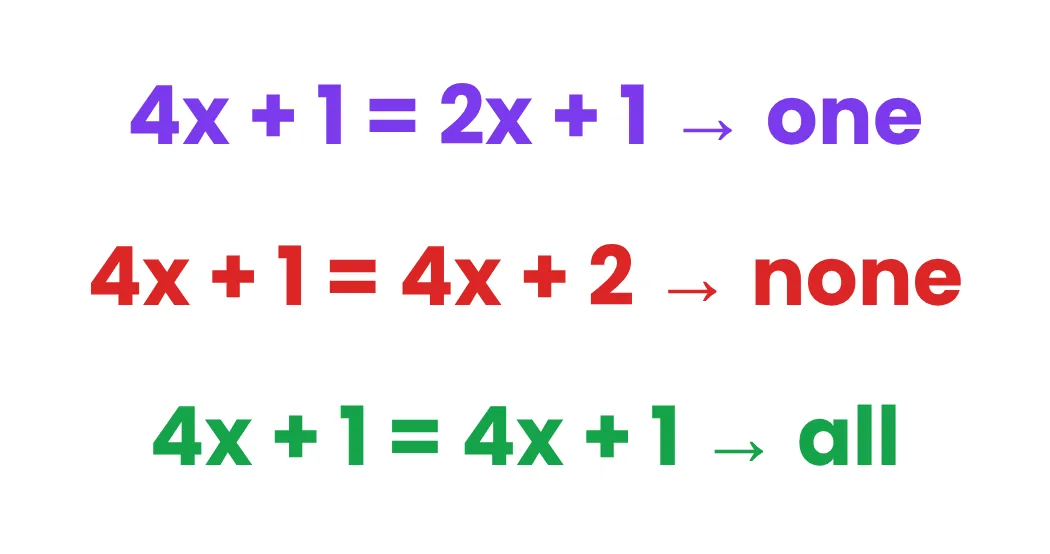
Simplify both sides. Different x coefficients: one solution.
Same x coefficients: compare the numbers. Different: none. Same: infinitely many.
4x + 1 = 2x + 1 → one
4x + 1 = 4x + 2 → none
4x + 1 = 4x + 1 → all
Watch out: 0 = 0 isn't "x = 0"
If you get 0 = 0, every number is a solution, not just zero.
Wrong: 0 = 0 → x = 0. Right: 0 = 0 → all numbers.
Your turn
How many solutions does 5x − 2 = 5x + 7 have?
5x − 2 = 5x + 7
Answer: no solution. The 5x cancels, leaving −2 = 7. Never true: no solution!
Remember
False statement: no solution. True statement: infinitely many.
x = a number: one solution.
one · none · infinite
Watch the Number of Solutions lesson and practice · Printable worksheet