Domain & Range notes (Algebra 1)
Find domain and range of functions.
The big question
inputs & outputs
Which numbers can go in and come out? The domain and range!
Learn it, step by step
1. Definitions
The domain is every input x the function uses.
The range is every output y it gives.
domain
x-values
y-values

2. From points
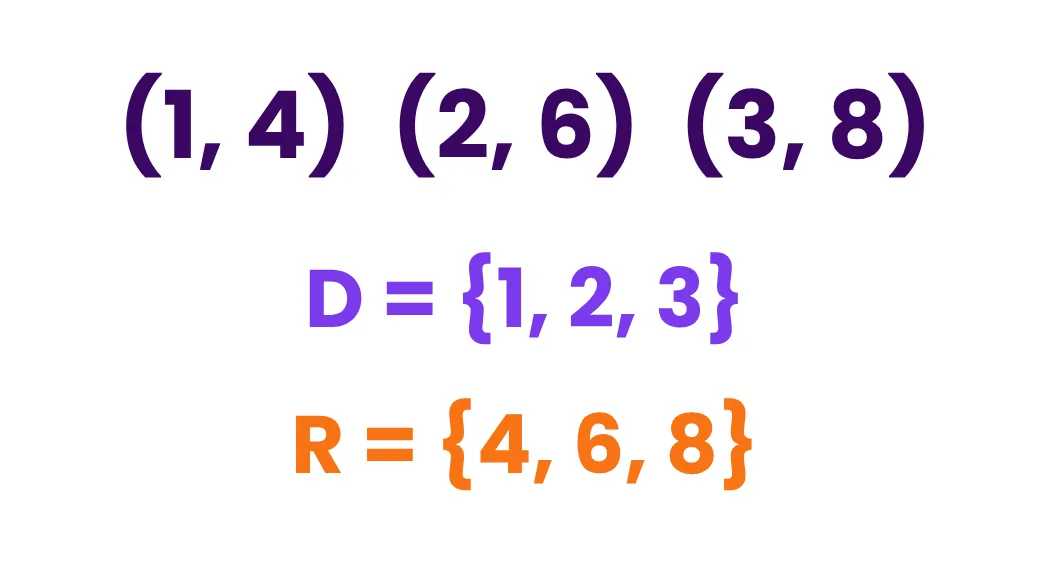
For the points (1, 4), (2, 6), (3, 8): the domain is the x-values, {1, 2, 3}.
The range is the y-values, {4, 6, 8}.
(1, 4) (2, 6) (3, 8)
D = {1, 2, 3}
R = {4, 6, 8}
3. From a graph
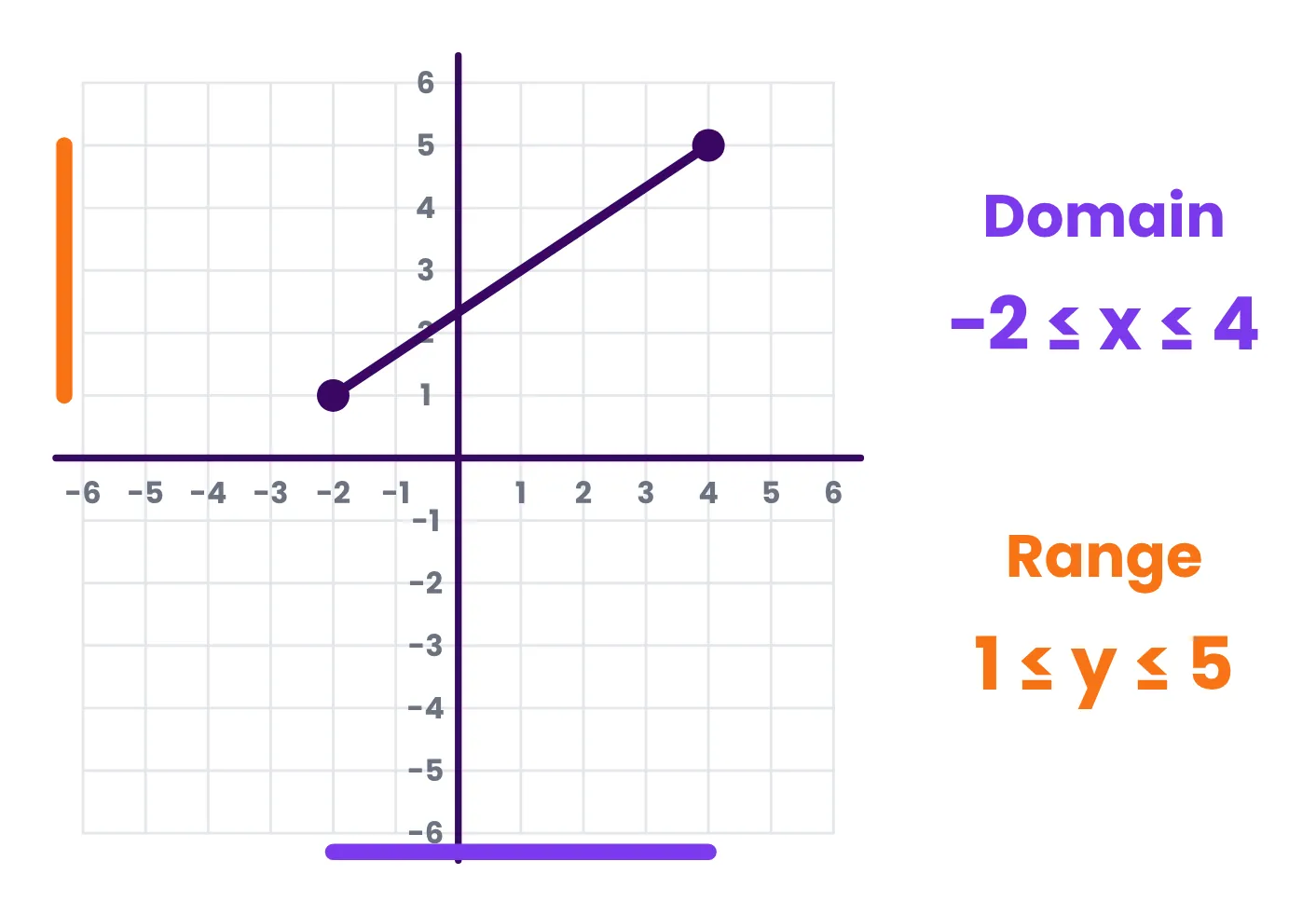
This segment runs from x = −2 to x = 4. Read across. The domain: −2 ≤ x ≤ 4.
It goes from y = 1 up to y = 5. Read up. The range: 1 ≤ y ≤ 5.
Domain
−2 ≤ x ≤ 4
1 ≤ y ≤ 5
4. From an equation
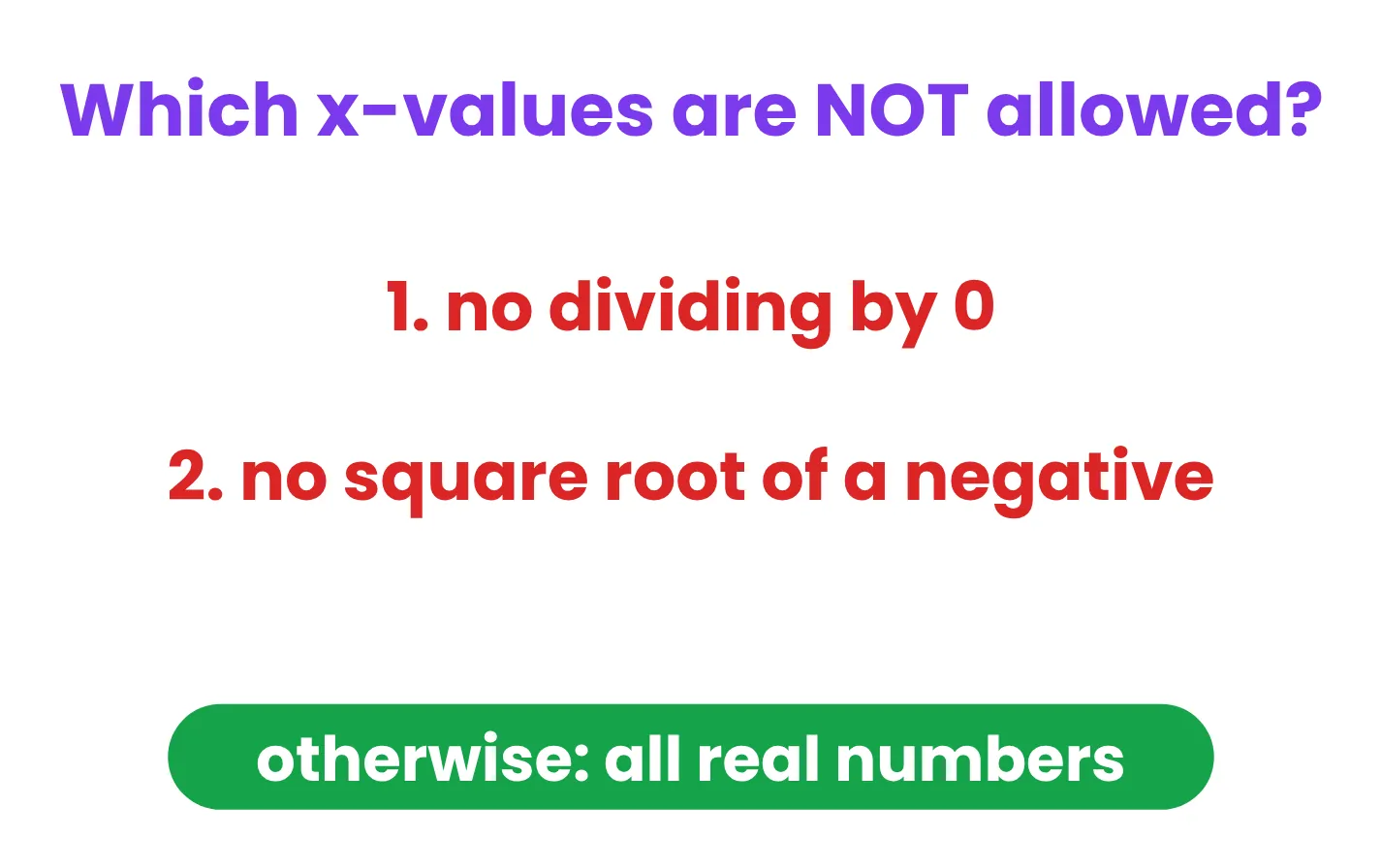
No graph? Look at the equation and ask: which x-values are not allowed?
Rule 1. You cannot divide by zero.
Rule 2. You cannot take the square root of a negative number.
If neither one happens, every x is allowed.
Which x-values are NOT allowed?
1. no dividing by 0
2. no square root of a negative
otherwise: all real numbers
5. Example 1: a line
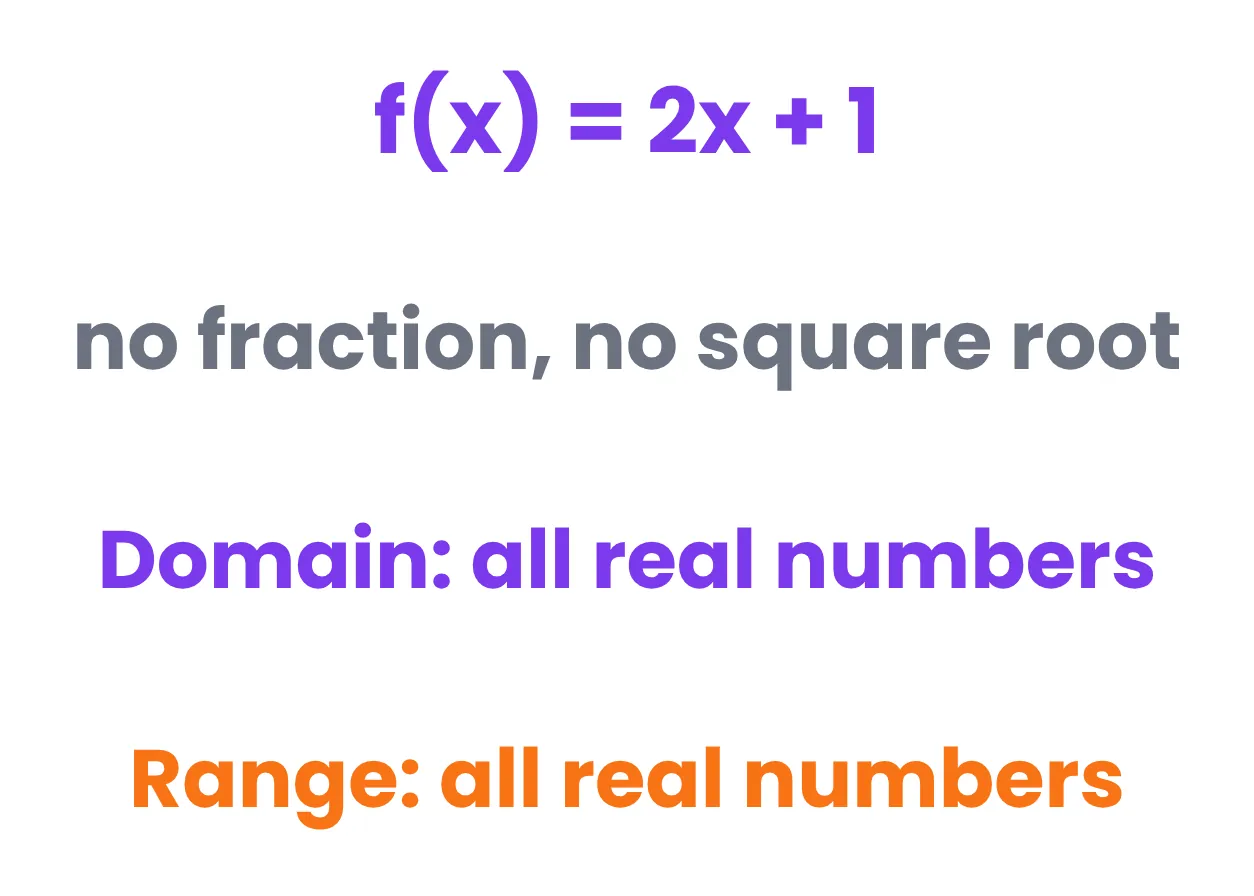
f(x) = 2x + 1. No fraction, no square root. You can double any number and add 1.
So the domain is all real numbers.
The outputs can be any number too, so the range is all real numbers.
f(x) = 2x + 1
no fraction, no square root
Domain: all real numbers
Range: all real numbers
6. Example 2: a fraction
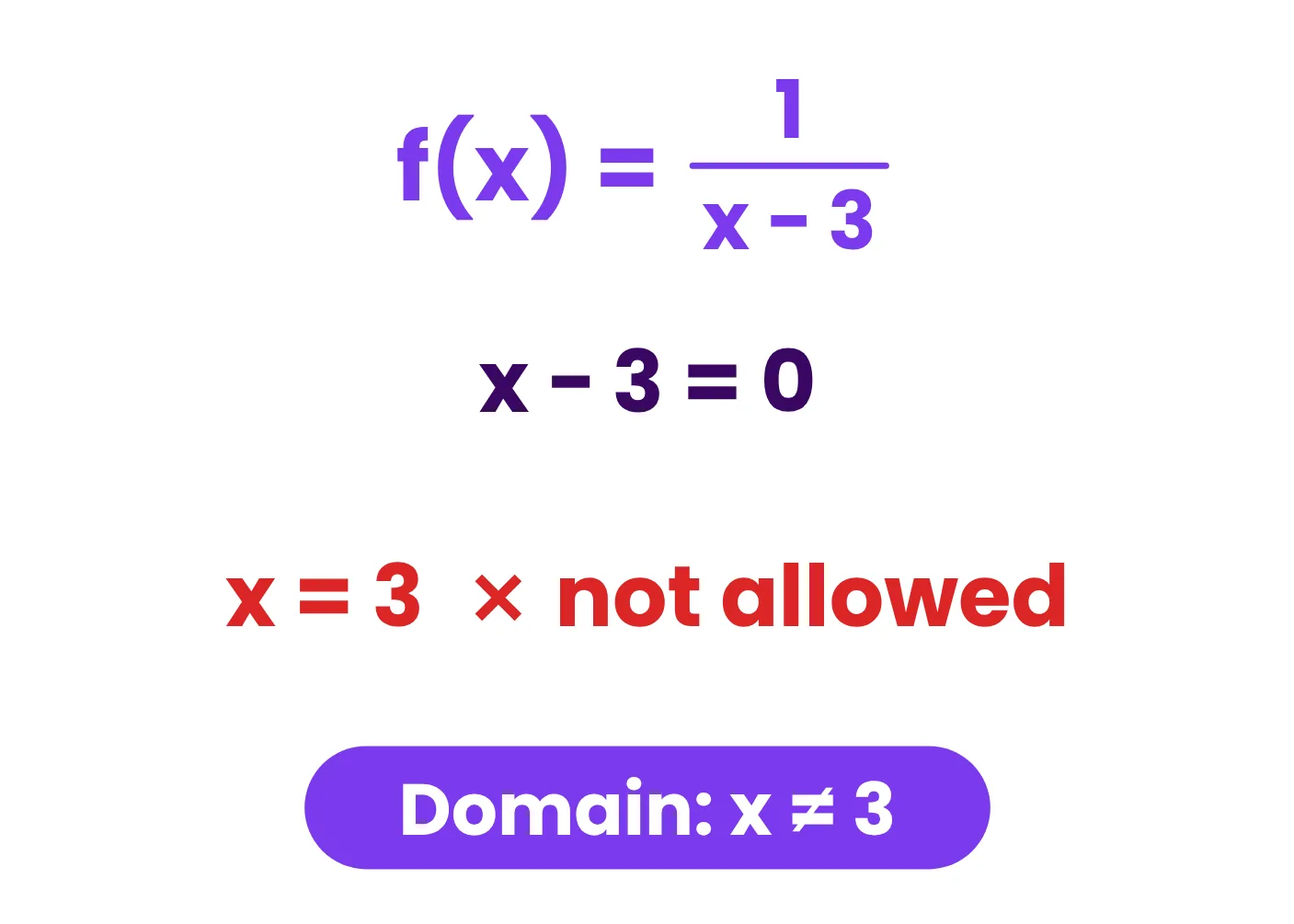
f(x) = 1/(x − 3). The bottom of a fraction cannot be zero.
Find the x that makes it zero: x − 3 = 0, so x = 3.
Leave that one number out. The domain is all real numbers except 3.
f(x) = 1/(x − 3)
x − 3 = 0
x = 3 ✗ not allowed
Domain: x ≠ 3
7. Example 3: a square root
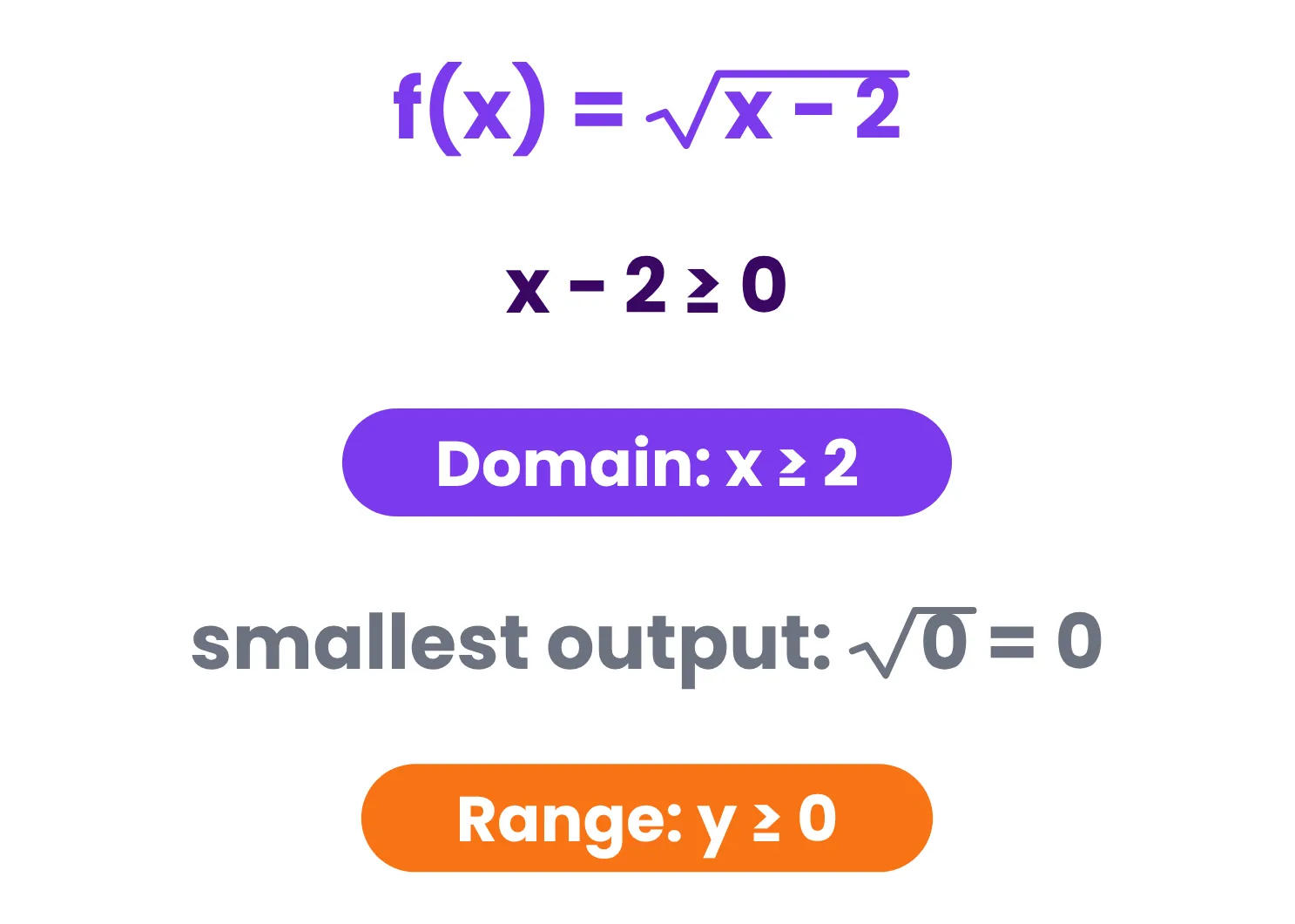
f(x) = √(x − 2). The inside of a square root cannot be negative.
So x − 2 ≥ 0. Add 2 to both sides: x ≥ 2. That is the domain.
The smallest output is √0 = 0, and it only goes up from there. The range: y ≥ 0.
f(x) = √(x − 2)
x − 2 ≥ 0
Domain: x ≥ 2
smallest output: √0 = 0
Range: y ≥ 0
8. Example 4: a square
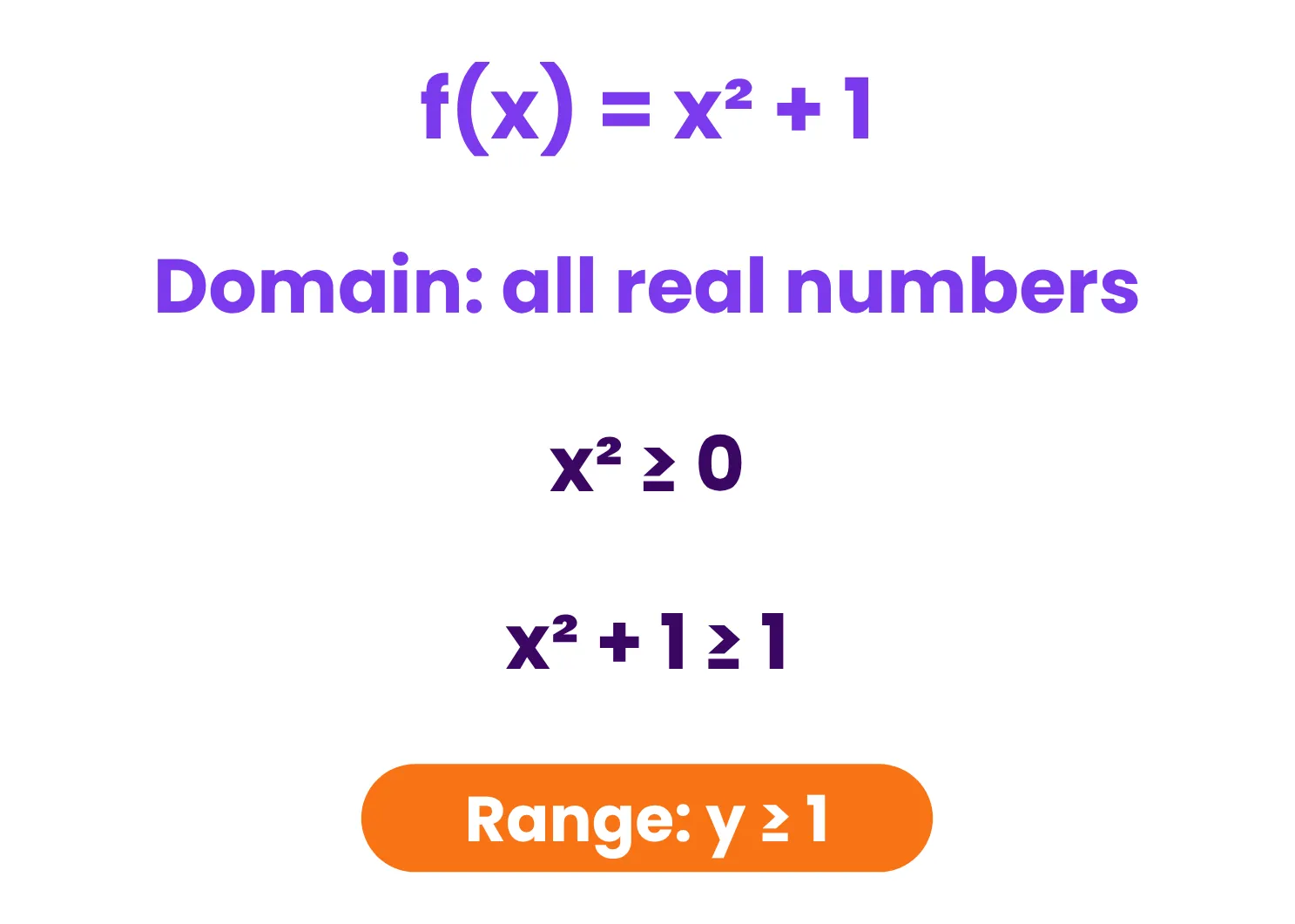
f(x) = x² + 1. Any number can be squared, so the domain is all real numbers.
A square is never negative: x² ≥ 0.
Add 1 to both sides: x² + 1 ≥ 1. The range: y ≥ 1.
f(x) = x² + 1
Domain: all real numbers
x² ≥ 0
x² + 1 ≥ 1
Range: y ≥ 1
9. Real-world limits
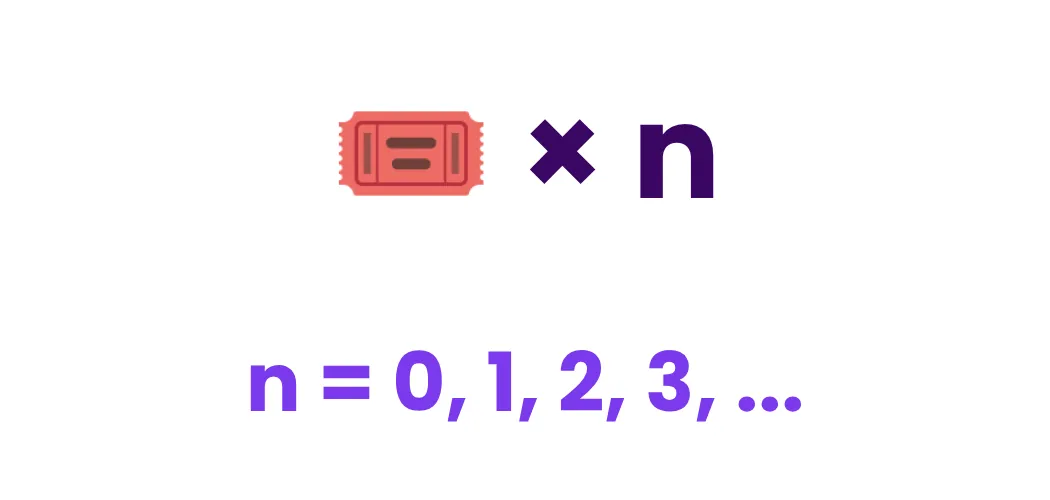
A ticket costs $5. The number of tickets can't be negative or a fraction.
Domain: 0, 1, 2, 3 and so on.
🎟️ × n
n = 0, 1, 2, 3, ...
Watch out: x for domain, y for range
Domain is the x-values, across. Range is the y-values, up and down.
Wrong: domain = y-values. Right: domain = x-values.
Your turn
Find the domain of this square root function.
f(x) = √(x + 4)
Answer: x ≥ −4. x + 4 ≥ 0. Subtract 4 from both sides: x ≥ −4!
Remember
Domain: the allowed inputs, x. Range: the outputs, y.
From a graph, read across and up. From an equation, rule out dividing by zero and square roots of negatives.
D: x R: y
graph: read across, then up
equation: no ÷ 0, no square root of a negative
Watch the Domain & Range lesson and practice · Printable worksheet