Absolute Value Equations notes (Algebra 1)
Solve |x − a| = b and absolute value inequalities.
The big question
|x| = 4
Which numbers are 4 away from zero? There are two!
Learn it, step by step
1. Distance from zero
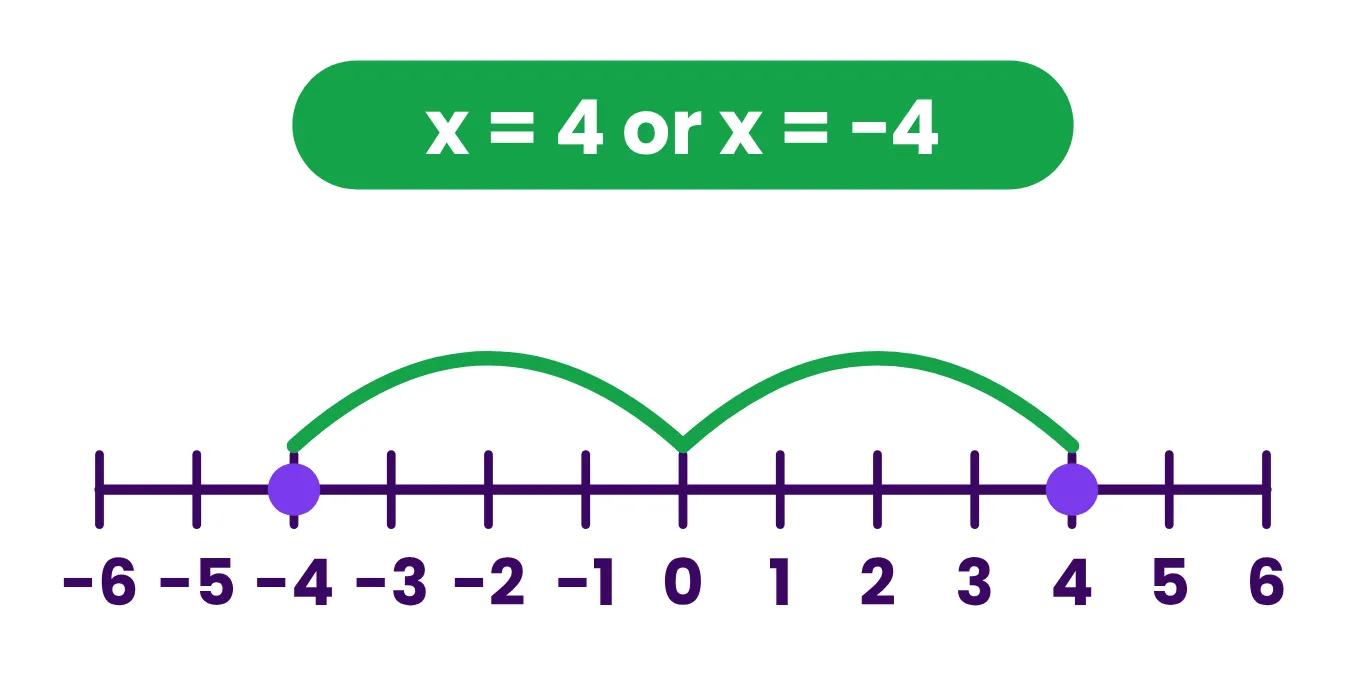
Absolute value is distance from zero. Both 4 and −4 are 4 away.
So |x| = 4 has two solutions: x = 4 or x = −4.
x = 4 or x = −4
2. Split into two
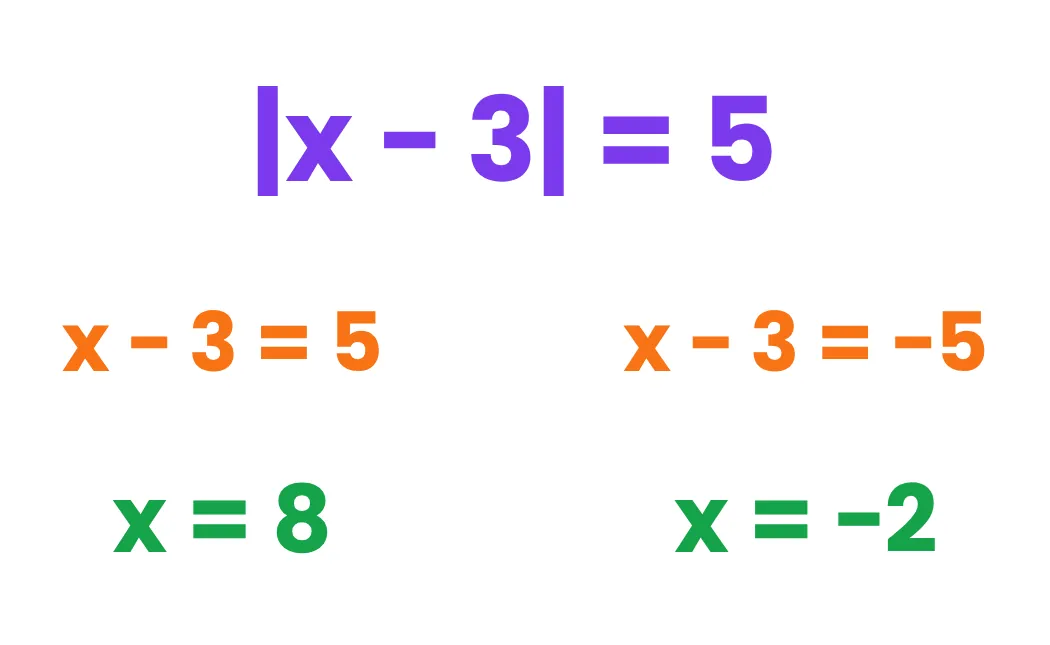
|x − 3| = 5 means x − 3 is 5 or −5.
x − 3 = 5 gives x = 8. x − 3 = −5 gives x = −2.
|x − 3| = 5
x − 3 = 5
x − 3 = −5
x = 8
x = −2
3. Isolate first
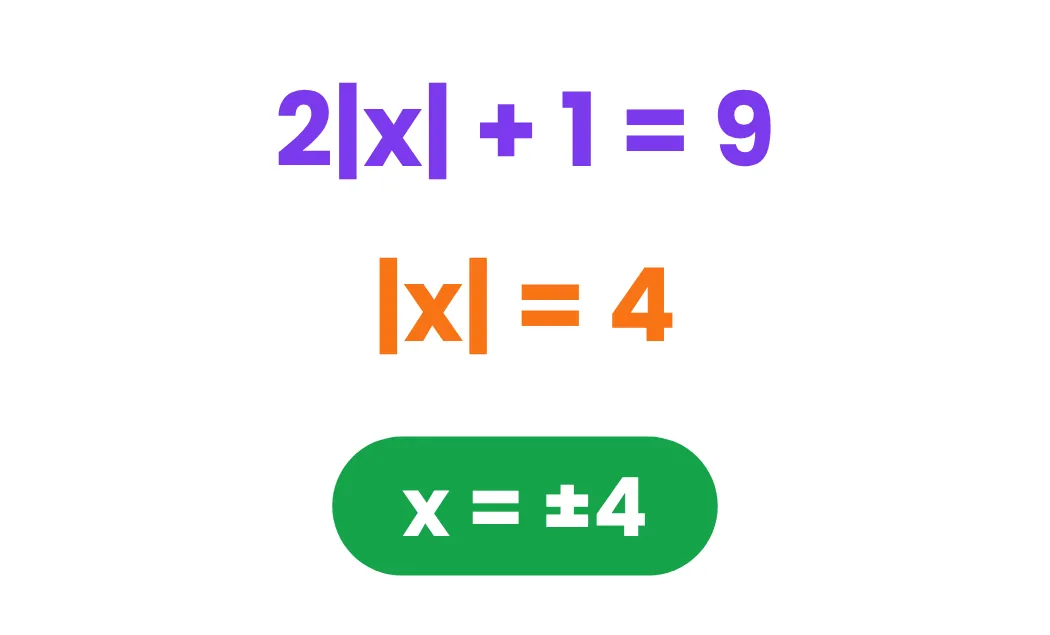
2|x| + 1 = 9. Get the absolute value alone: 2|x| = 8, so |x| = 4.
Then split: x = 4 or −4.
2|x| + 1 = 9
|x| = 4
x = ±4
4. No solution
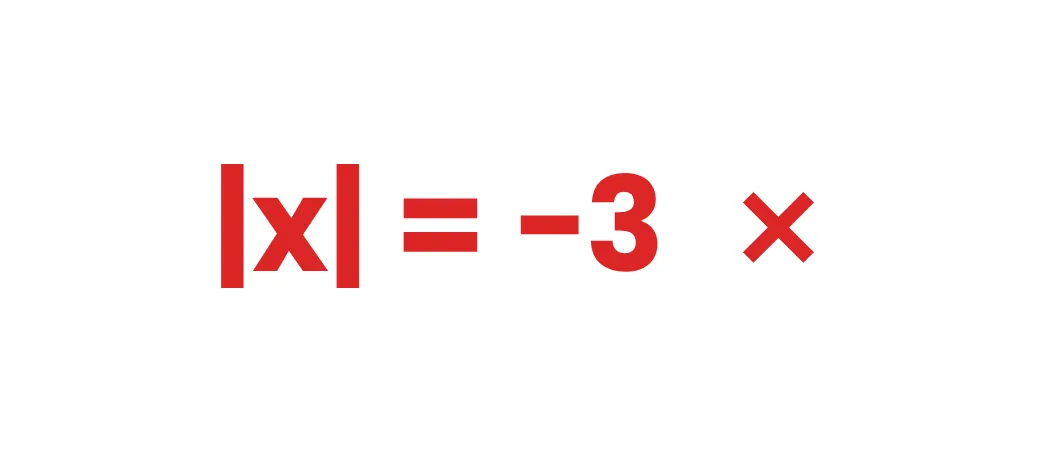
|x| = −3 has no solution. A distance can't be negative.
|x| = −3 ✗
Watch out: Two answers
Don't stop at one answer. Absolute value equations usually have two.
Wrong: |x| = 4 → x = 4. Right: |x| = 4 → x = ±4.
Your turn
Solve |x + 2| = 6.
|x + 2| = 6
Answer: x = 4 or x = −8. x + 2 = 6 gives 4. x + 2 = −6 gives −8. So x = 4 or −8!
Remember
Isolate the absolute value, then split into positive and negative cases.
A negative on the other side means no solution.
|A| = b → A = b or A = −b
Watch the Absolute Value Equations lesson and practice · Printable worksheet