Transformations notes (8th Grade math)
Translations, rotations, and reflections.
The big question
↔ ⟲ ⤢
How can a shape move? Slide, flip, turn, or resize!
Learn it, step by step
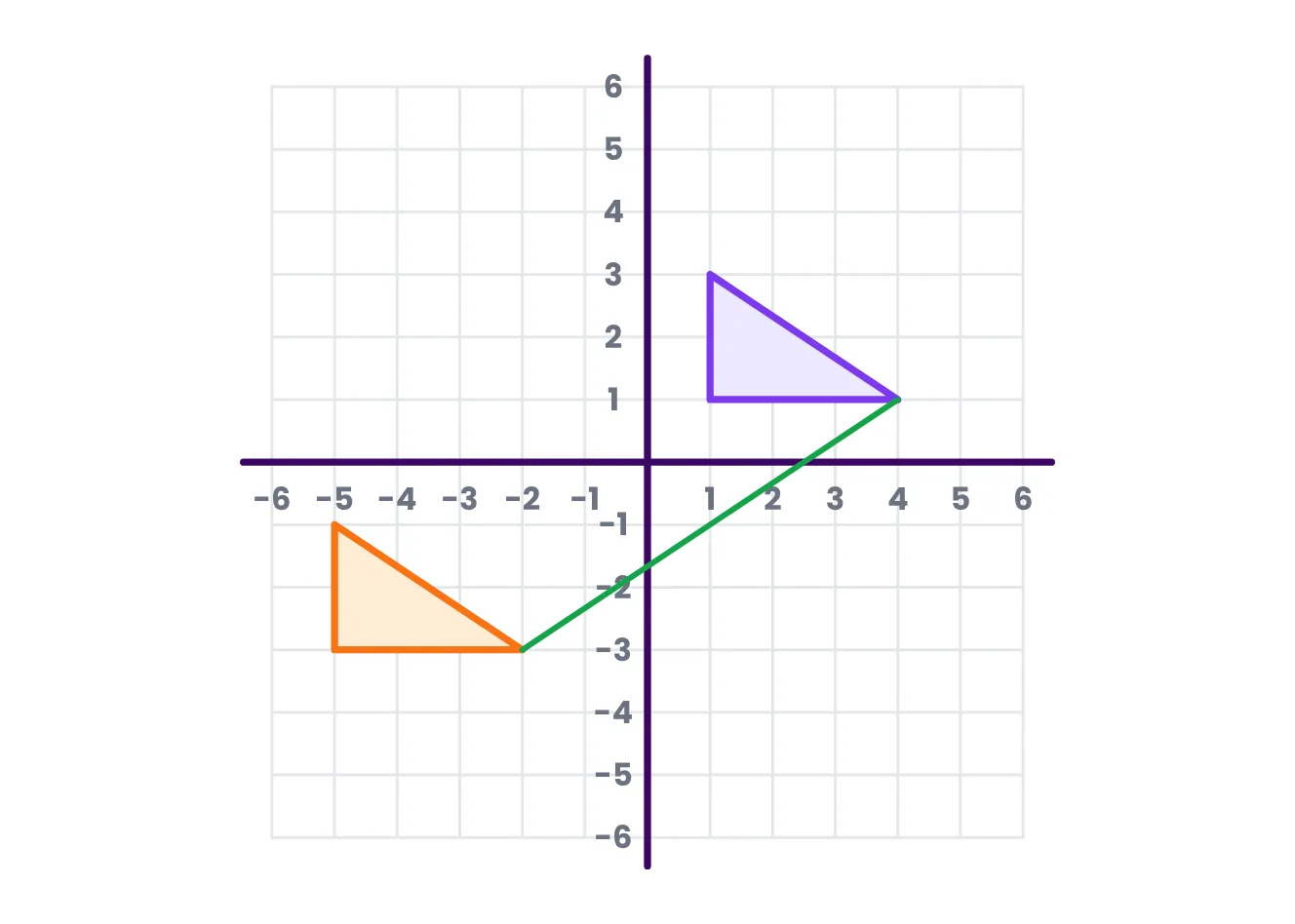
1. Translation: slide
A translation slides every point the same way. Left 6, down 4.
(x, y) becomes (x − 6, y − 4). Same shape, same size.
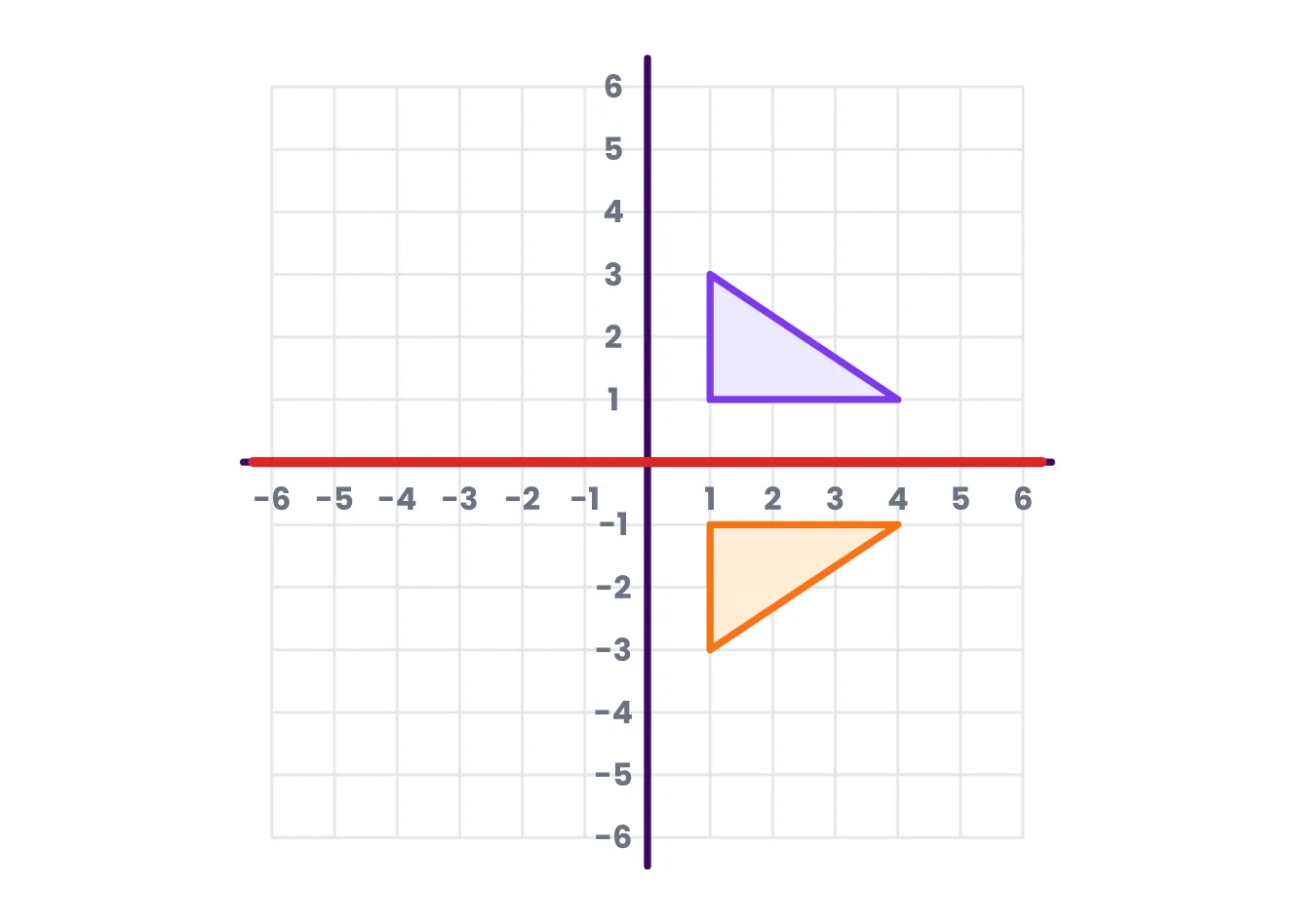
2. Reflection: flip
A reflection flips across a line, like a mirror.
Across the x-axis, (x, y) becomes (x, −y).
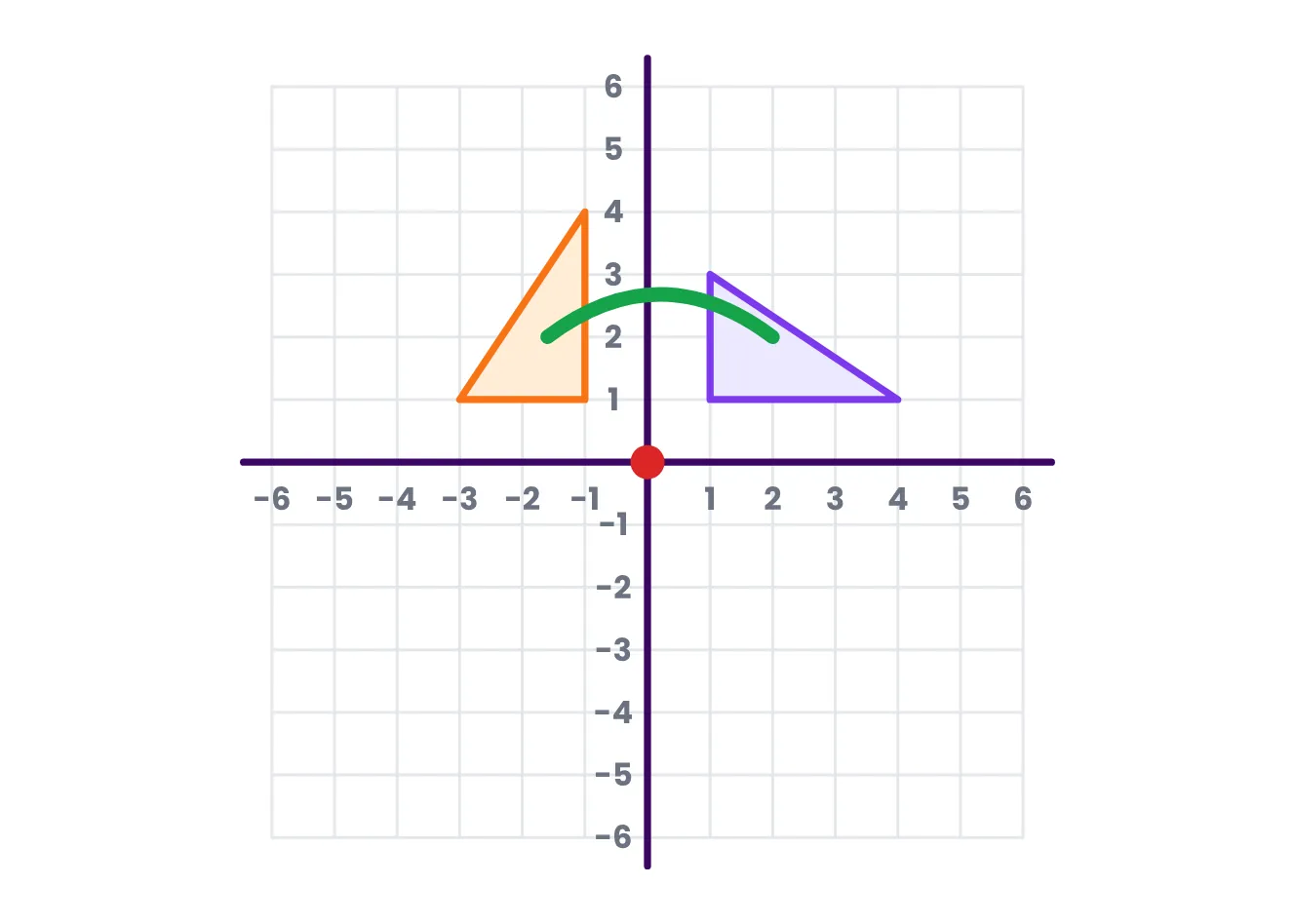
3. Rotation: turn
A rotation turns a shape around a point. 90 degrees counterclockwise around the origin:
(x, y) becomes (−y, x).
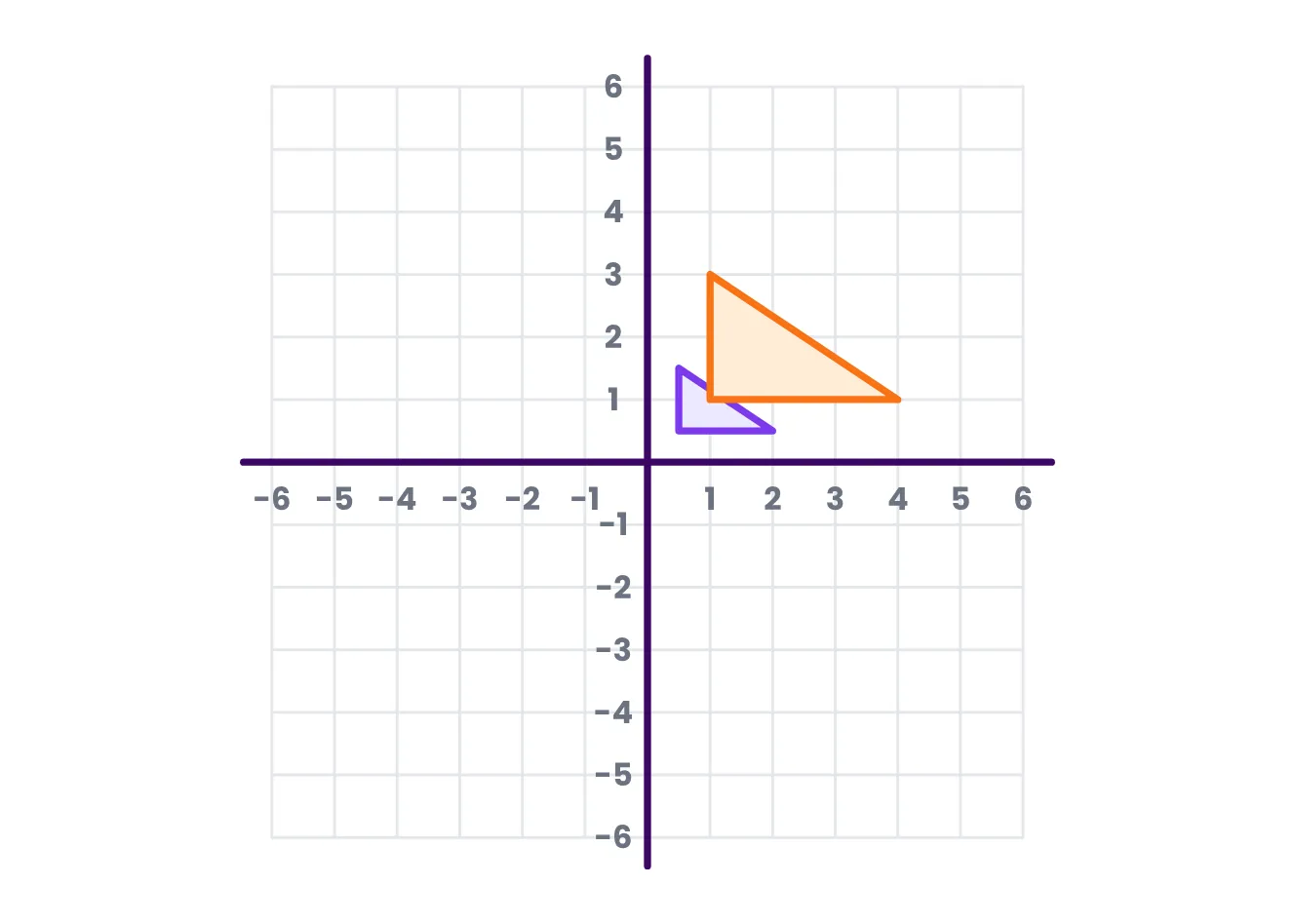
4. Dilation: resize
A dilation makes a shape bigger or smaller by a scale factor.
Scale factor 2 from the origin: (x, y) becomes (2x, 2y). Same shape, new size.
5. Coordinate rules: step by step
You can transform a point with a rule, without drawing.
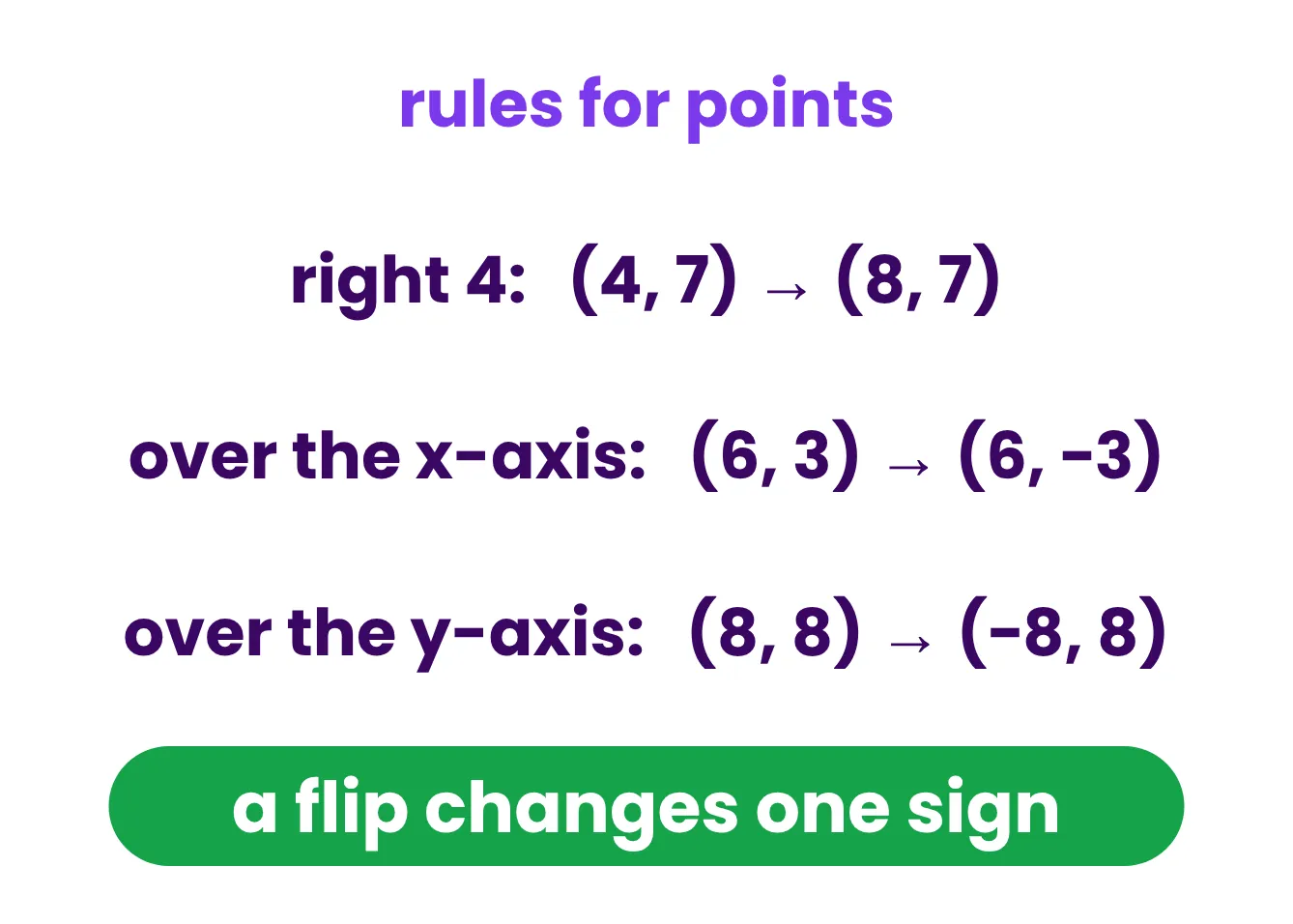
Translate (4, 7) right 4: add 4 to x. The point becomes (8, 7).
Reflect (6, 3) over the x-axis: change the sign of y. It becomes (6, −3).
Reflect (8, 8) over the y-axis: change the sign of x. It becomes (−8, 8).
rules for points
right 4: (4, 7) → (8, 7)
over the x-axis: (6, 3) → (6, −3)
over the y-axis: (8, 8) → (−8, 8)
a flip changes one sign
Watch out: Which axis?
Across the x-axis, y changes sign. Across the y-axis, x changes sign.
Wrong: y-axis: (3, 5) → (3, −5). Right: y-axis: (3, 5) → (−3, 5).
Your turn
Reflect the point (3, 5) across the y-axis.
Answer: (−3, 5). The x flips sign: (−3, 5)!
Remember
Translate: slide. Reflect: flip. Rotate: turn. Dilate: resize.
The first three keep size; a dilation changes it.
slide · flip · turn · resize
Watch the Transformations lesson and practice · Printable worksheet