Pythagorean Theorem notes (8th Grade math)
Find missing sides of right triangles.
The big question
a² + b² = c²
Is there a rule for right triangles? The Pythagorean theorem!
Learn it, step by step
1. Squares on the sides
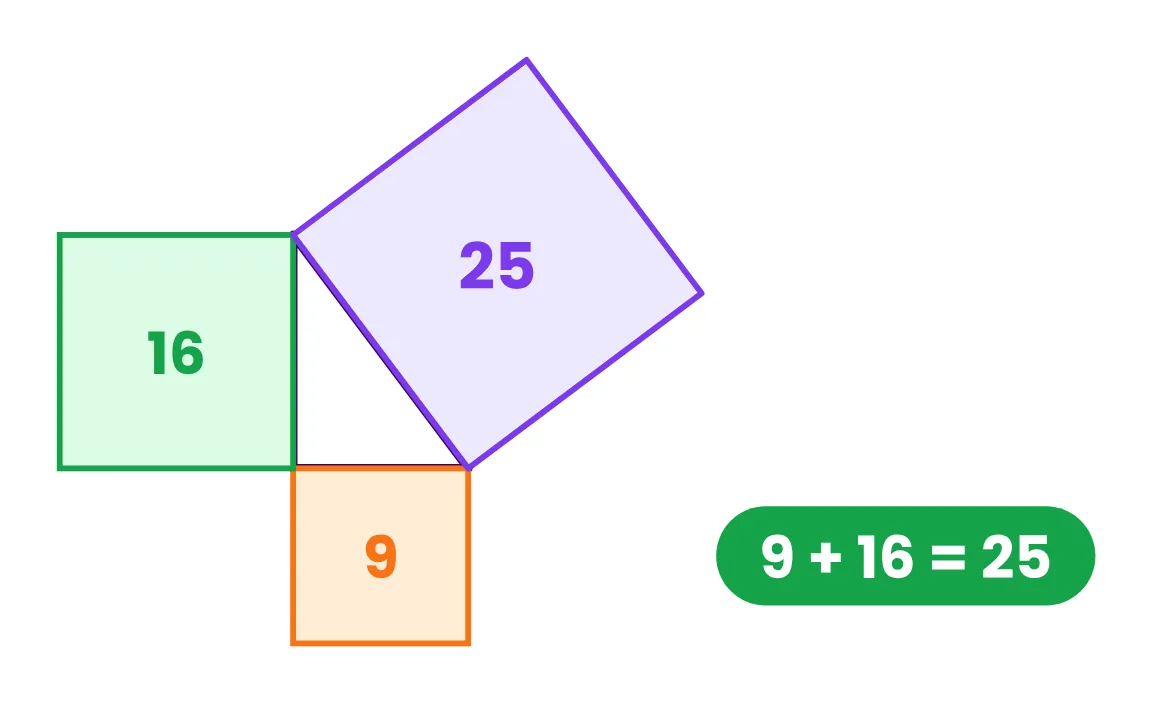
A right triangle with legs 3 and 4. Build a square on each side.
The two small squares are 9 and 16. Together: 25, the big square.
9 + 16 = 25
2. The rule
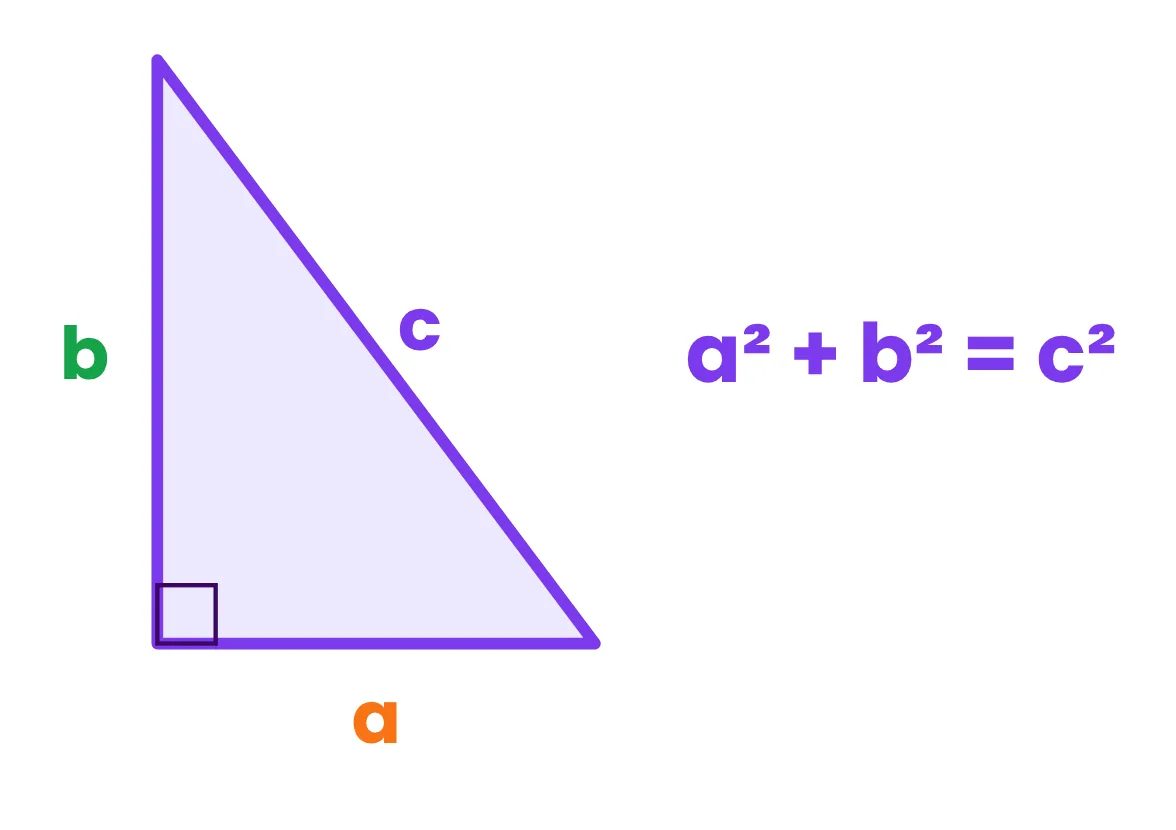
For any right triangle, a² + b² = c². c is the hypotenuse, the longest side, across from the right angle.
a² + b² = c²
3. Find the hypotenuse
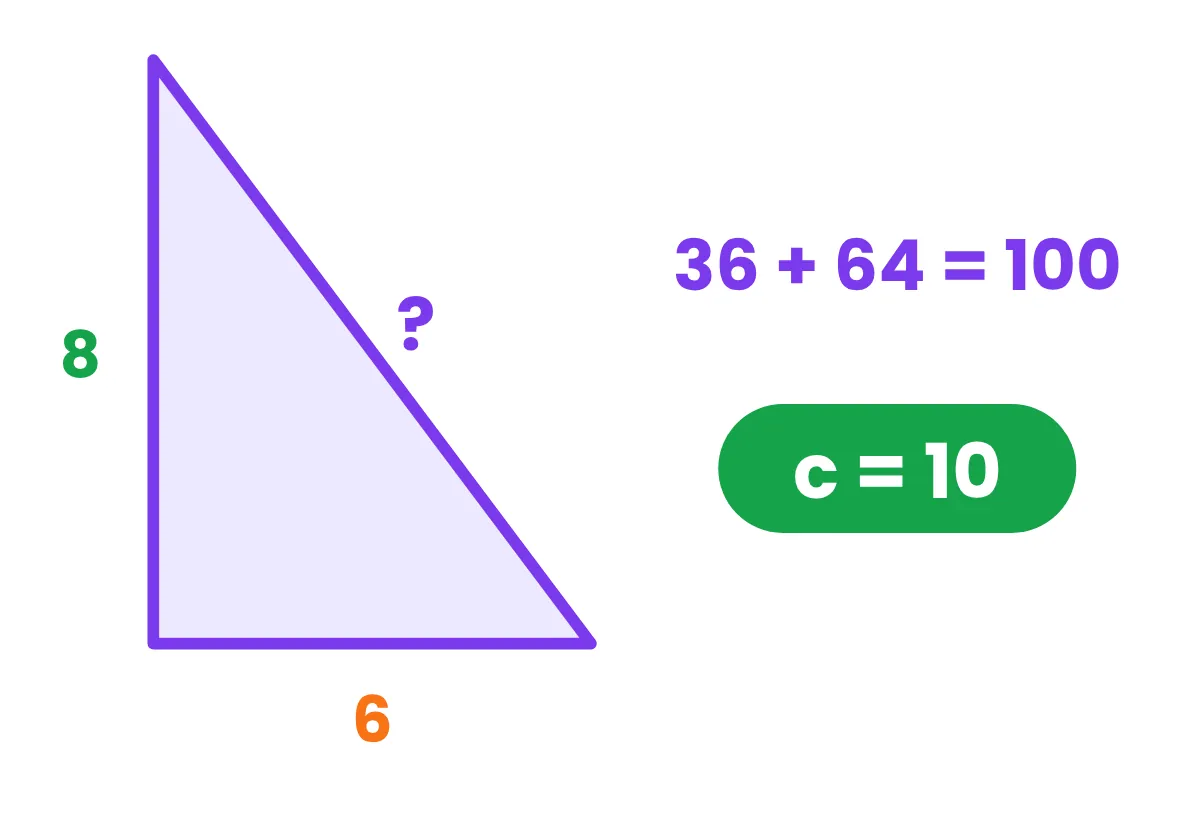
Legs 6 and 8. 36 + 64 = 100. c is the square root of 100: 10.
36 + 64 = 100
c = 10
4. Find a leg
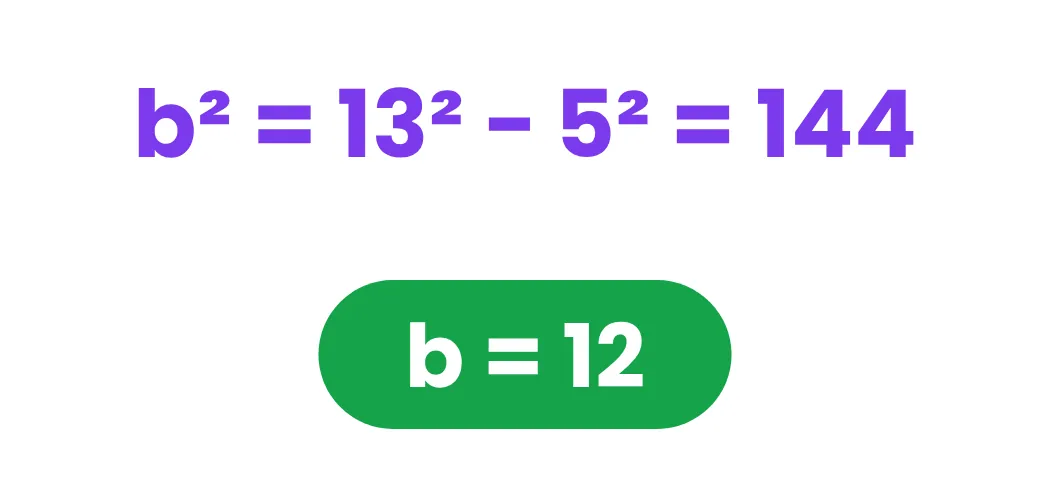
Hypotenuse 13, one leg 5. 13² − 5² = 169 − 25 = 144.
The other leg is √144 = 12.
b² = 13² − 5² = 144
b = 12
Watch out: c is the longest side
c must be the hypotenuse. With 5 and 13, don't add: 13 is already c.
Wrong: 5² + 13² = c². Right: 5² + b² = 13².
Your turn
A ladder leans on a wall. It's 5 meters long and its foot is 3 meters from the wall. How high does it reach?
Answer: 4 m. 25 − 9 is 16. The square root is 4. It reaches 4 meters!
Remember
In a right triangle, a² + b² = c².
Square, add or subtract, then take the square root.
a² + b² = c²
Watch the Pythagorean Theorem lesson and practice · Printable worksheet