Parallel Lines & Transversals notes (8th Grade math)
Find angle measures using parallel line properties.
The big question
∥
What happens when a line crosses two parallel lines? Lots of equal angles!
Learn it, step by step
1. Eight angles
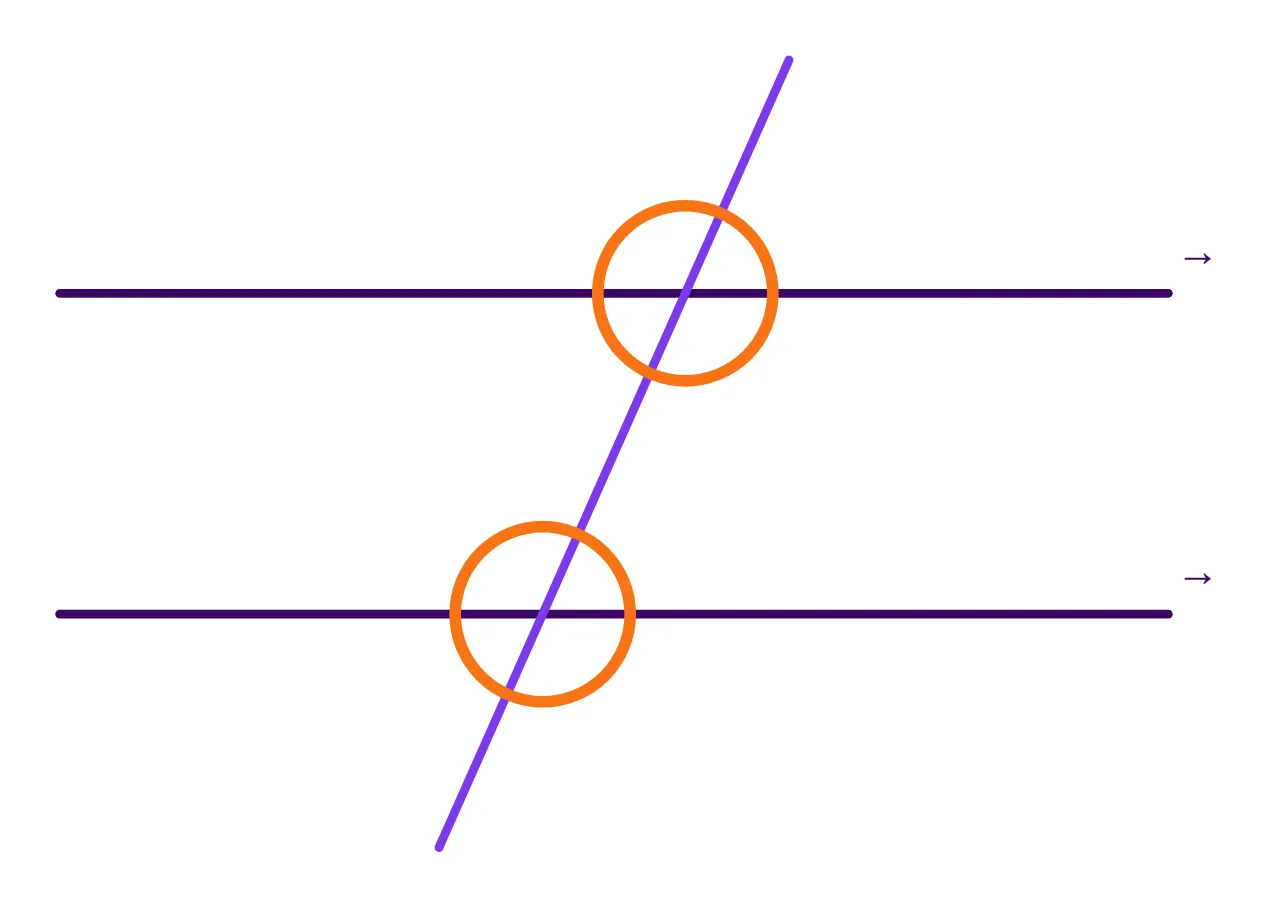
Two parallel lines are cut by a transversal. That makes 8 angles: 4 at each crossing.
The top crossing is an exact copy of the bottom one.
2. Corresponding angles
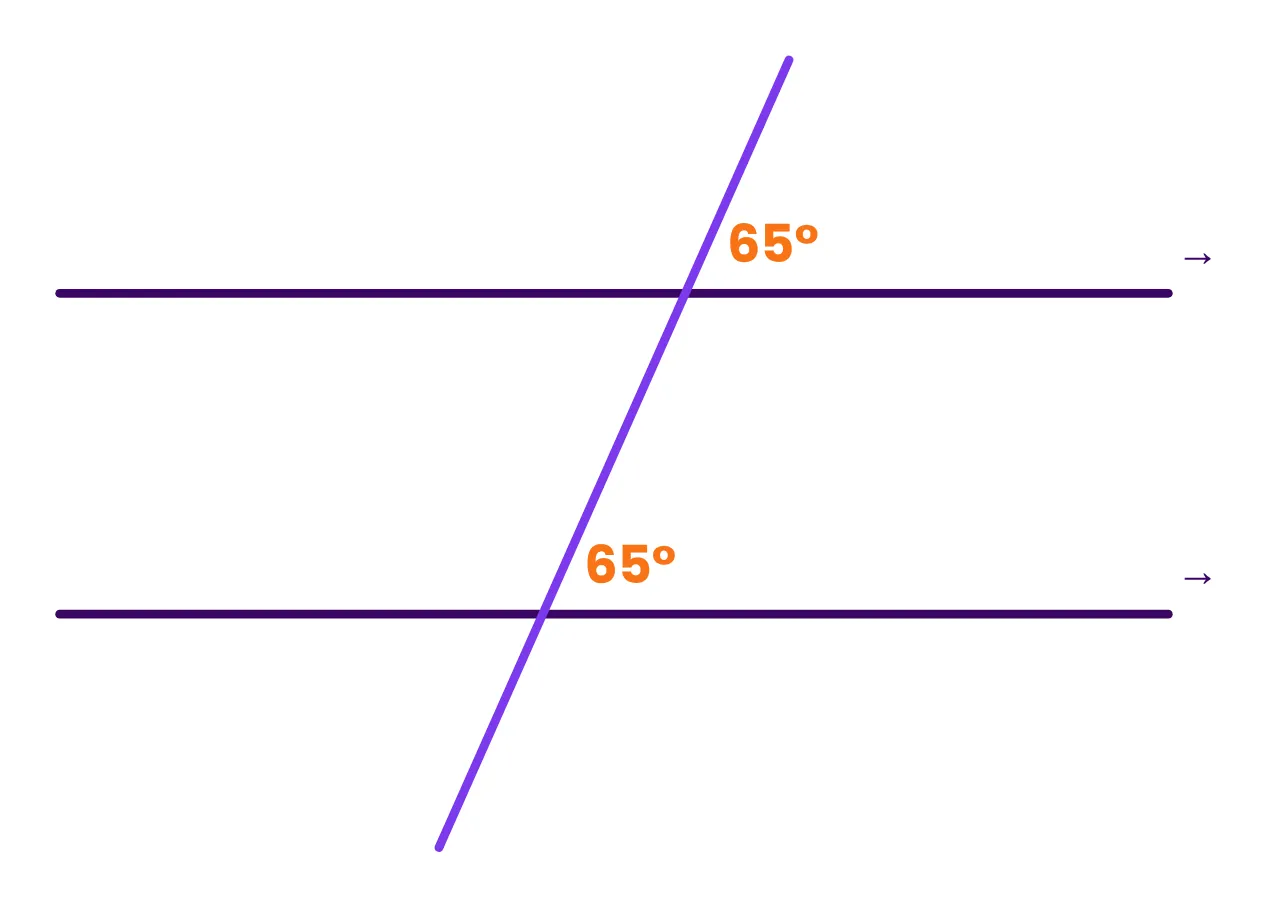
Angles in the same spot at each crossing are corresponding. They are equal.
If this one is 65 degrees, so is the one below it.
65°
3. Alternate interior
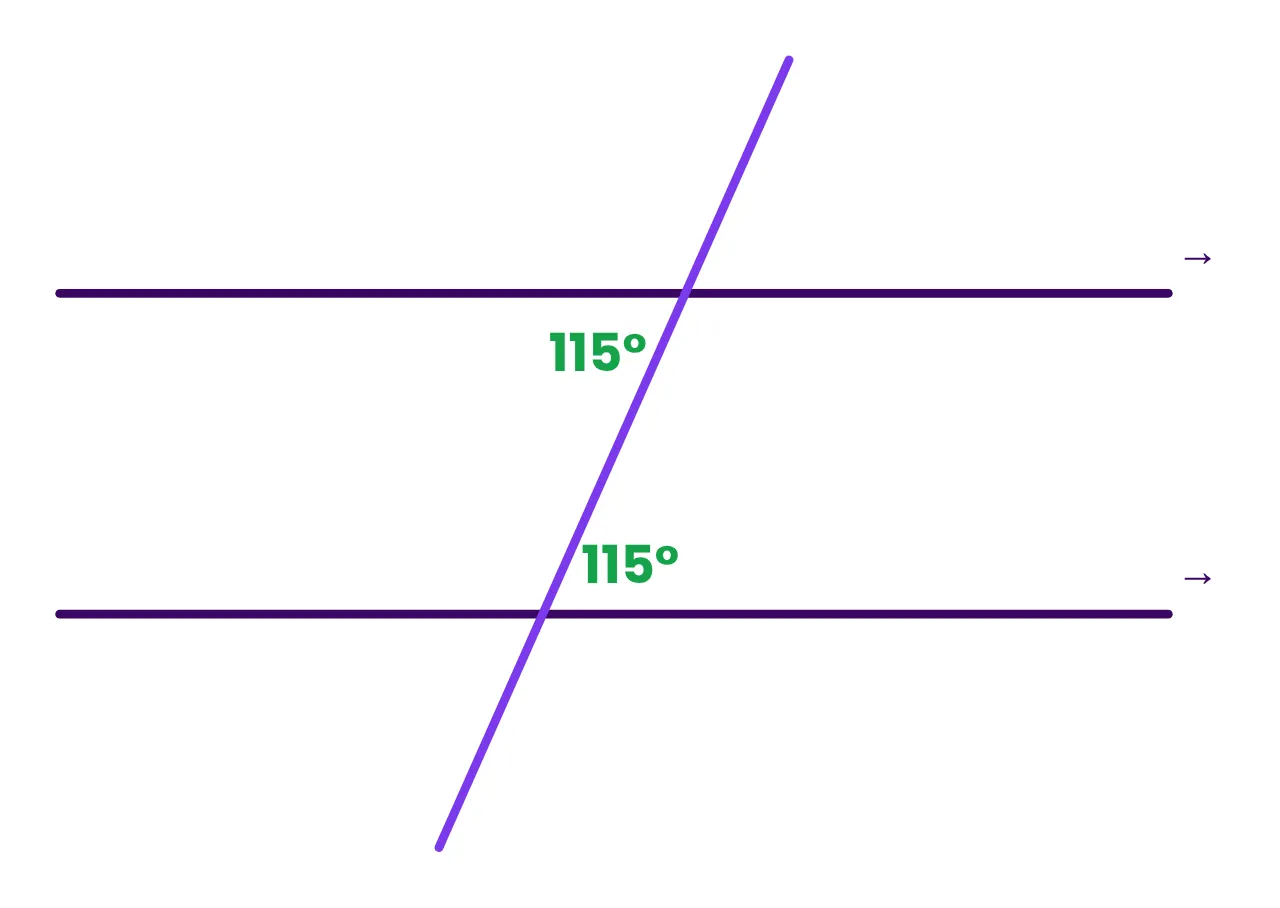
Angles between the parallel lines, on opposite sides of the transversal, are alternate interior angles. They are equal too.
115°
4. Same-side pairs
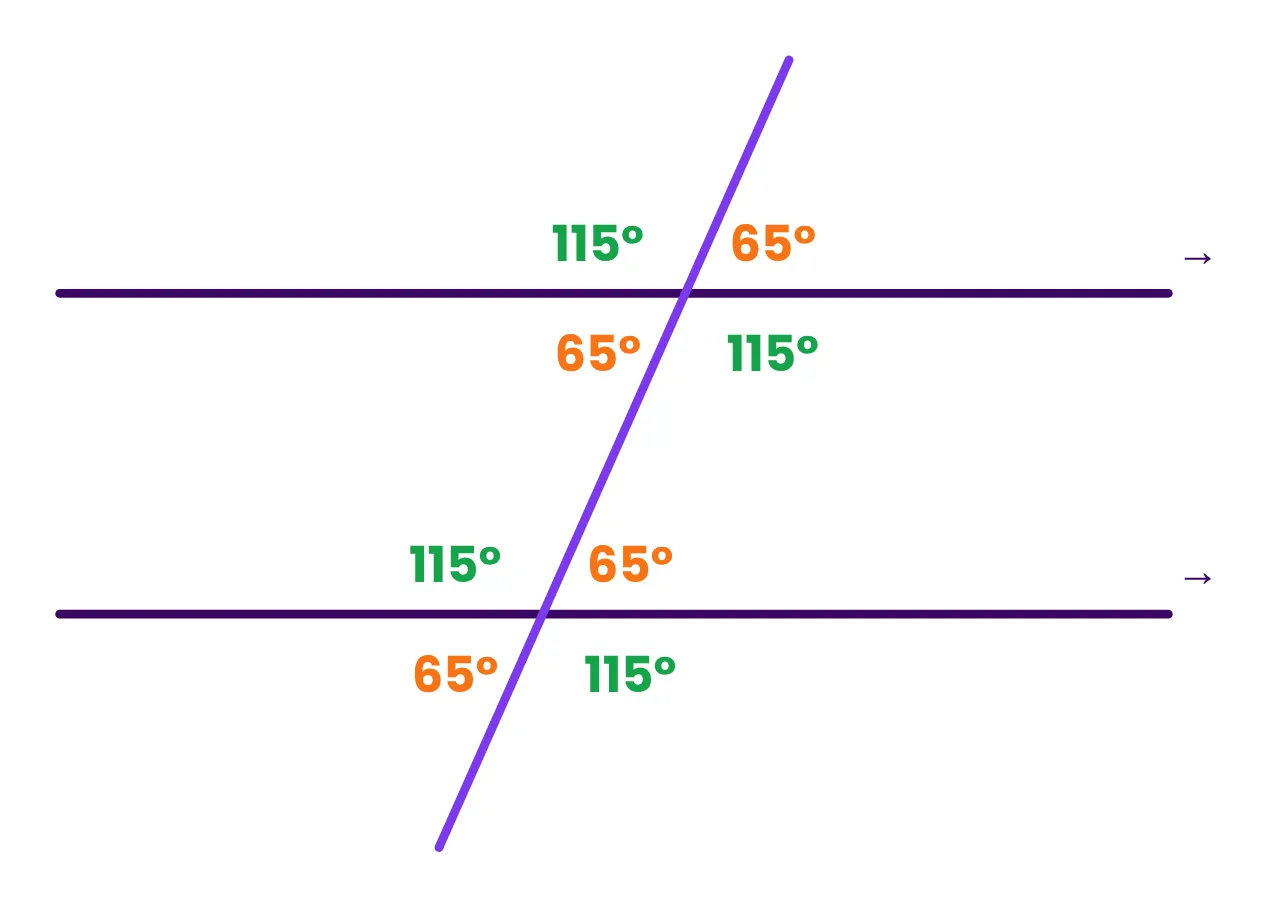
Angles next to each other on a line add to 180.
So 65 and 115 are supplementary. Every angle here is 65 or 115.
65°
115°
5. Alternate exterior angles
Alternate exterior angles are outside the parallel lines, on opposite sides of the transversal.
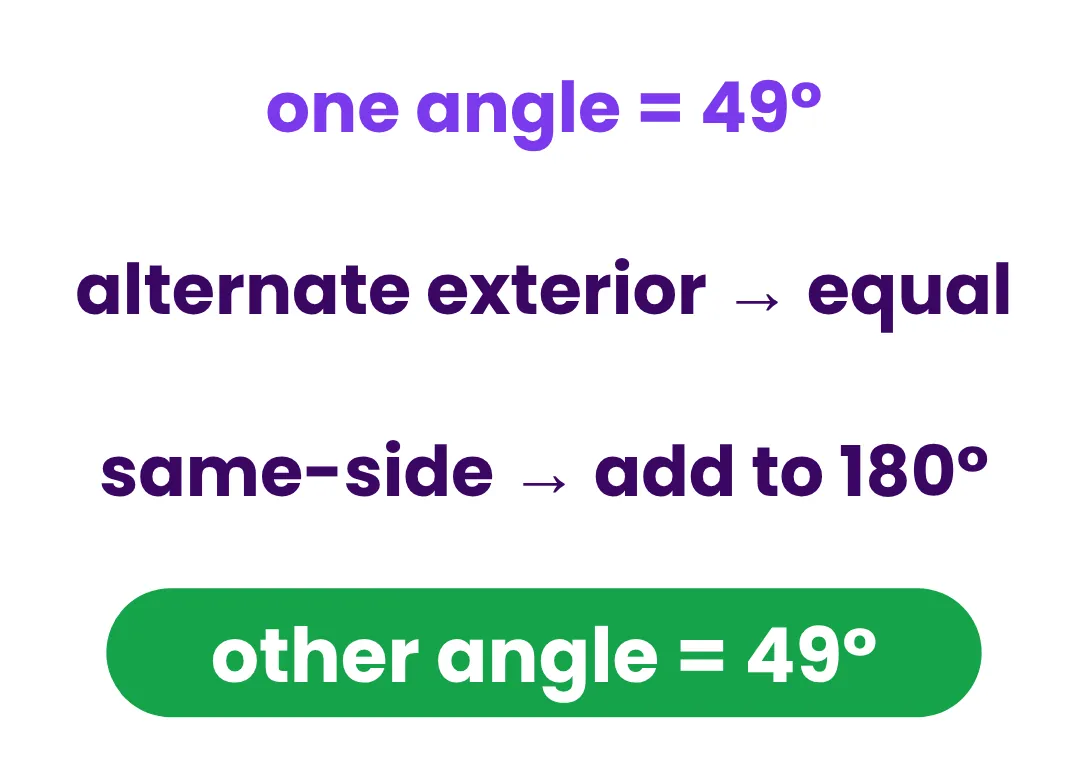
Like alternate interior angles, they are equal. If one is 49 degrees, the other is 49 degrees too.
So first name the pair, then decide: matching pairs are equal, and same-side pairs add to 180.
one angle = 49°
alternate exterior → equal
same-side → add to 180°
other angle = 49°
Watch out: Only for parallel lines
These equal-angle rules only work when the lines are parallel.
Wrong: any two lines. Right: parallel lines only.
Your turn
One angle is 72 degrees. What is the angle next to it on the same line?
Answer: 108°. 180 minus 72 is 108 degrees!
Remember
Corresponding and alternate interior angles are equal.
Angles on a straight line add to 180.
Watch the Parallel Lines & Transversals lesson and practice · Printable worksheet