Multi-Digit Multiplication notes (8th Grade math)
Multiply larger numbers.
The big question
243 × 36
How do we multiply big numbers by hand? Break it into two easier products!
Learn it, step by step
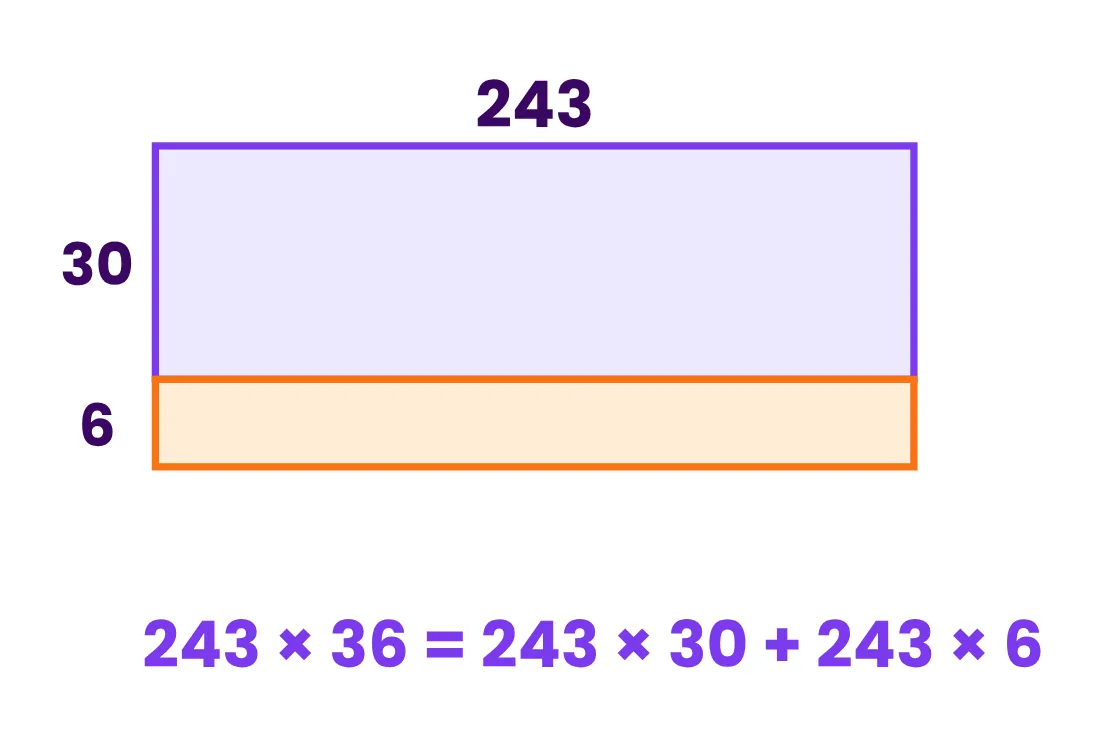
1. First: the area model
36 is 30 plus 6. So 243 × 36 is 243 × 6 plus 243 × 30.
243 × 36 = 243 × 30 + 243 × 6
2. First row: × 6
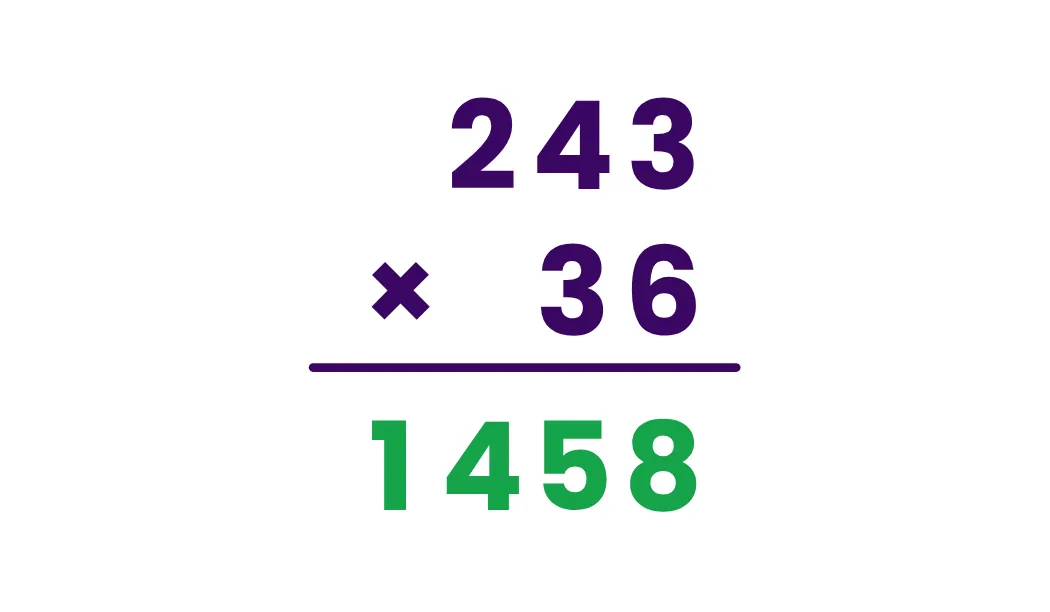
243 × 6: 6 × 3 is 18, write 8 carry 1. 6 × 4 is 24, plus 1 is 25, write 5 carry 2.
6 × 2 is 12, plus 2 is 14. The first row is 1,458.
3. Second row: × 30
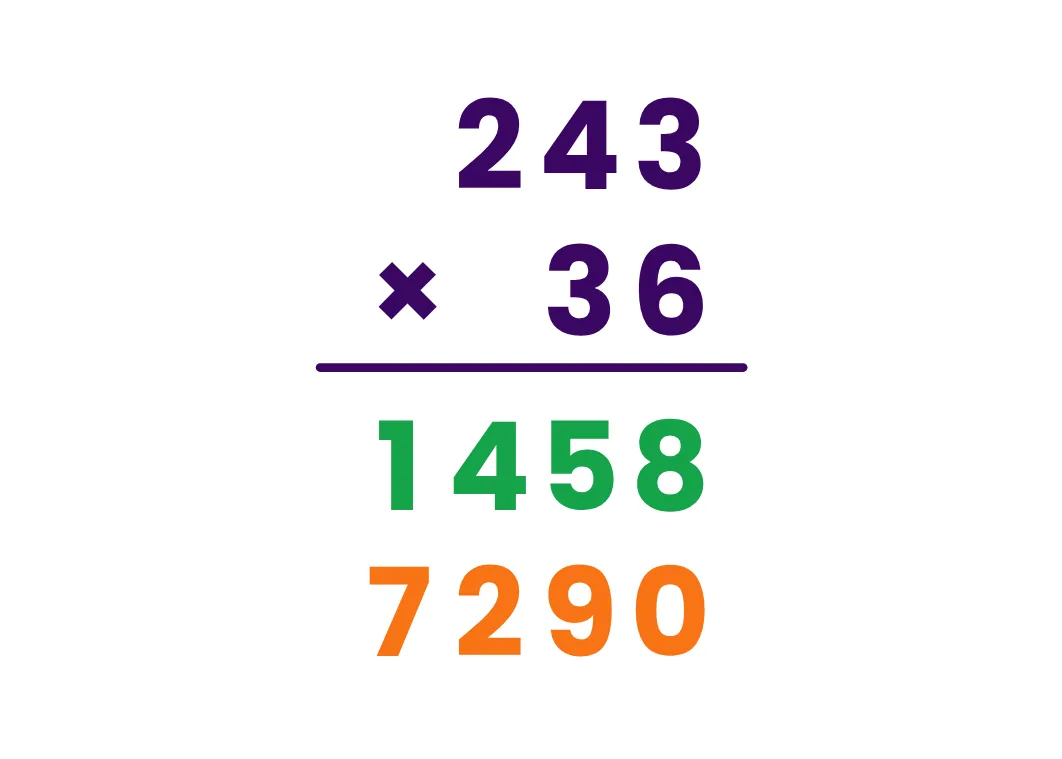
243 × 30: write a 0 first, because we are multiplying by tens.
Then 243 × 3 is 729. The second row is 7,290.
4. Add the rows
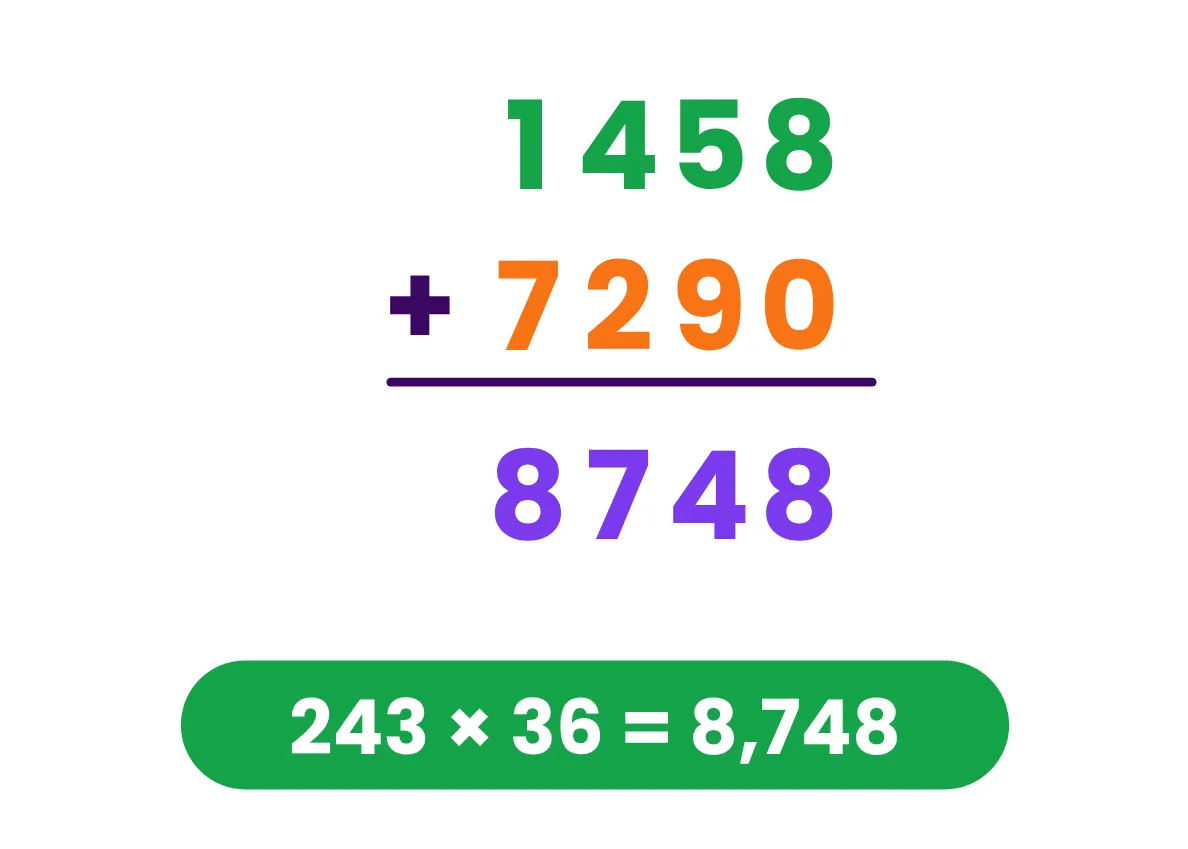
1,458 plus 7,290 is 8,748.
So 243 × 36 = 8,748.
243 × 36 = 8,748
5. Estimate to check
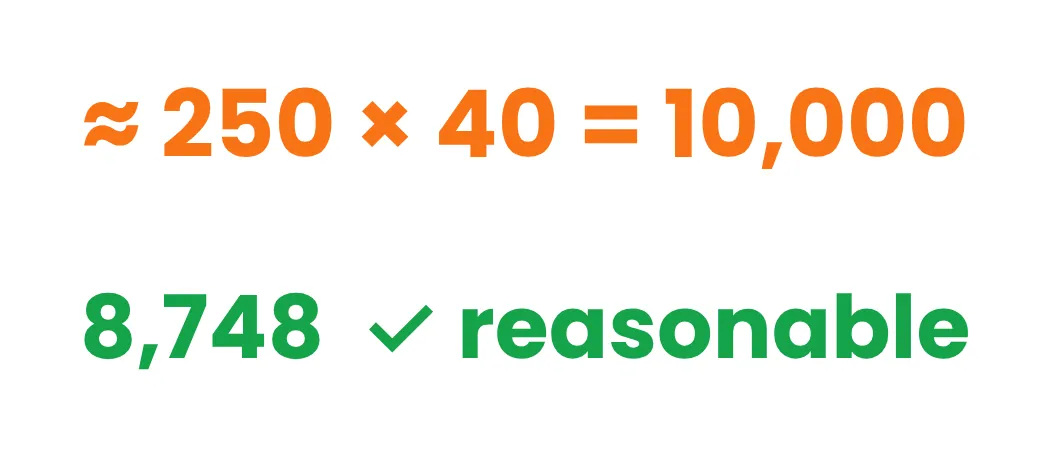
243 is about 250, and 36 is about 40. 250 × 40 is 10,000.
Hmm, 36 is less than 40, so a bit less: 8,748 is reasonable.
≈ 250 × 40 = 10,000
8,748 ✓ reasonable
Watch out: Remember the zero
In the second row you are multiplying by tens, so start with a 0. Without it the answer is far too small.
Wrong: 1,458 + 729 = 2,187. Right: 1,458 + 7,290 = 8,748.
Your turn
What is 125 × 24?
125 × 24 = ?
Answer: 3,000. 125 × 4 is 500. 125 × 20 is 2,500. 500 plus 2,500 is 3,000!
Remember
Multiply by the ones digit, then by the tens digit with a zero placeholder.
Add the rows, and estimate to check.
243 × 36 = 1,458 + 7,290
Watch the Multi-Digit Multiplication lesson and practice · Printable worksheet