Linear Functions notes (8th Grade math)
Understand and graph linear functions.
The big question
in → out
What is a function? A rule with one output for each input!
Learn it, step by step
1. A function machine
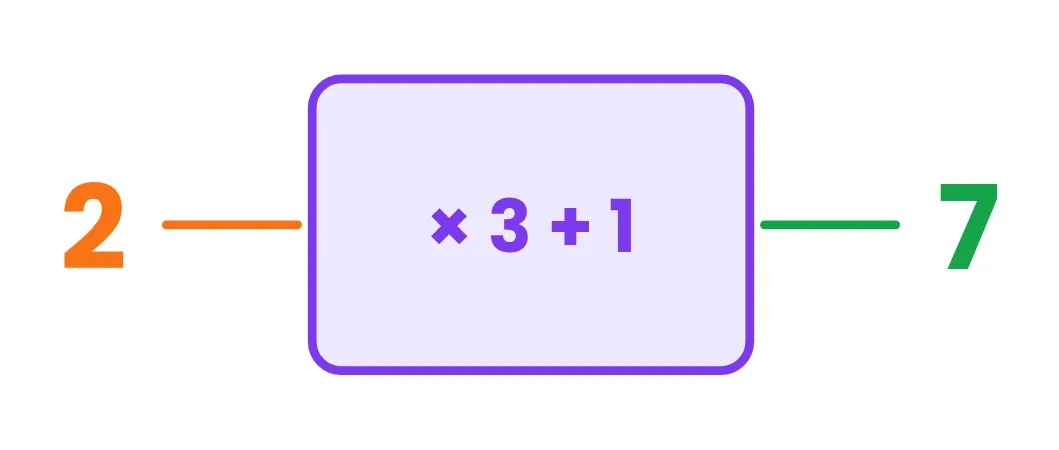
A function takes an input and gives exactly one output.
Rule: times 3, plus 1. Put in 2, get out 7.
× 3 + 1
2. Table, graph, equation
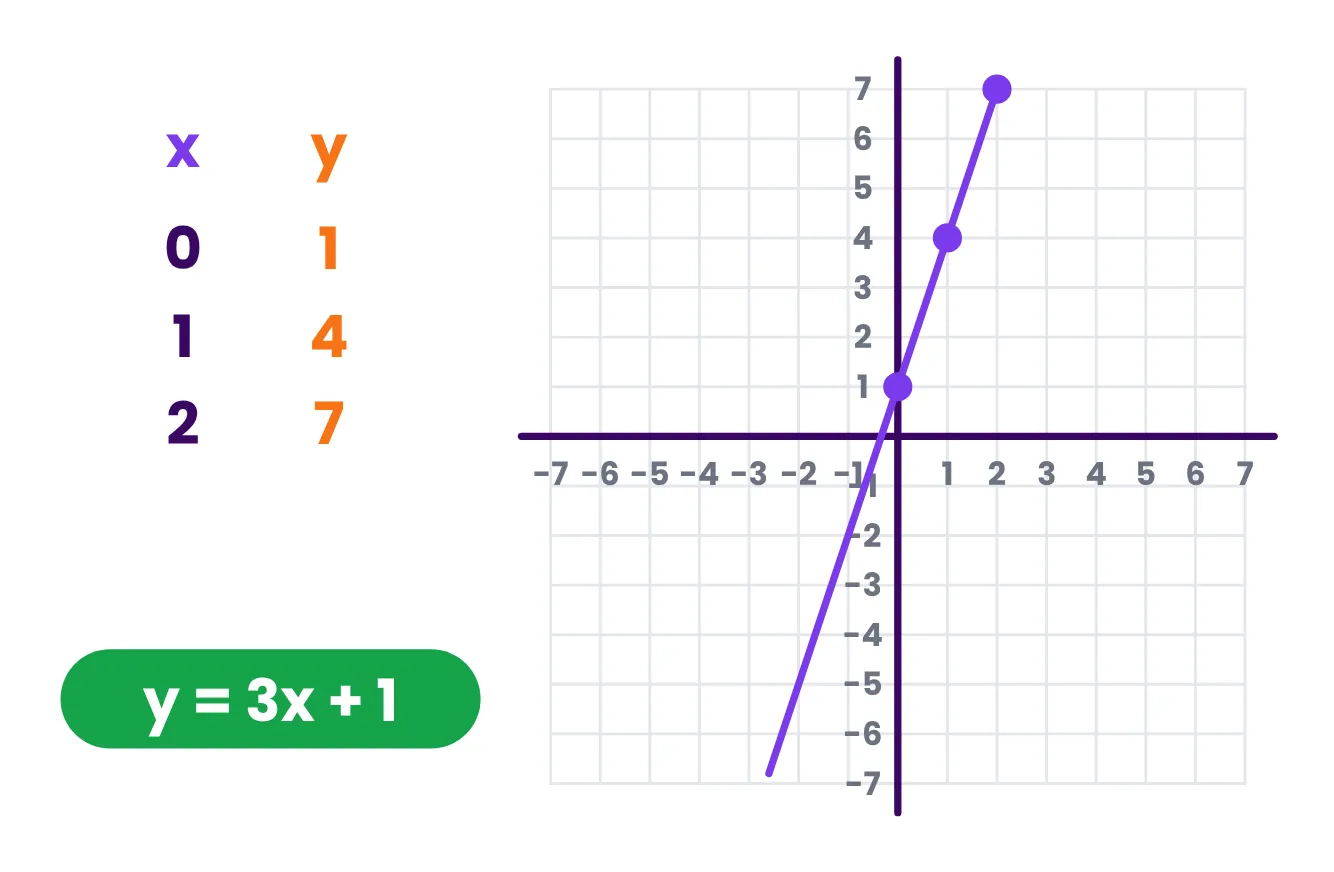
The same function three ways. A table: x 0, 1, 2 gives y 1, 4, 7.
The points form a straight line: y = 3x + 1. That makes it linear.
y = 3x + 1
3. Rate of change
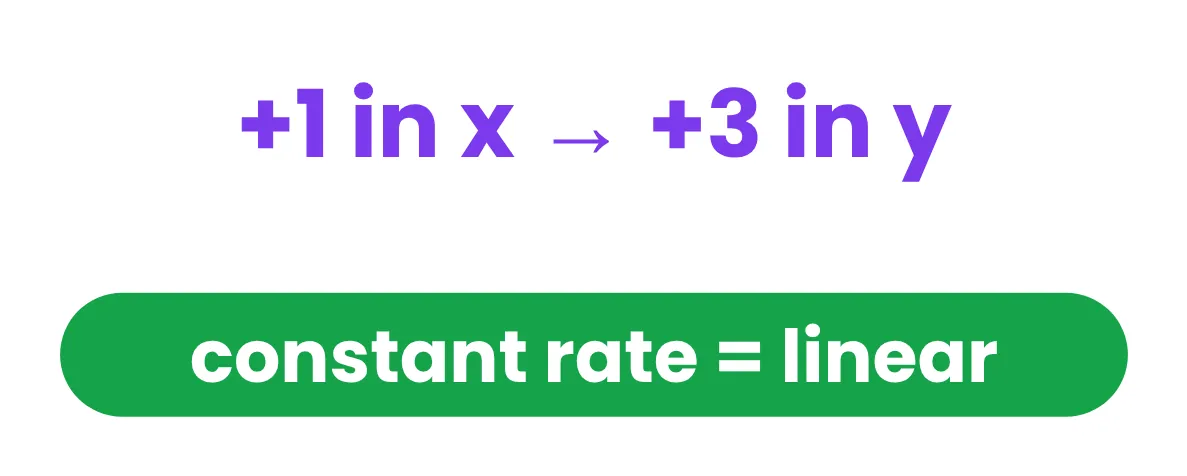
Each time x goes up 1, y goes up 3. That constant rate of change is the slope.
A linear function always has a constant rate of change.
+1 in x → +3 in y
constant rate = linear
4. Is it a function?
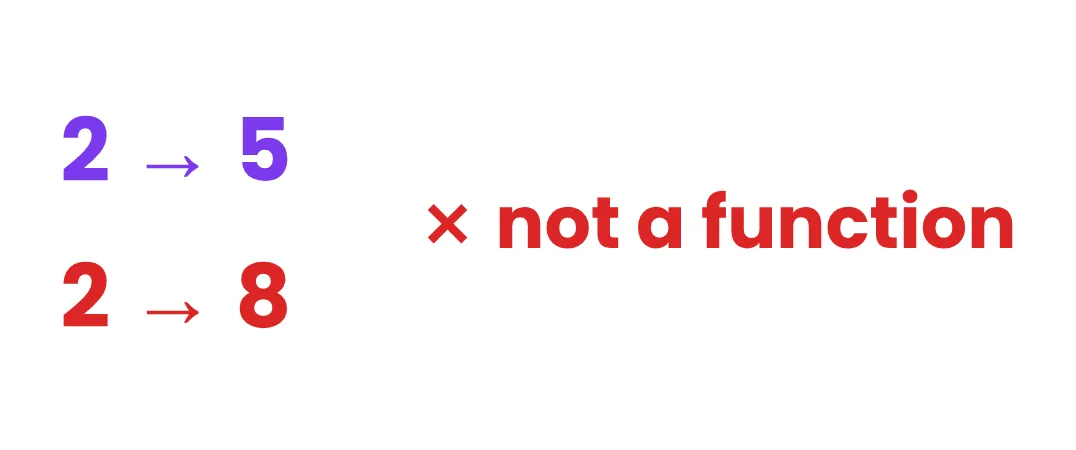
If one input has two different outputs, it's not a function.
x = 2 giving y = 5 and y = 8 breaks the rule.
2 → 5
2 → 8
✗ not a function
5. Evaluate a function: step by step
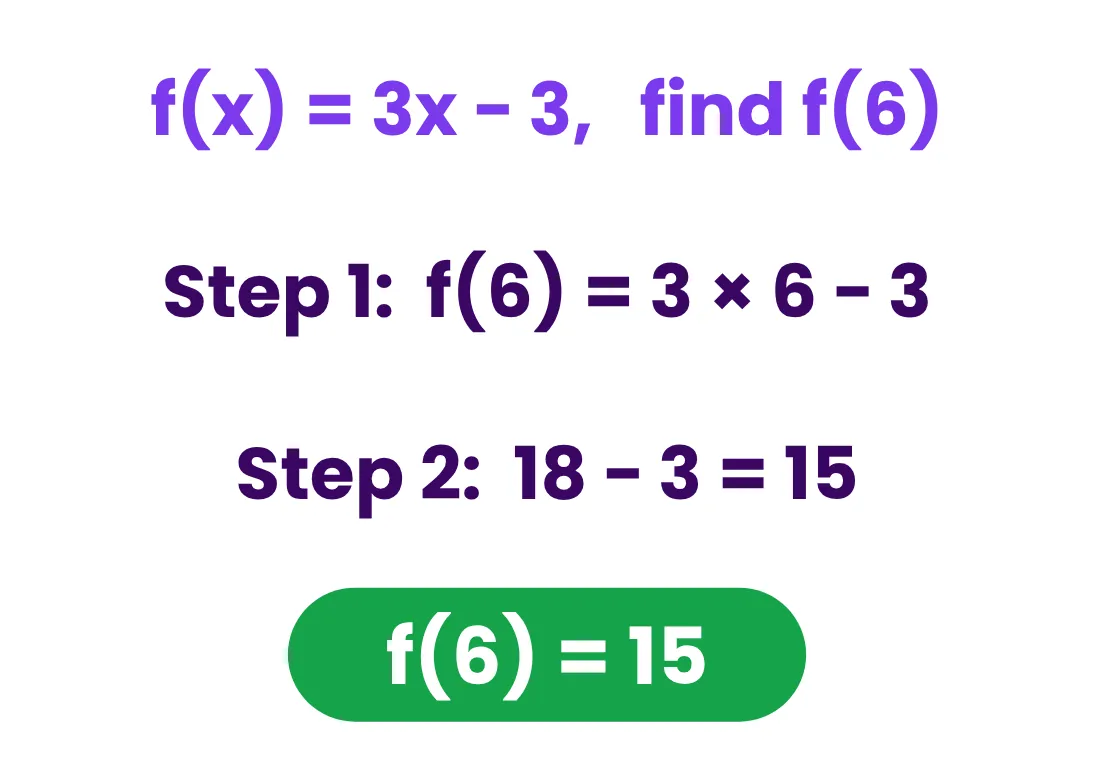
f(x) = 3x − 3. Find f(6). That means: put 6 in place of x.
Step 1. Replace x with 6: f(6) = 3 × 6 − 3.
Step 2. Multiply first: 18 − 3 = 15. So f(6) = 15.
f(x) = 3x − 3, find f(6)
Step 1: f(6) = 3 × 6 − 3
Step 2: 18 − 3 = 15
f(6) = 15
Watch out: Curves aren't linear
y = x² is a function, but not linear. Its rate of change isn't constant.
Wrong: y = x² is linear. Right: y = x² is not linear.
Your turn
For y = 4x − 2, what is the output when x is 3?
y = 4x − 2, x = 3
Answer: y = 10. 4 × 3 is 12, minus 2 is 10!
Remember
A function gives one output per input.
Linear functions have a constant rate of change and a straight-line graph.
y = mx + b
Watch the Linear Functions lesson and practice · Printable worksheet