Algebraic Expressions notes (8th Grade math)
Work with variables and expressions.
The big question
4(x − 2) + 3x
How do we make long expressions simpler? Distribute, then combine!
Learn it, step by step
1. Distribute: step by step
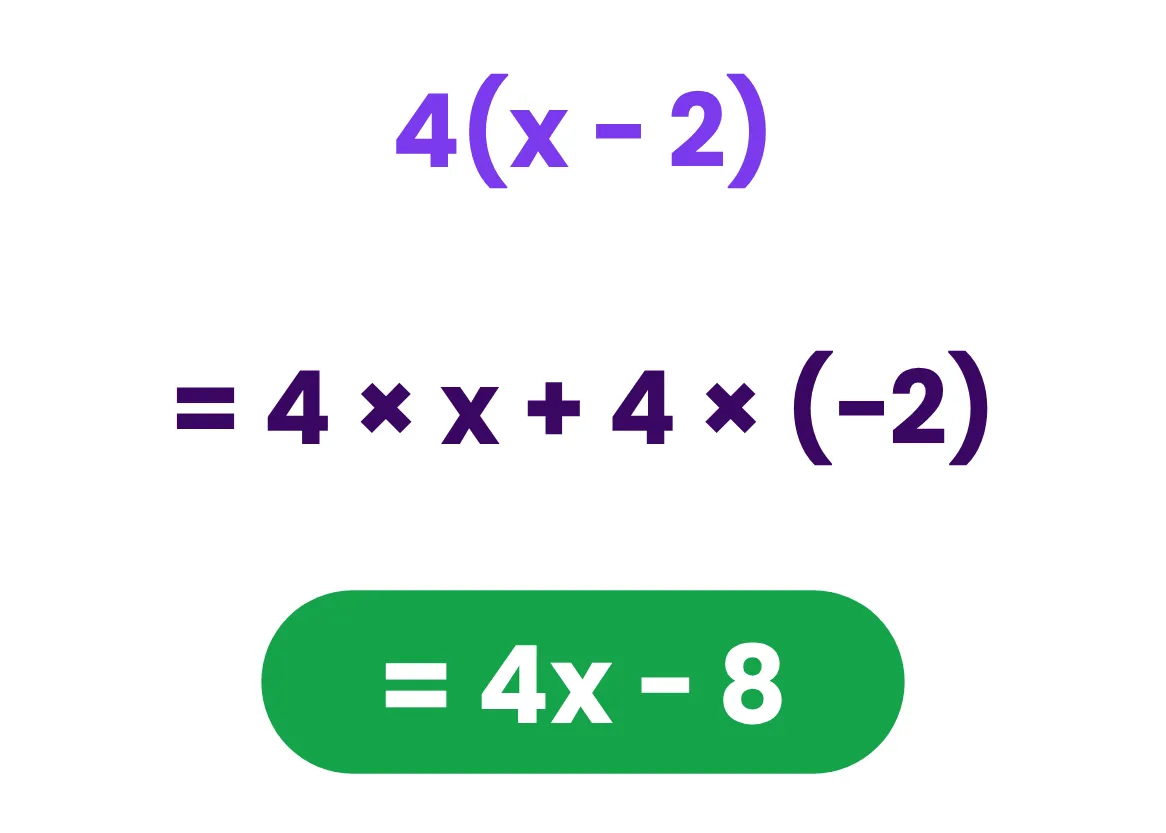
4(x − 2) means 4 times everything inside the parentheses.
4 times x is 4x.
4 times −2 is −8. So 4(x − 2) = 4x − 8.
4(x − 2)
= 4 × x + 4 × (−2)
= 4x − 8
2. Combine like terms
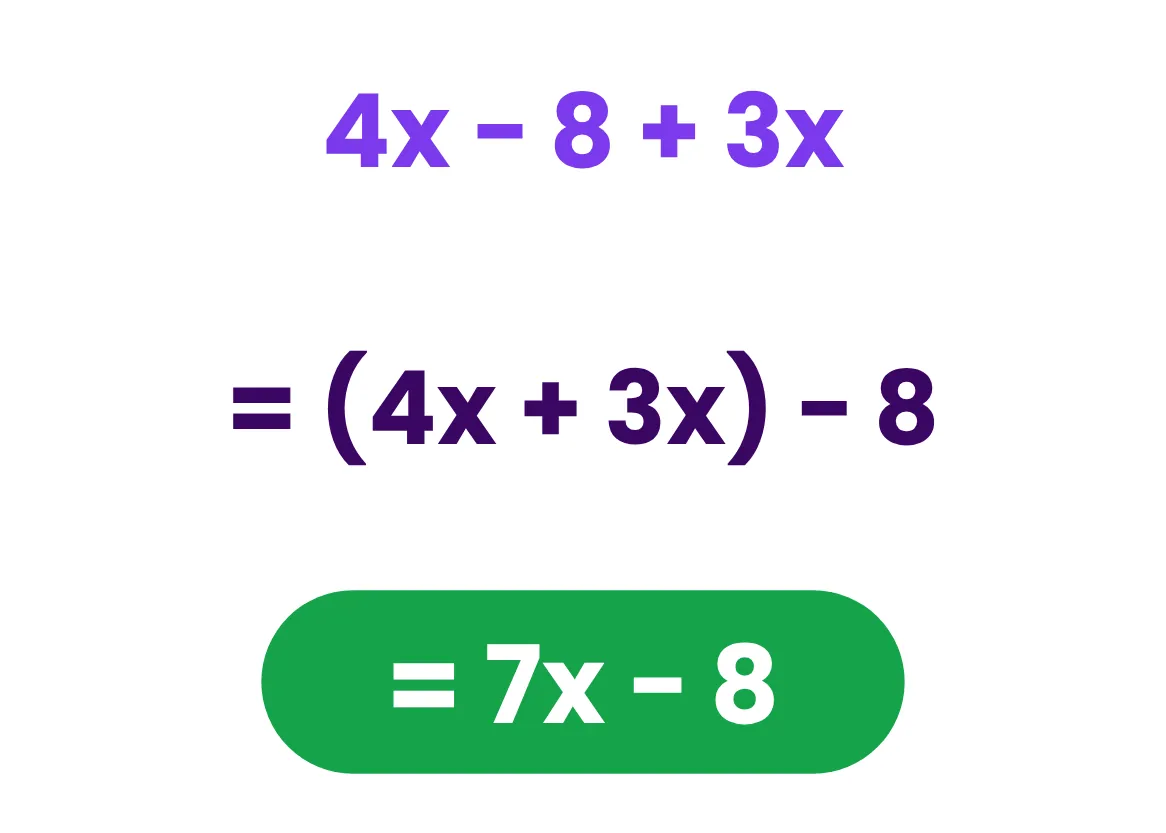
Now simplify 4x − 8 + 3x. Like terms have the same letter part.
4x and 3x are like terms: 4x + 3x = 7x.
The −8 has no partner, so it stays. The answer is 7x − 8.
4x − 8 + 3x
= (4x + 3x) − 8
= 7x − 8
3. Distributing a negative
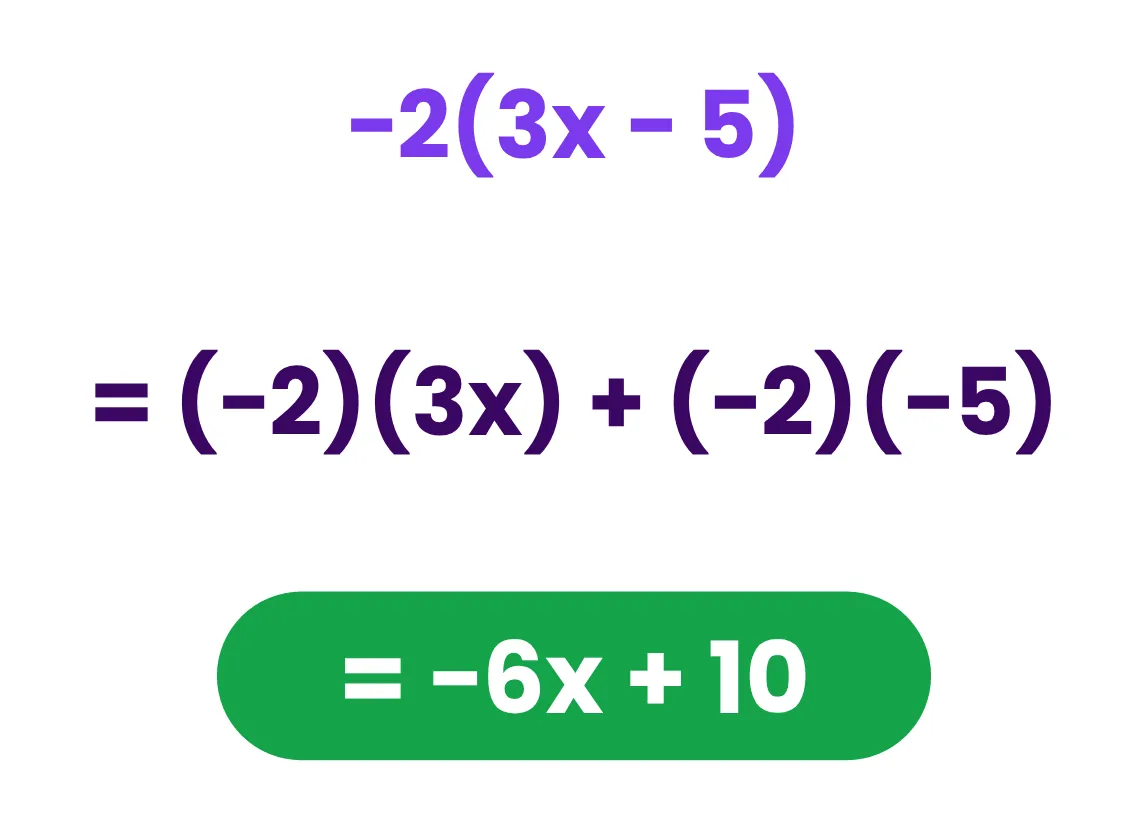
Distribute −2(3x − 5). The negative sign goes with the 2.
−2 times 3x is −6x.
−2 times −5 is +10, because two negatives make a positive. The answer is −6x + 10.
−2(3x − 5)
= (−2)(3x) + (−2)(−5)
= −6x + 10
4. Factoring out
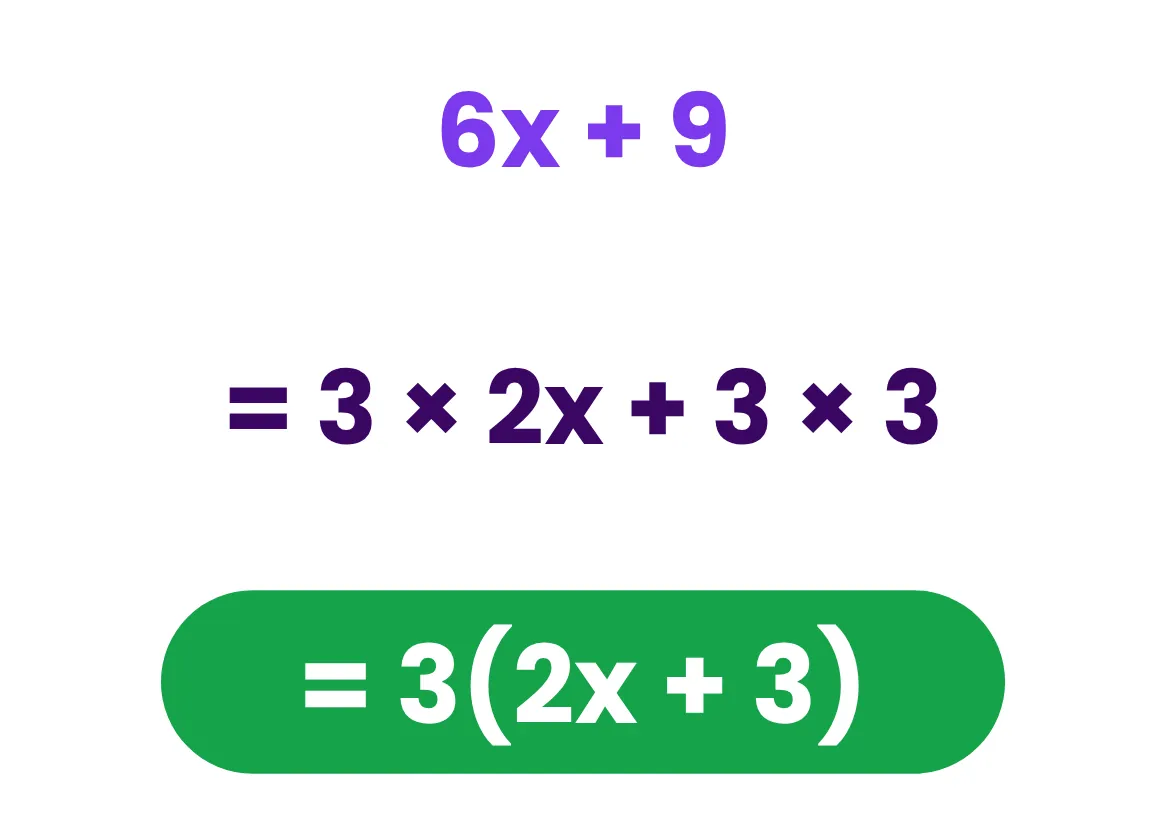
Factoring goes backwards. Take 6x + 9. What number divides both 6 and 9? 3.
6x is 3 times 2x, and 9 is 3 times 3.
Pull the 3 out in front: 6x + 9 = 3(2x + 3).
6x + 9
= 3 × 2x + 3 × 3
= 3(2x + 3)
5. Solve an equation: step by step
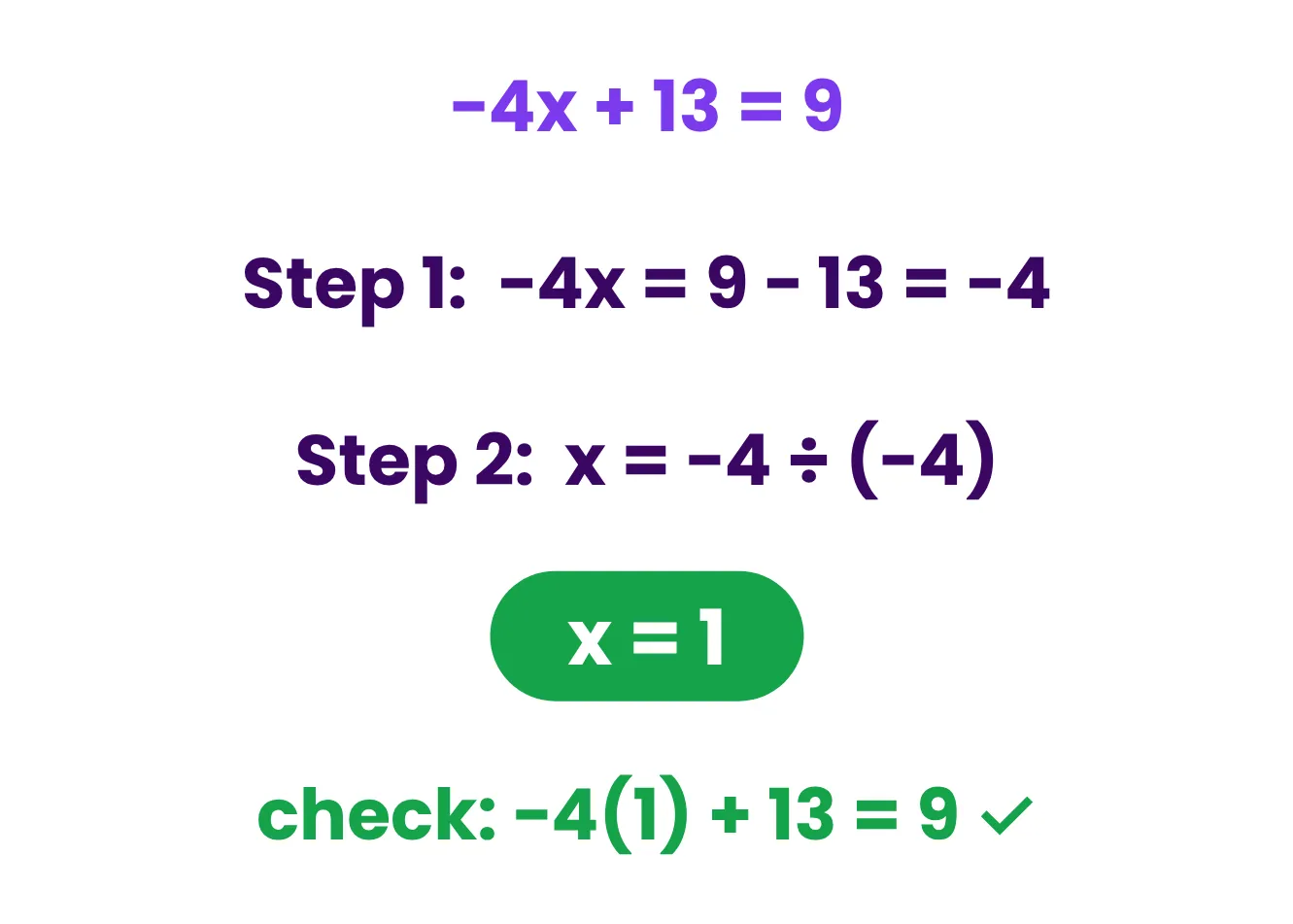
Now use these skills to solve an equation: −4x + 13 = 9.
Step 1. Subtract 13 from both sides: −4x = −4.
Step 2. Divide both sides by −4: x = 1.
Check: −4 × 1 + 13 = 9. Correct!
−4x + 13 = 9
Step 1: −4x = 9 − 13 = −4
Step 2: x = −4 ÷ (−4)
x = 1
check: −4(1) + 13 = 9 ✓
6. Smallest whole number: step by step
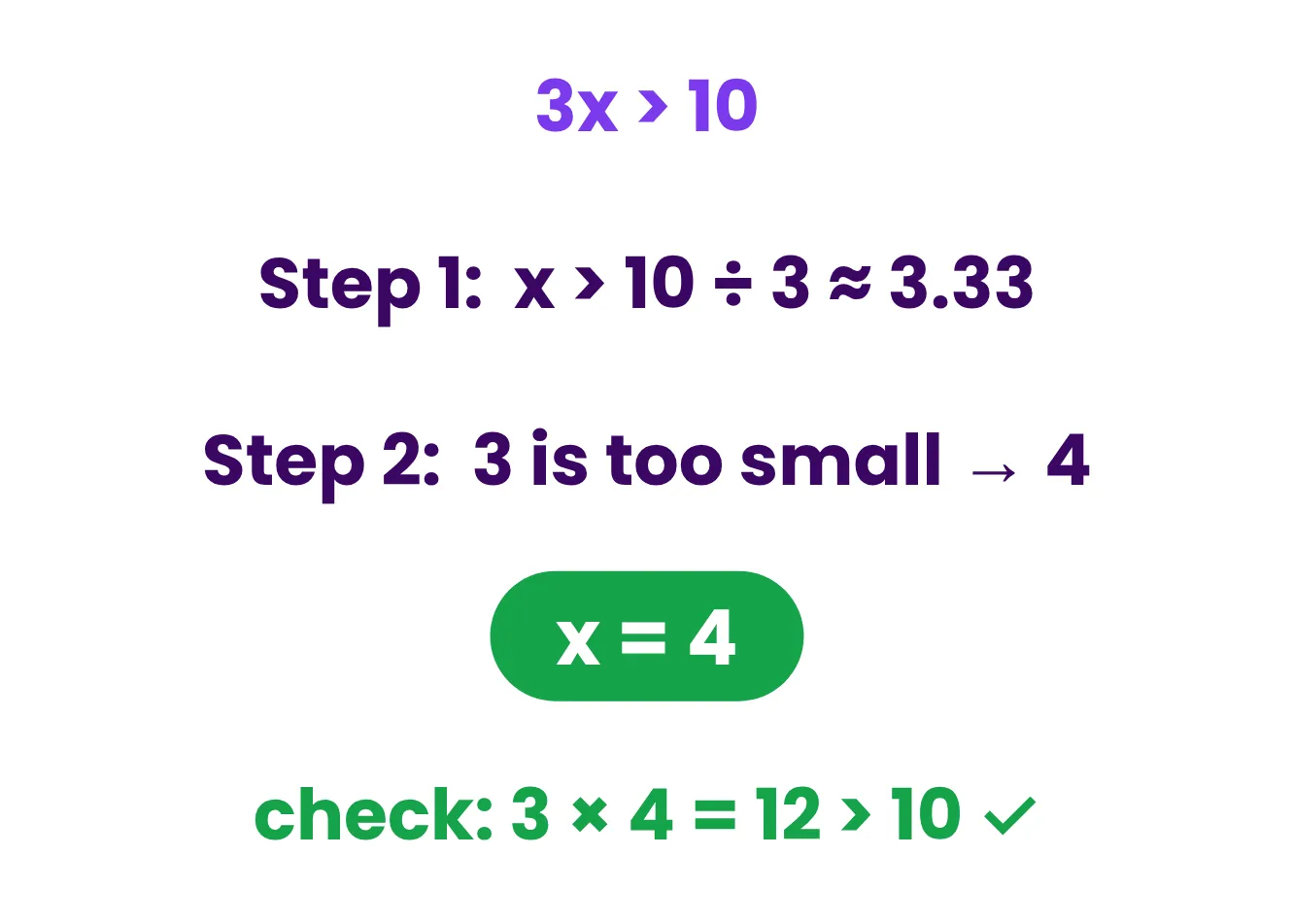
3x > 10. What is the smallest whole number that works?
Step 1. Divide both sides by 3: x > 3.33.
Step 2. 3 is too small, so go up to the next whole number: 4.
Check: 3 × 4 = 12, and 12 is greater than 10.
3x > 10
Step 1: x > 10 ÷ 3 ≈ 3.33
Step 2: 3 is too small → 4
x = 4
check: 3 × 4 = 12 > 10 ✓
7. Variables on both sides: step by step
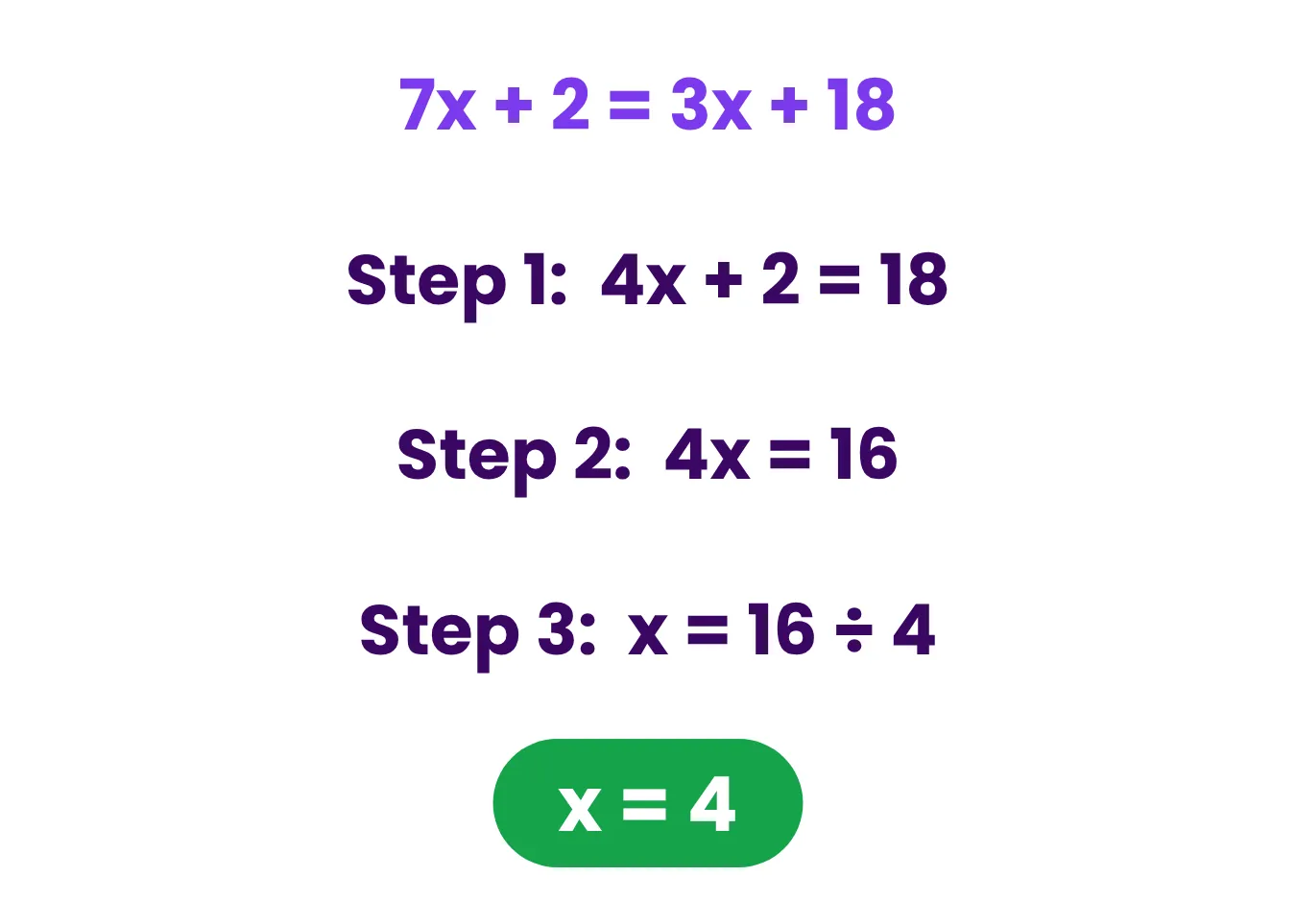
7x + 2 = 3x + 18. Get the x terms together first.
Step 1. Subtract 3x from both sides: 4x + 2 = 18.
Step 2. Subtract 2 from both sides: 4x = 16.
Step 3. Divide by 4: x = 4.
7x + 2 = 3x + 18
Step 1: 4x + 2 = 18
Step 2: 4x = 16
Step 3: x = 16 ÷ 4
x = 4
8. Distribute, then solve: step by step
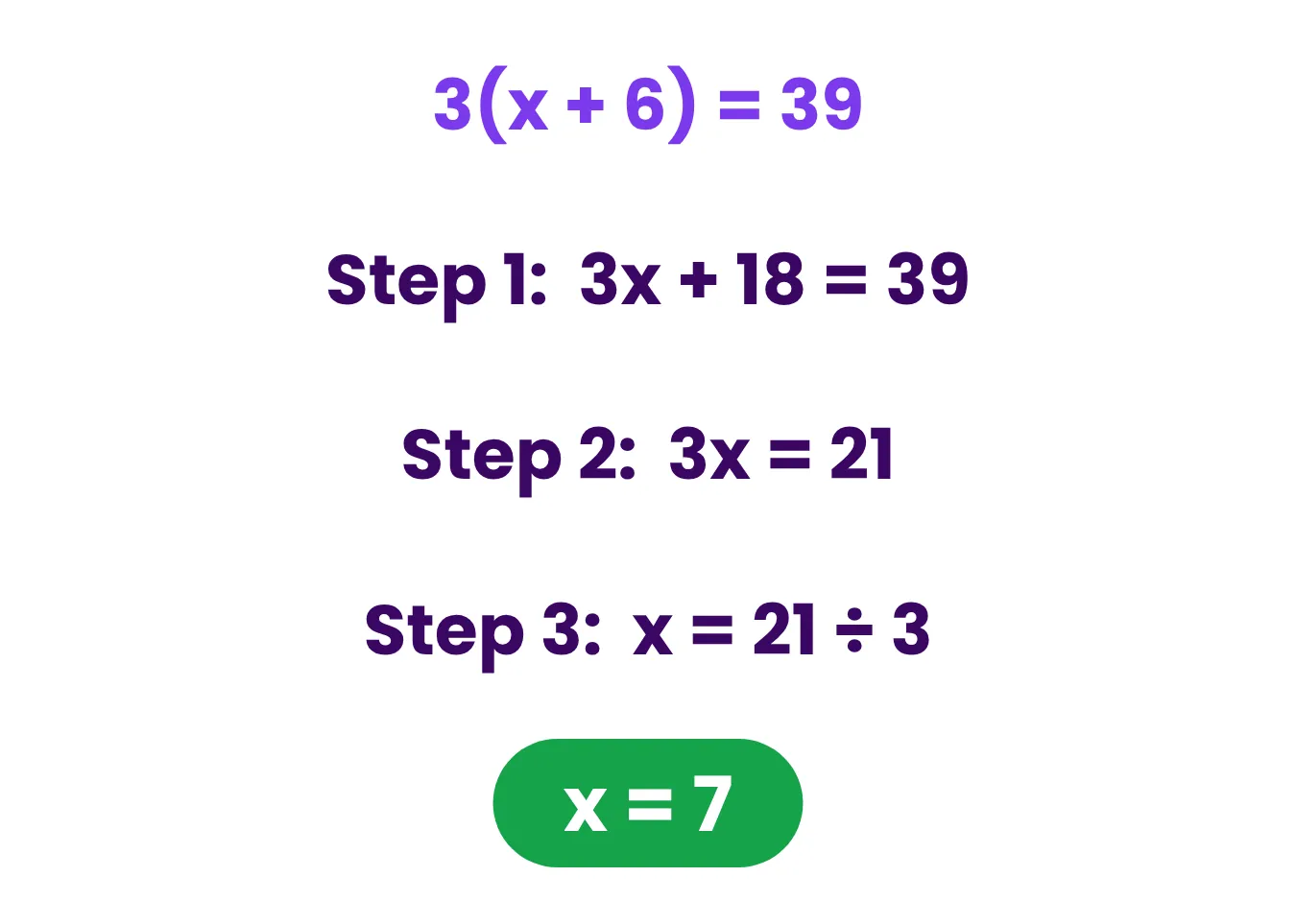
3(x + 6) = 39.
Step 1. Distribute the 3: 3x + 18 = 39.
Step 2. Subtract 18 from both sides: 3x = 21.
Step 3. Divide by 3: x = 7.
3(x + 6) = 39
Step 1: 3x + 18 = 39
Step 2: 3x = 21
Step 3: x = 21 ÷ 3
x = 7
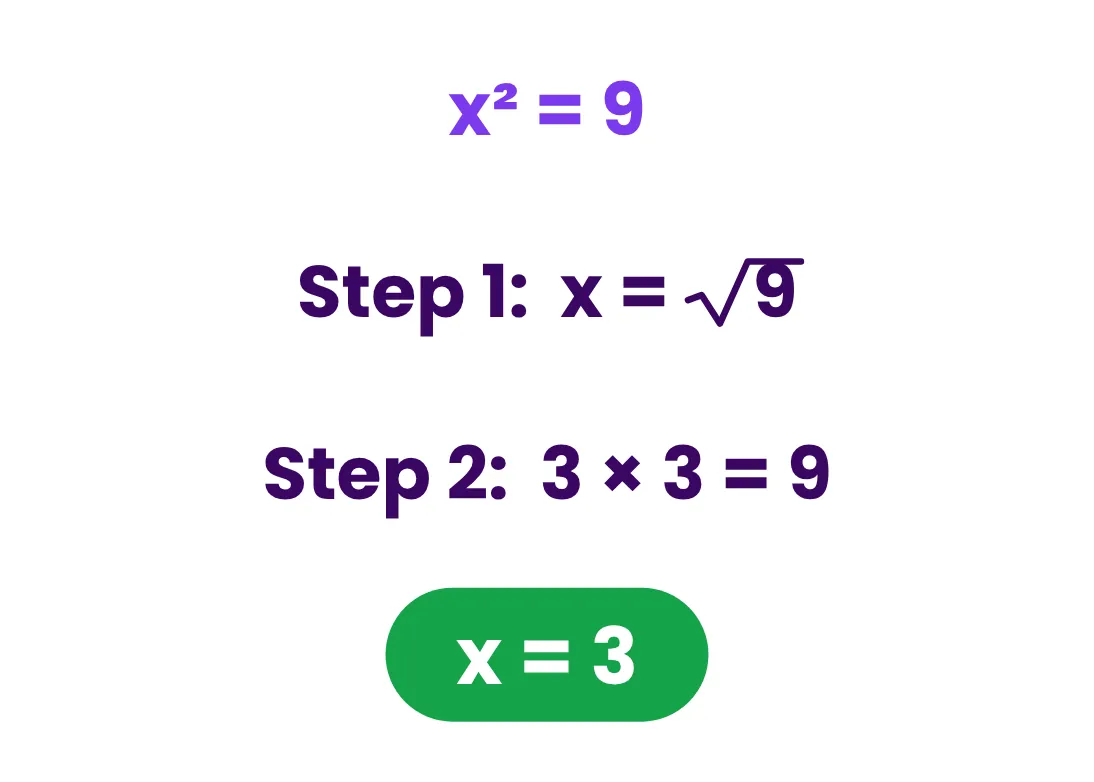
9. Solve x² = 9: step by step
x² = 9. Which number, times itself, makes 9?
Step 1. Undo the square with a square root: x = √9.
Step 2. 3 × 3 = 9, so the positive value is x = 3.
x² = 9
Step 1: x = √9
Step 2: 3 × 3 = 9
x = 3
Watch out: Distribute to every term
4(x − 2) is 4x − 8, not 4x − 2. Multiply every term inside.
Wrong: 4(x − 2) = 4x − 2. Right: 4(x − 2) = 4x − 8.
Your turn
Simplify 5(y + 2) − 2y.
5(y + 2) − 2y
Answer: = 3y + 10. Combine the y terms: 5y − 2y = 3y. The answer is 3y + 10!
Remember
Step 1. Distribute to every term inside the parentheses.
Step 2. Watch the signs.
Step 3. Combine like terms.
1. distribute to every term
2. watch the signs
3. combine like terms
3(x + 4) − x = 3x + 12 − x = 2x + 12
Watch the Algebraic Expressions lesson and practice · Printable worksheet