Volume of 3D Shapes notes (7th Grade math)
Calculate volume of prisms, cylinders, cones, and spheres.
The big question
V = Bh
Is there one formula for many solids? Base area times height!
Learn it, step by step
1. First: volume of a box
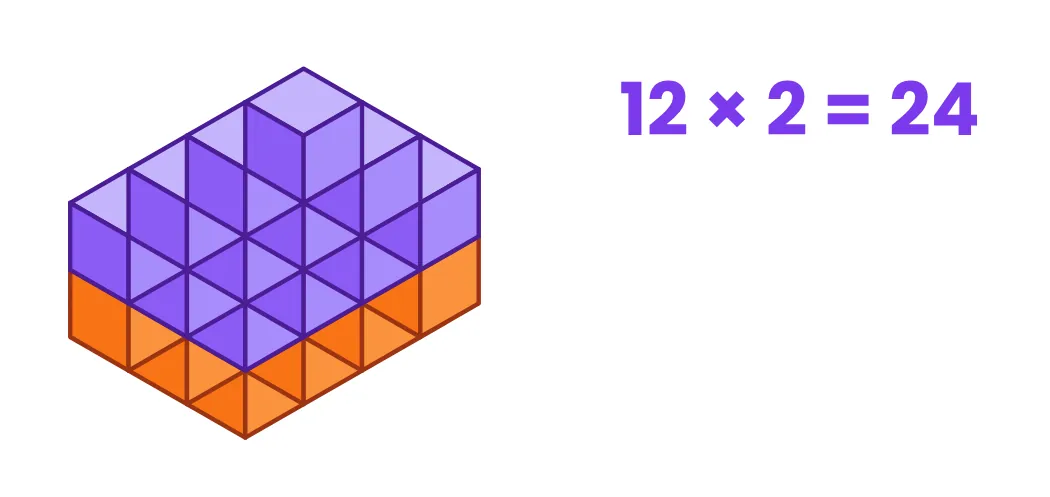
A box 4 by 3 by 2 holds 4 × 3 = 12 cubes per layer, and 2 layers: 24 cubes.
12 × 2 = 24
2. Base times height
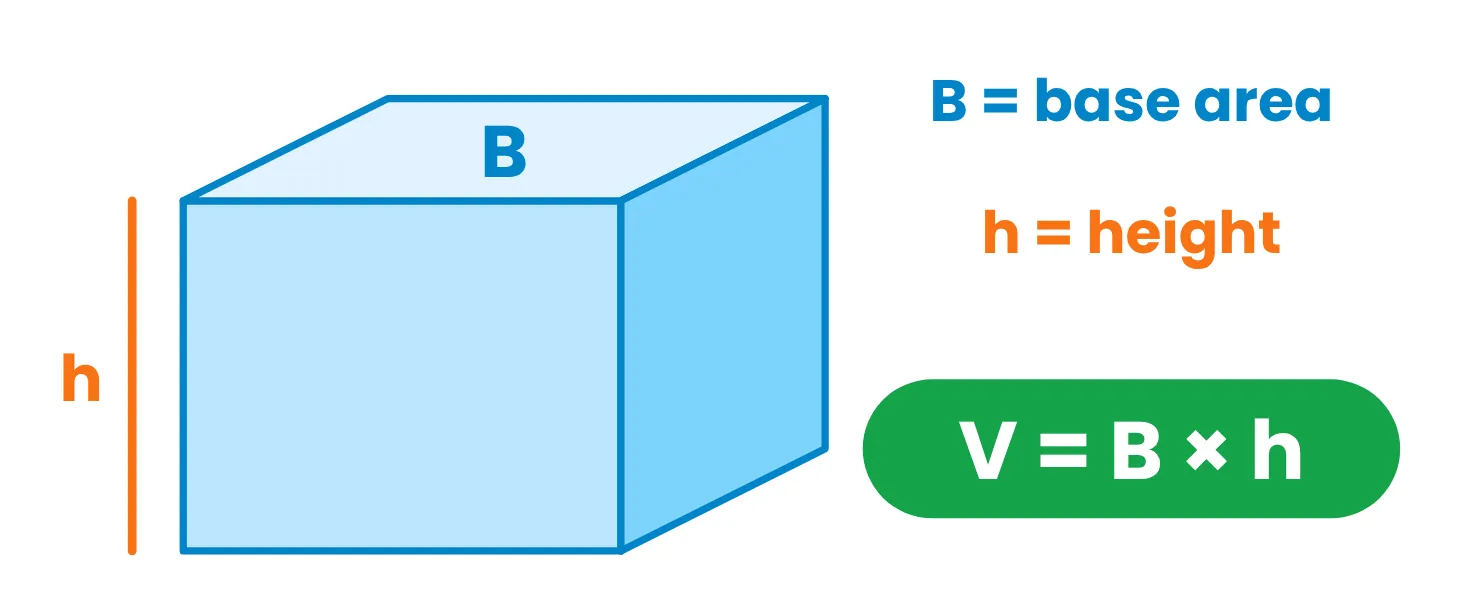
The base area, B, is the area of the bottom face. Think of it as one layer.
Stack that layer up to the height, h. So V = B × h.
This works for any prism, and for cylinders too.
B = base area
h = height
V = B × h
3. Box: step by step
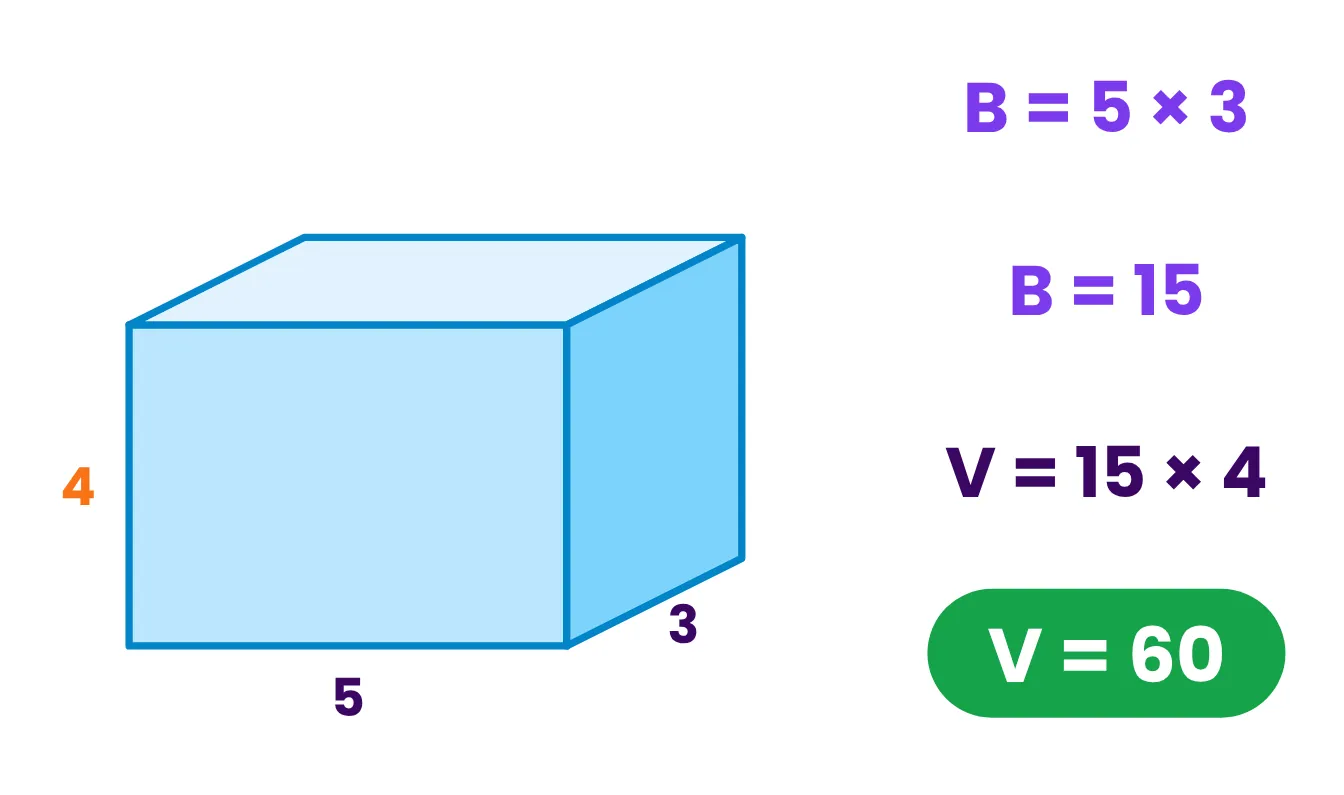
A box is 5 long, 3 wide and 4 high. Step 1. Find the base area: B = 5 × 3 = 15.
Step 2. Multiply by the height: V = 15 × 4 = 60 cubic units.
B = 5 × 3
B = 15
V = 15 × 4
V = 60
4. Triangular prism: step by step
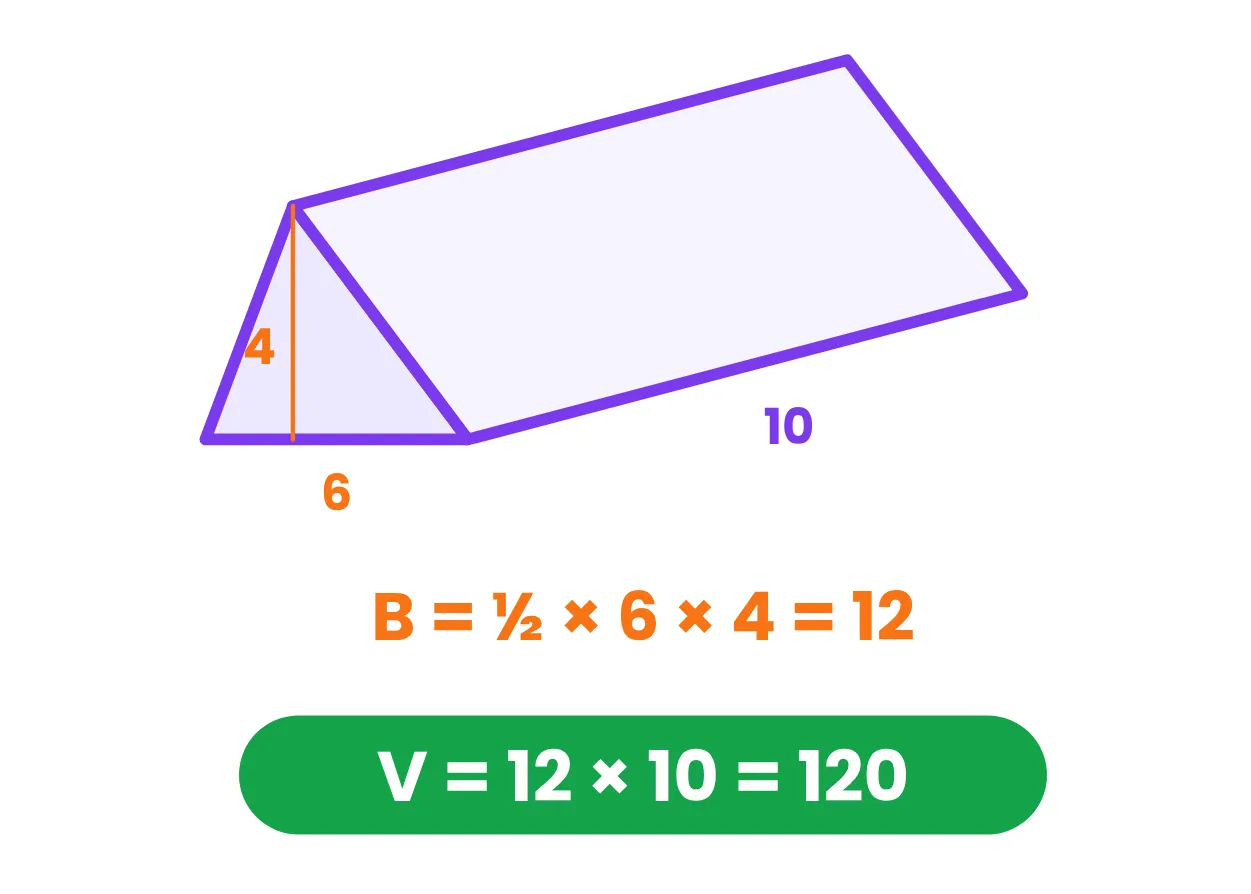
The base is a triangle with base 6 and height 4. Step 1. Find its area: half of 6 × 4 is 12.
Step 2. The prism is 10 long. Multiply: V = 12 × 10 = 120 cubic units.
B = ½ × 6 × 4 = 12
V = 12 × 10 = 120
5. Cylinder: step by step
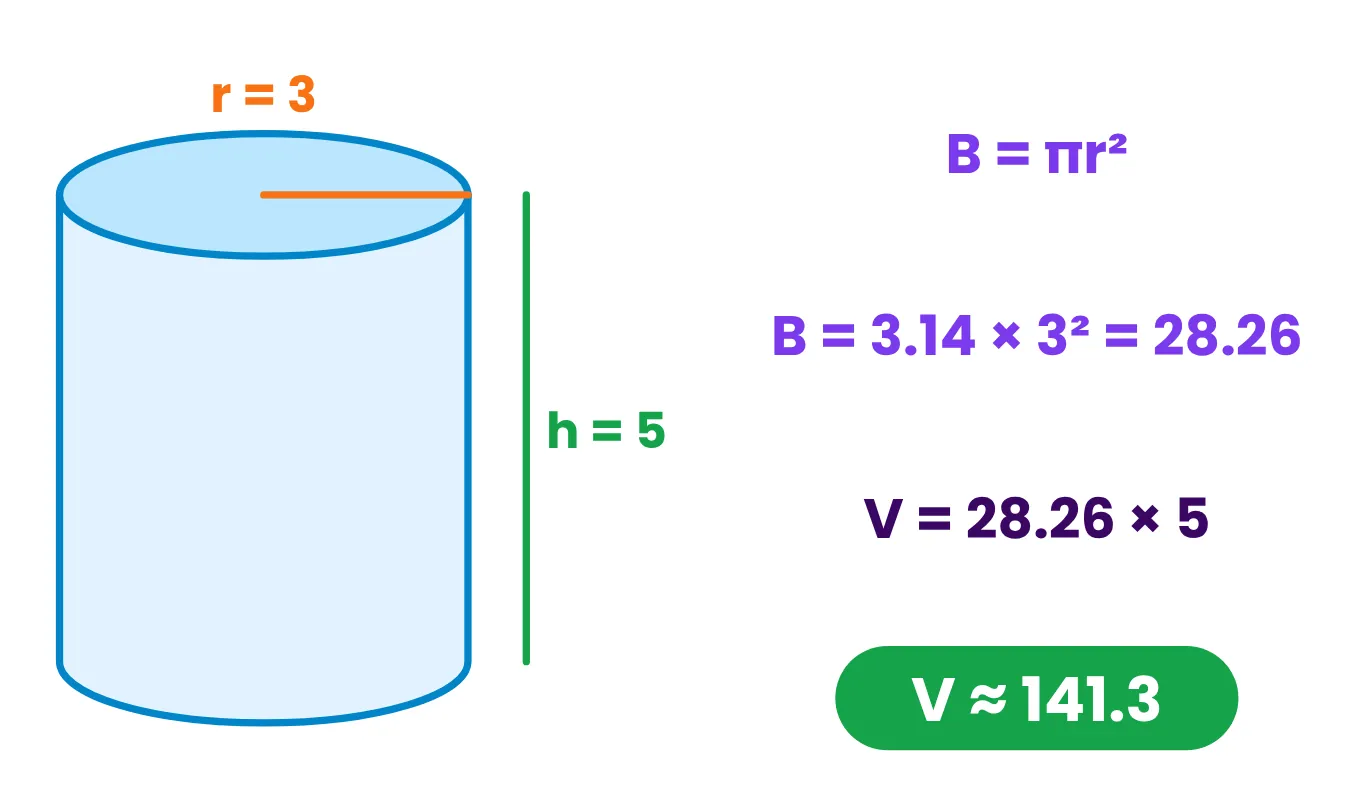
A cylinder's base is a circle, so B = π r². With radius 3: 3.14 × 9 = 28.26.
Multiply by the height, 5: V = 28.26 × 5, about 141.3 cubic units.
r = 3
h = 5
B = πr²
B = 3.14 × 3² = 28.26
V = 28.26 × 5
V ≈ 141.3
6. Pyramid: step by step
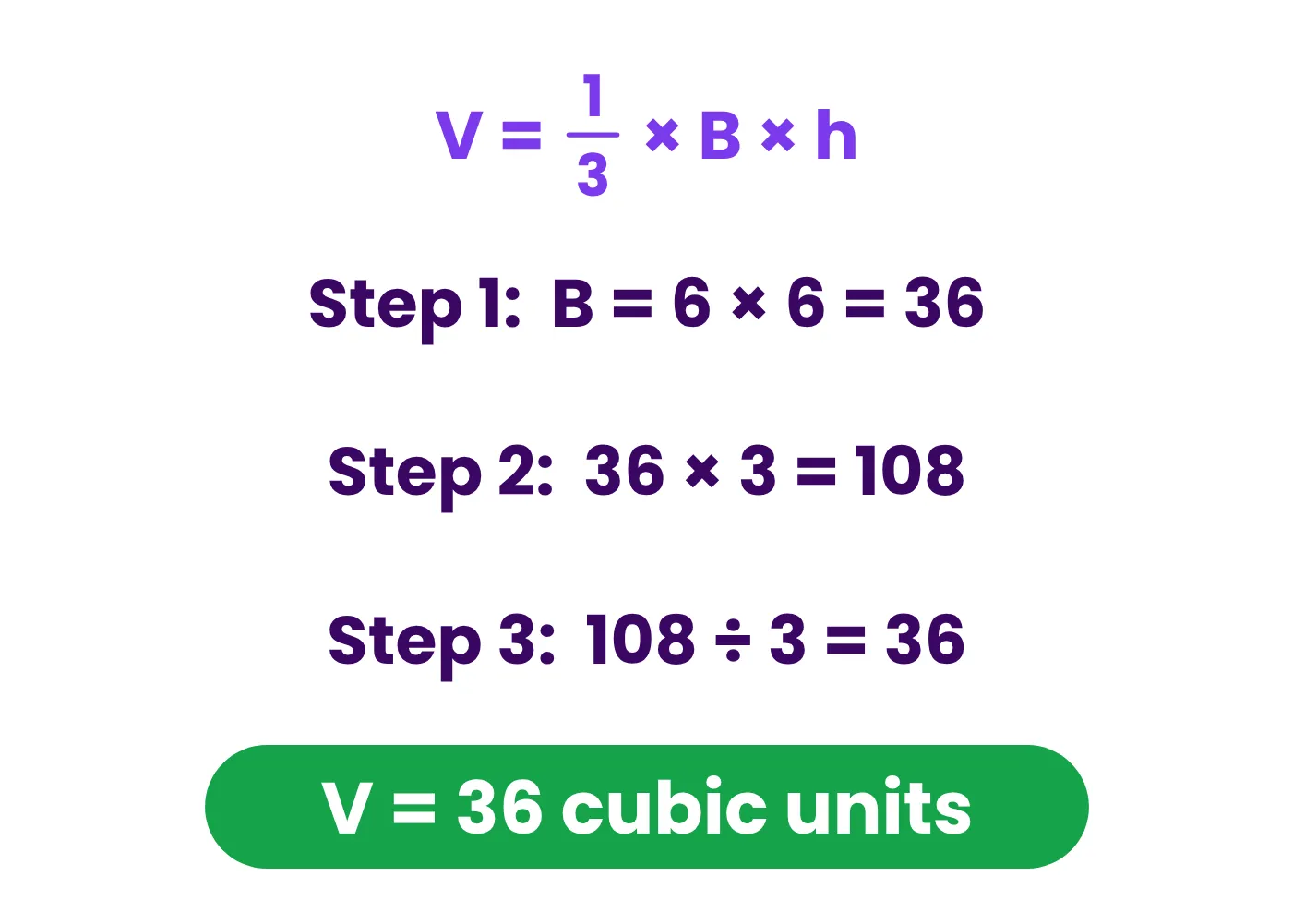
A pyramid holds one third as much as a prism with the same base and height. So the volume is one third of B × h.
A square pyramid has a 6 by 6 base and height 3. Step 1. Find the base area: B = 6 × 6 = 36.
Step 2. Multiply by the height: 36 × 3 = 108.
Step 3. Take one third: 108 ÷ 3 = 36 cubic units.
V = 1/3 × B × h
Step 1: B = 6 × 6 = 36
Step 2: 36 × 3 = 108
Step 3: 108 ÷ 3 = 36
V = 36 cubic units
Watch out: B is an area
B is the area of the base, not one of its sides. For a triangle base, use ½ × b × h first.
Wrong: B = 6. Right: B = ½ × 6 × 4 = 12.
Your turn
A box is 6 long, 2 wide and 5 high. Find its volume.
V = B × h
Answer: V = 60. Times the height: 12 × 5 = 60 cubic units!
Remember
Prisms and cylinders: V = base area × height.
Find the base area first: length × width for a box, half base × height for a triangle, π r² for a circle.
Answers are in cubic units.
V = B × h
box: B = l × w
triangle: B = ½ × b × h
circle: B = πr²
Watch the Volume of 3D Shapes lesson and practice · Printable worksheet