Prime & Composite notes (5th Grade math)
Identify prime and composite numbers.
The big question
7 or 8?
Why are some numbers special? Prime numbers!
Learn it, step by step
1. Prime: only one rectangle
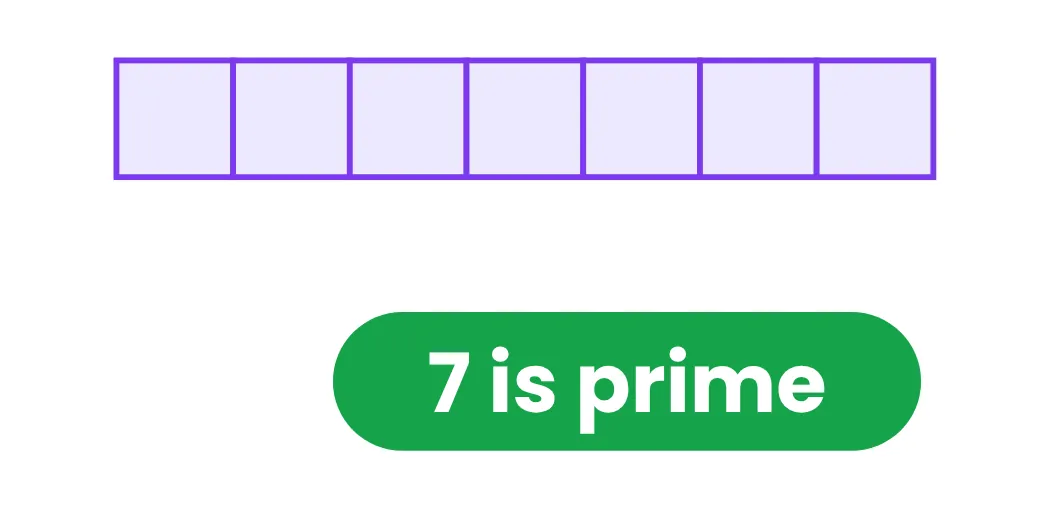
Try to arrange 7 tiles in a rectangle. The only way is 1 row of 7.
7 has exactly two factors, 1 and 7. It is prime.
7 is prime
2. Composite: more rectangles
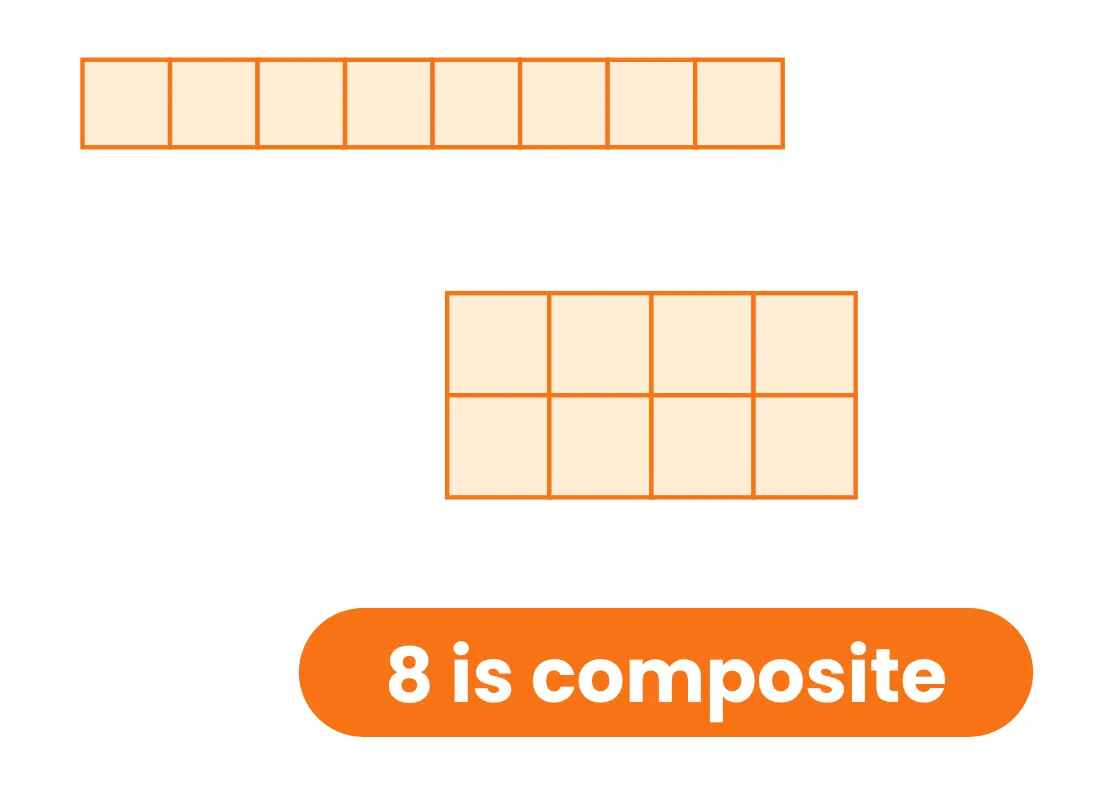
8 tiles can make 1 by 8, or 2 by 4.
8 has more than two factors: 1, 2, 4, 8. It is composite.
8 is composite
3. Primes up to 20
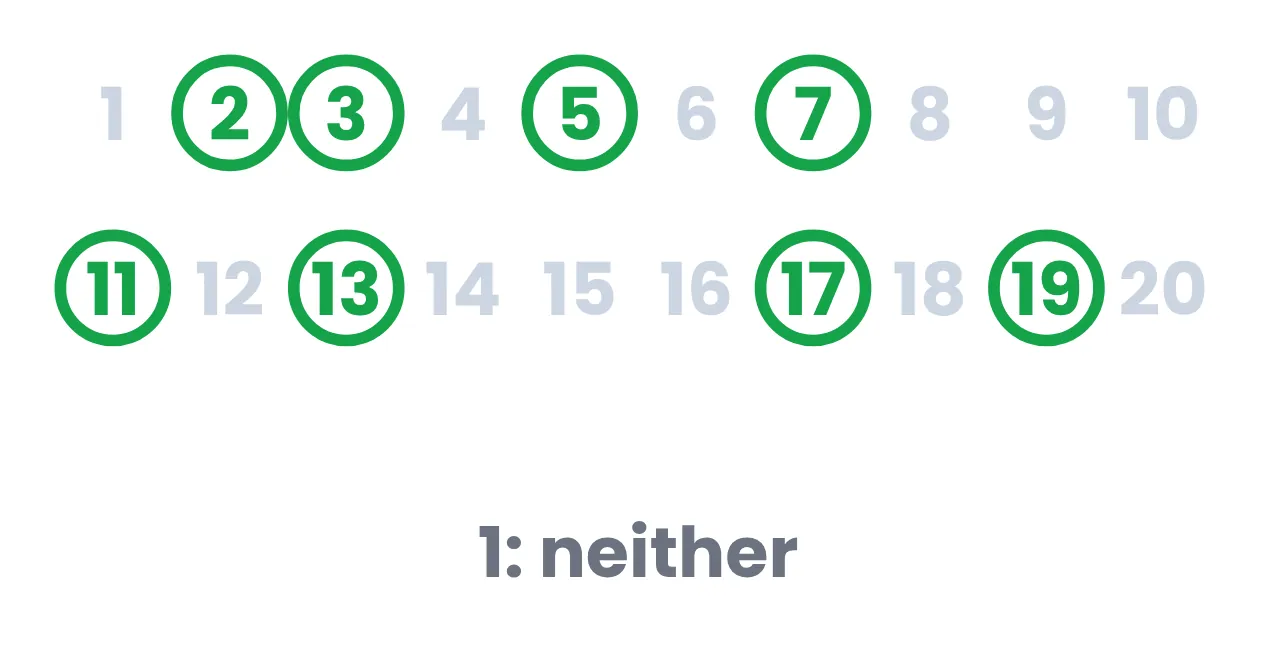
The primes up to 20 are 2, 3, 5, 7, 11, 13, 17 and 19.
1 is special: it is neither prime nor composite. 2 is the only even prime.
1: neither
Watch out: Odd does not mean prime
9 is odd, but 3 × 3 = 9. It is composite. Always check for factors.
Wrong: 9 is odd, so prime. Right: 9 = 3 × 3: composite.
Your turn
Is 15 prime or composite?
Answer: composite: 3 × 5. 3 × 5 = 15. It has more factors, so 15 is composite!
Remember
Prime: exactly two factors, 1 and itself.
Composite: more than two factors.
2 3 5 7 11 13
4 6 8 9 10 12
Watch the Prime & Composite lesson and practice · Printable worksheet