Fractions notes (5th Grade math)
Add, subtract, and compare fractions.
The big question
⅔ + ¼
How do we add fractions with different denominators? Make the pieces match!
Learn it, step by step
1. First: equal-size pieces
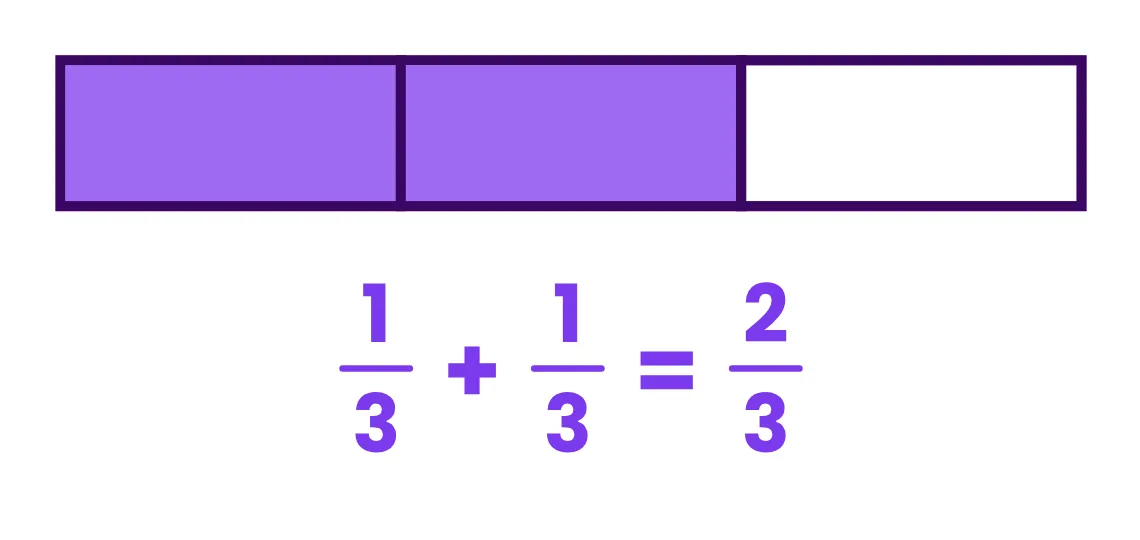
To add fractions, the pieces must be the same size.
1 third plus 1 third is 2 thirds, because thirds are the same size.
1/3 + 1/3 = 2/3
2. Different pieces
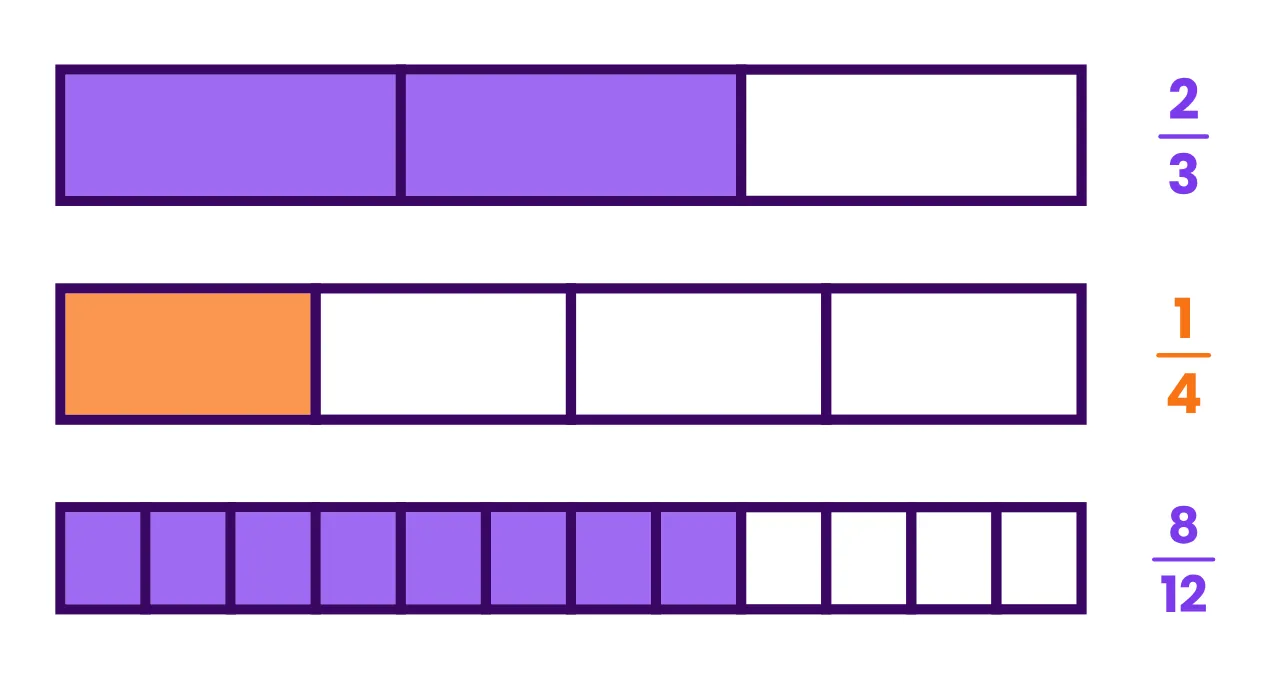
2 thirds and 1 fourth are different-sized pieces.
Cut both into twelfths: thirds into 4 pieces each, fourths into 3 pieces each.
2/3
1/4
8/12
3. Add the twelfths
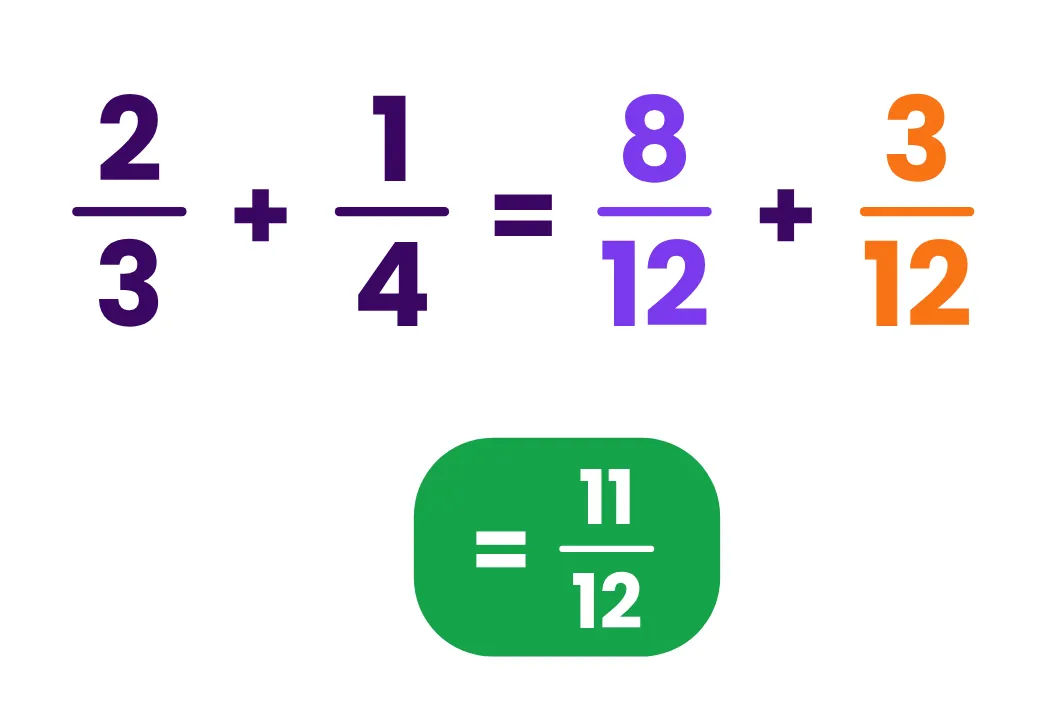
2 thirds is 8 twelfths. 1 fourth is 3 twelfths.
8 plus 3 is 11. The sum is 11 twelfths.
2/3
1/4
8/12
3/12
= 11/12
4. Finding the common denominator
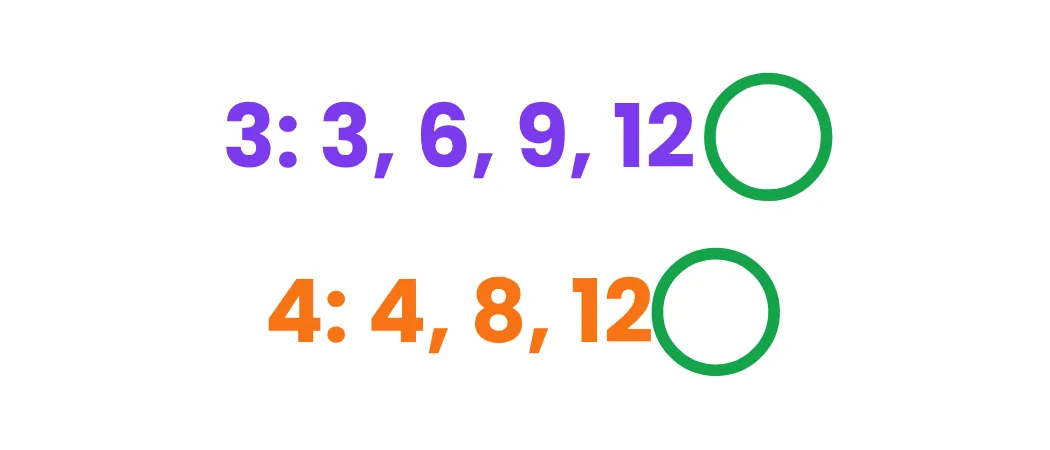
Look for a number both denominators go into. Multiples of 3: 3, 6, 9, 12. Multiples of 4: 4, 8, 12.
12 is the first one they share: the least common denominator.
3: 3, 6, 9, 12
4: 4, 8, 12
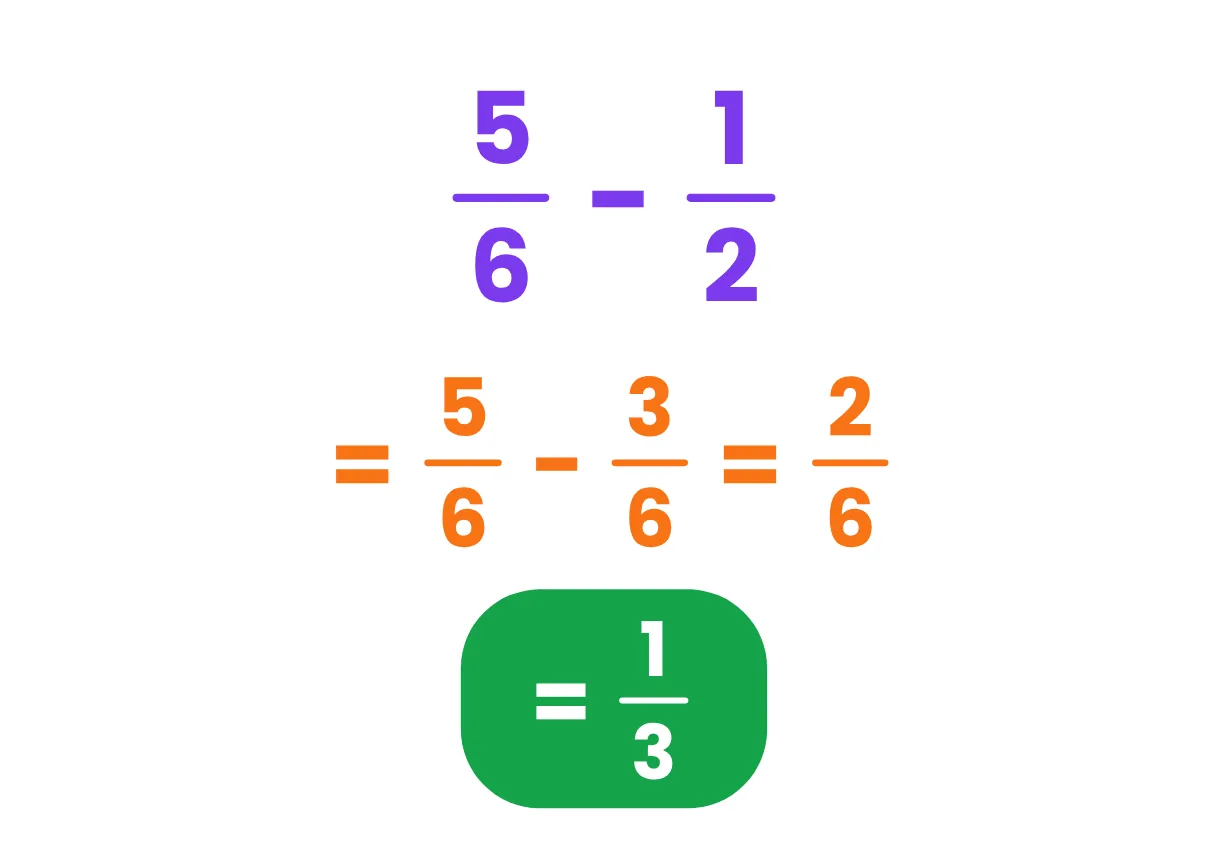
5. Subtracting works the same way
5 sixths minus 1 half: change the half to sixths, 3 sixths.
5 sixths minus 3 sixths is 2 sixths, which simplifies to 1 third.
5/6 − 1/2
= 5/6 − 3/6 = 2/6
= 1/3
6. Check with estimation
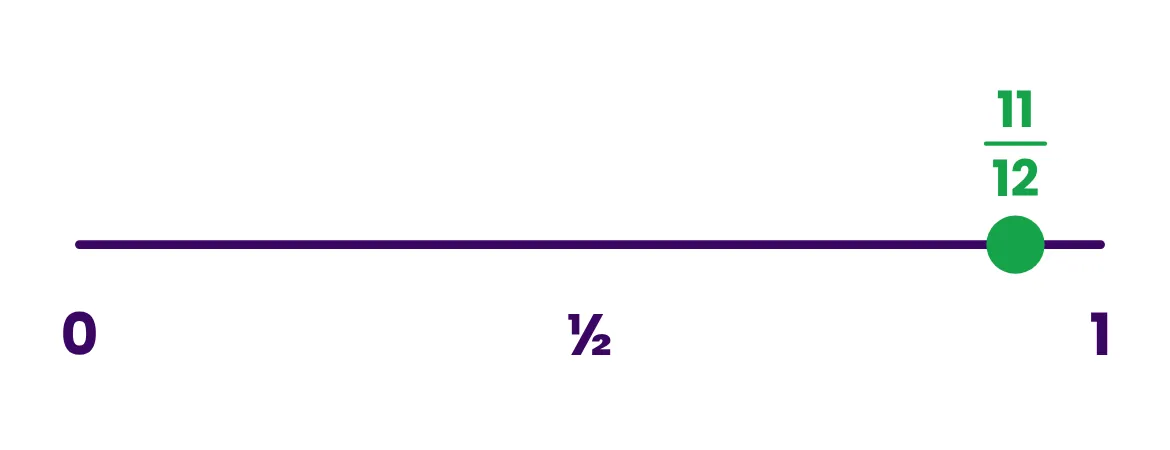
Is 11 twelfths reasonable for 2 thirds plus 1 fourth?
About two thirds plus a quarter is a bit less than 1. 11 twelfths is just under 1. Yes!
11/12
Watch out: Never add denominators
2/3 + 1/4 is not 3/7. 3/7 is less than 1/2, but we added more than 1/2! Make common denominators.
Wrong: 2/3 + 1/4 = 3/7. Right: 2/3 + 1/4 = 11/12.
Your turn
What is 3 fifths plus 1 half?
3/5 + 1/2 = ?
Answer: 11/10 = 1 1/10. 3 fifths is 6 tenths, 1 half is 5 tenths. 11 tenths, which is 1 and 1 tenth!
Remember
Find a common denominator. Rewrite each fraction.
Add or subtract the tops, keep the bottom, then simplify.
2/3 + 1/4 = 8/12 + 3/12 = 11/12
Watch the Fractions lesson and practice · Printable worksheet