Decimals notes (5th Grade math)
Work with decimal numbers.
The big question
2.5 + 1.75
How do we add and multiply decimals? Keep track of the places!
Learn it, step by step
1. First: what decimals mean
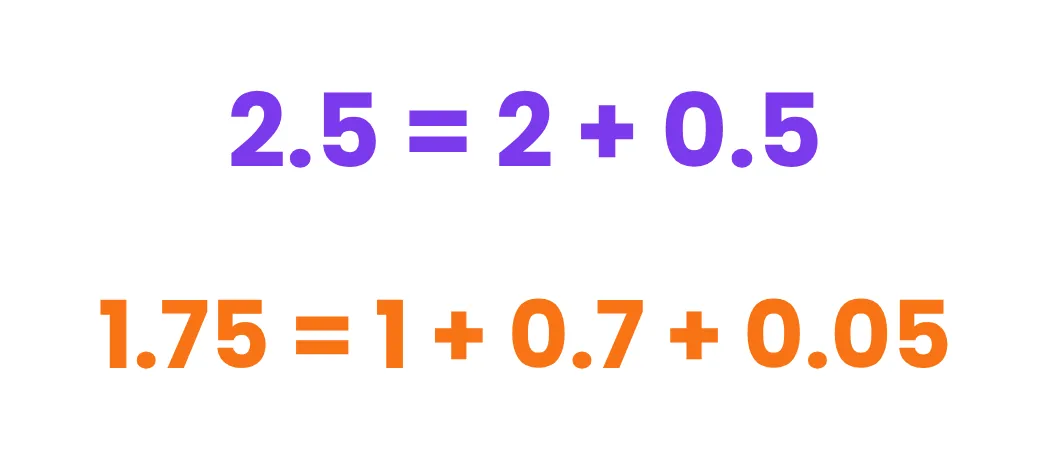
2.5 means 2 ones and 5 tenths. 1.75 means 1 one, 7 tenths, and 5 hundredths.
2.5 = 2 + 0.5
1.75 = 1 + 0.7 + 0.05
2. Adding: line up the points
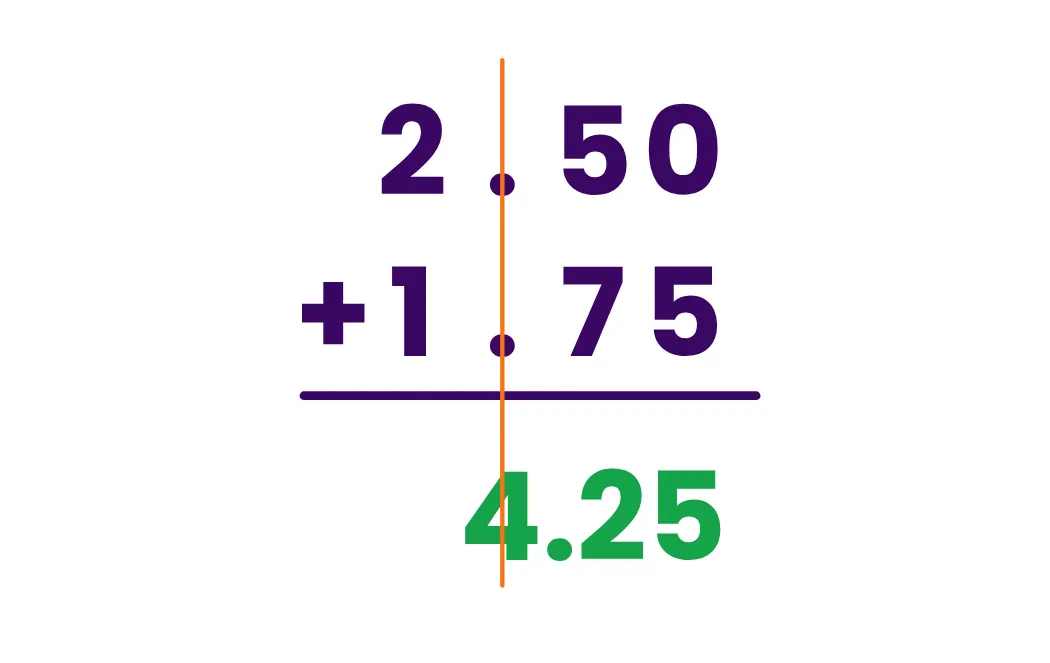
Write 2.5 as 2.50 so both have hundredths. Line up the decimal points.
Add like whole numbers: 250 plus 175 is 425. Bring the point straight down: 4.25.
3. Multiplying decimals
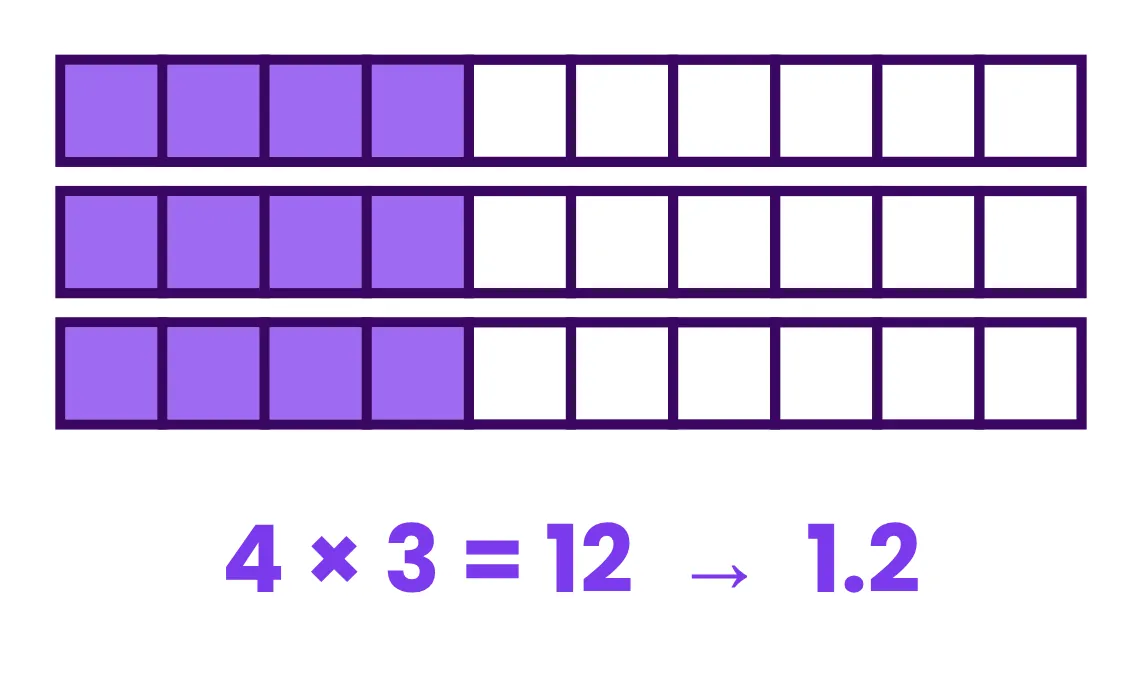
0.4 × 3: 4 tenths, three times, is 12 tenths: 1.2.
Multiply as whole numbers, 4 × 3 is 12, then count the decimal places in the factors: 1 place. So 1.2.
4 × 3 = 12 → 1.2
4. Two decimal factors
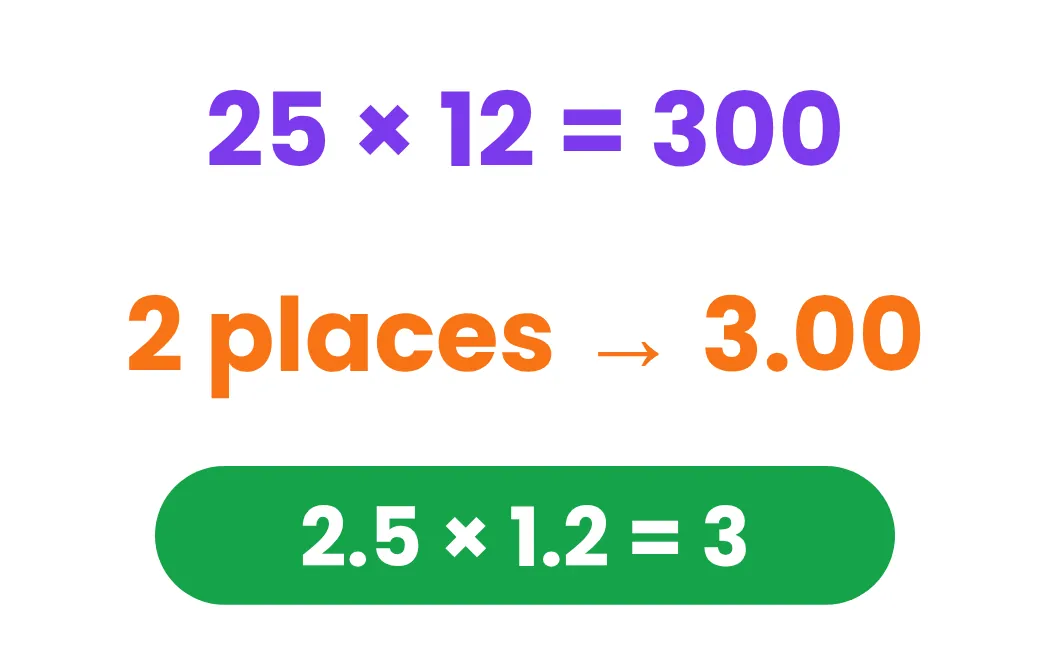
2.5 × 1.2: multiply 25 × 12 = 300.
The factors have 1 + 1 = 2 decimal places, so the answer is 3.00, which is 3.
25 × 12 = 300
2 places → 3.00
2.5 × 1.2 = 3
5. Dividing by a whole number
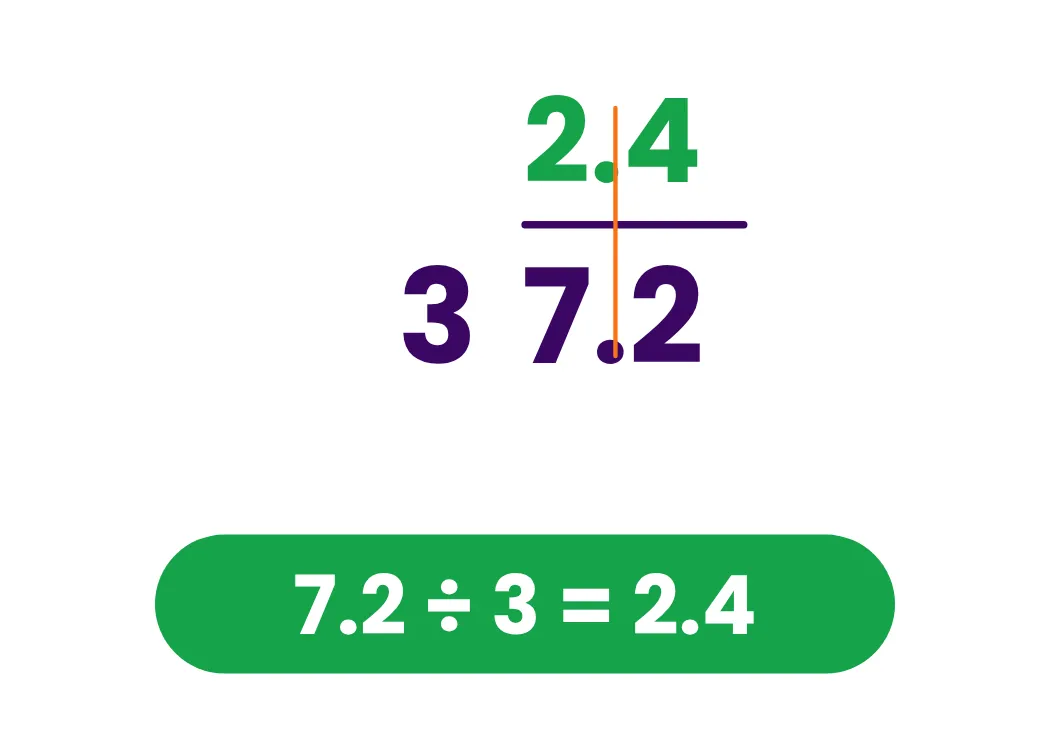
7.2 ÷ 3: divide like whole numbers, and put the point in the answer right above the point in 7.2.
7.2 ÷ 3 = 2.4.
7.2 ÷ 3 = 2.4
6. Estimate to check
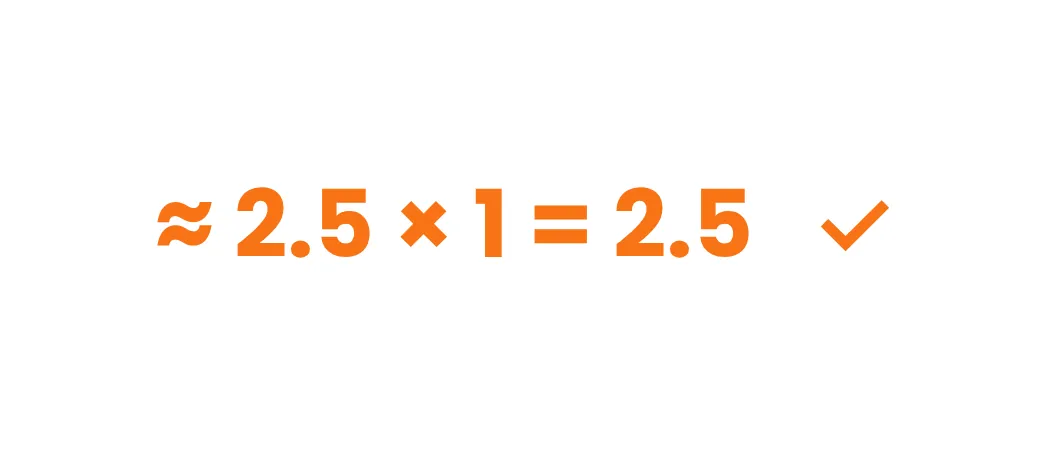
2.5 × 1.2 is about 2.5 × 1, which is 2.5. Our answer 3 is close. Good.
≈ 2.5 × 1 = 2.5 ✓
7. Decimal to percent: step by step
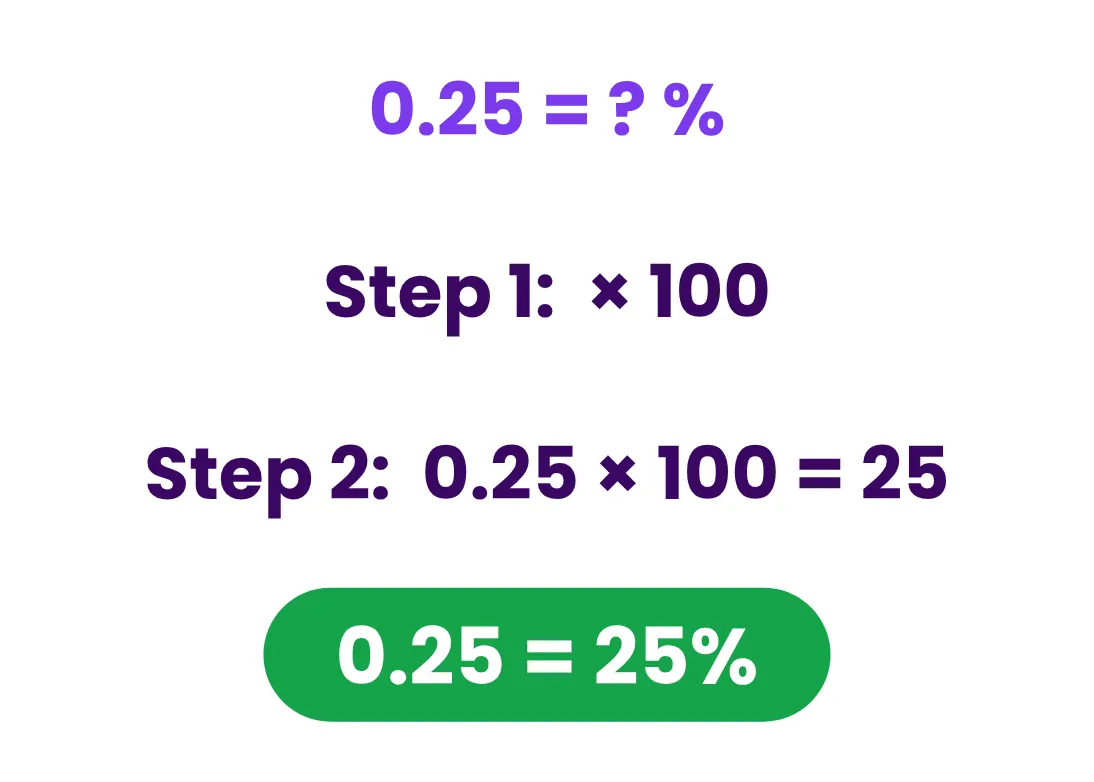
Write 0.25 as a percent.
Step 1. Percent means out of 100, so multiply by 100.
Step 2. 0.25 × 100 = 25. The decimal point moves two places to the right. That is 25 percent.
0.25 = ? %
Step 1: × 100
Step 2: 0.25 × 100 = 25
0.25 = 25%
Watch out: Line up the points, not the digits
When adding, line up the decimal points. 2.5 plus 1.75 is not 2.00 or 19.25.
Wrong: 2.5 + 1.75 = 2.00. Right: 2.50 + 1.75 = 4.25.
Your turn
What is 3.6 × 0.5?
3.6 × 0.5 = ?
Answer: 1.8. 36 × 5 is 180. Two decimal places: 1.80, which is 1.8!
Remember
Add and subtract: line up the decimal points.
Multiply: count the decimal places in the factors. Divide: put the point straight up.
2.5 × 1.2 = 3.00
Watch the Decimals lesson and practice · Printable worksheet