Fractions notes (4th Grade math)
Add, subtract, and compare fractions.
The big question
⅗ ? ⅔
How do we compare and add fractions? Let's see with fraction bars!
Learn it, step by step
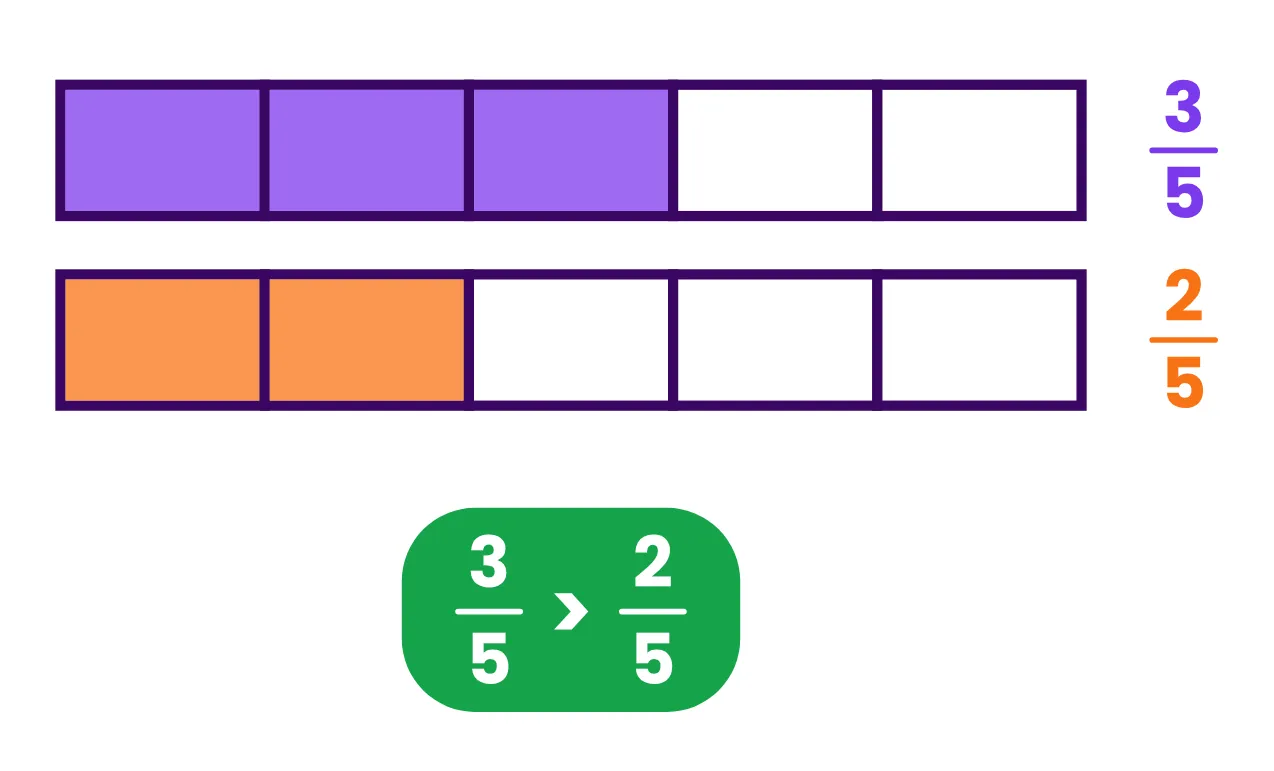
1. Same denominator
With the same bottom number, compare the tops. 3 fifths is more than 2 fifths.
The parts are the same size, so more parts is more.
3/5
2/5
3/5 > 2/5
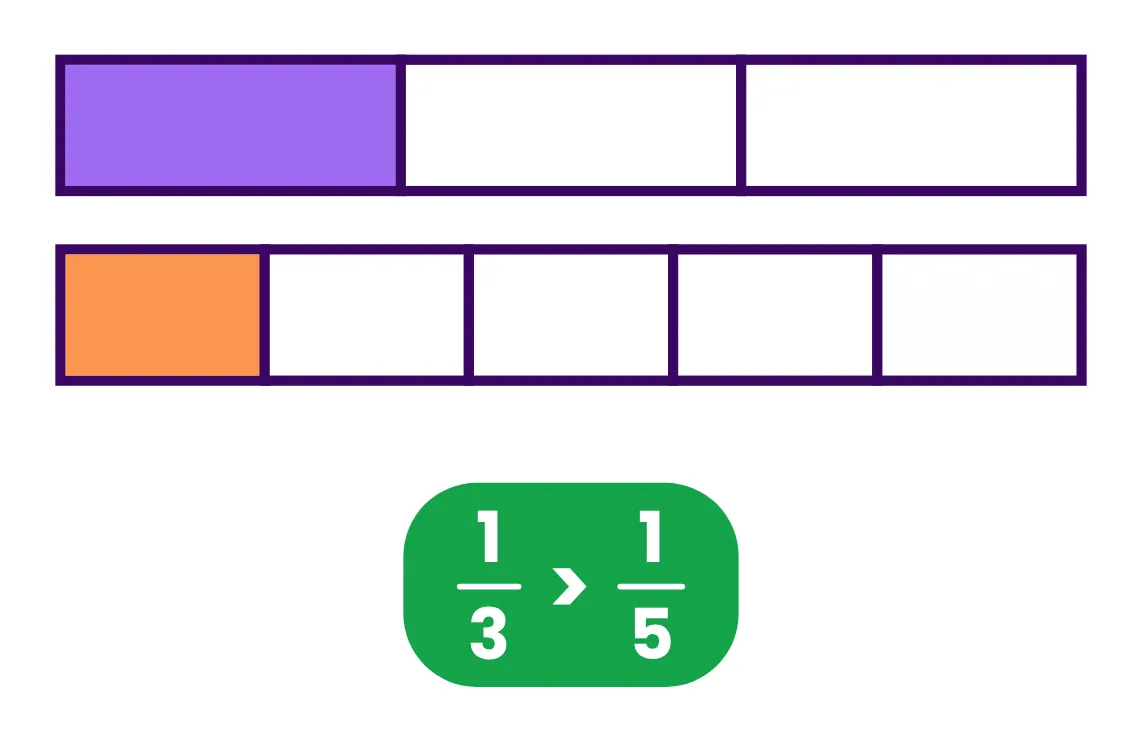
2. Same numerator
With the same top number, the bigger bottom number means smaller pieces.
One third is more than one fifth.
1/3 > 1/5
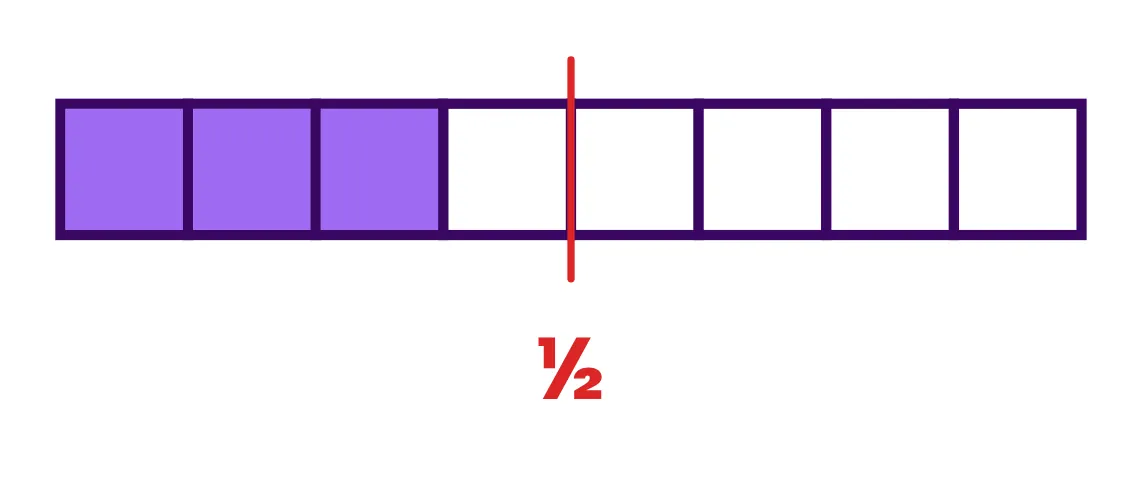
3. Compare to one half
Is 3 eighths more or less than one half? Half of 8 is 4, so 3 eighths is less than a half.
Benchmarks like one half help compare.
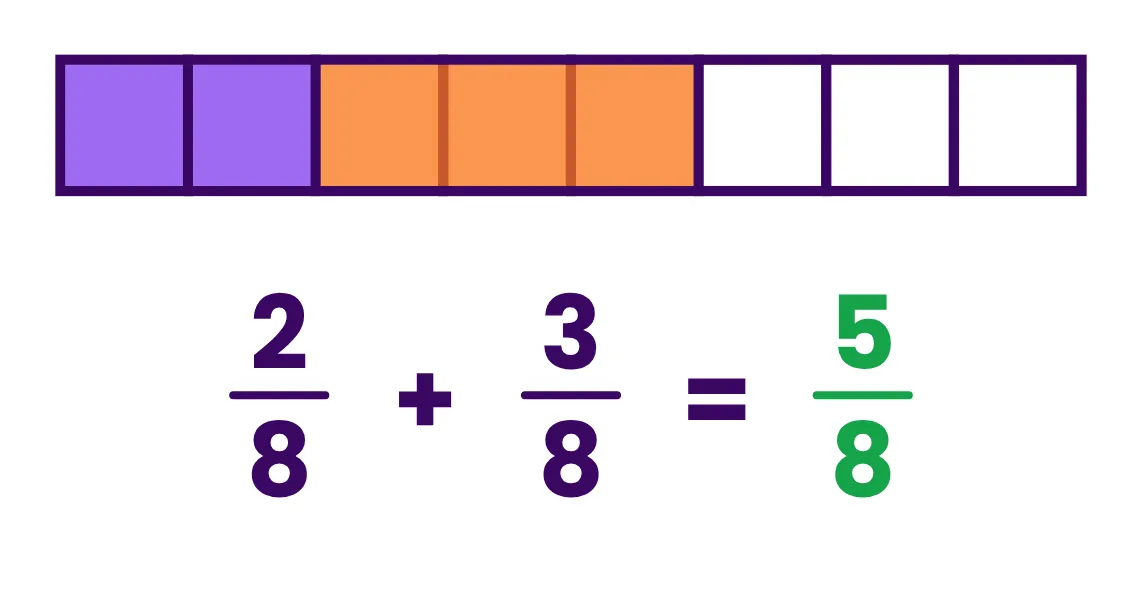
4. Add fractions with the same denominator
2 eighths plus 3 eighths: the pieces are the same size, so add the tops.
2 plus 3 is 5. The answer is 5 eighths. The bottom stays 8.
2/8
3/8
5/8
Watch out: Don't add the bottoms
2 eighths plus 3 eighths is 5 eighths, not 5 sixteenths. The size of the pieces doesn't change.
Wrong: 2/8 + 3/8 = 5/16. Right: 2/8 + 3/8 = 5/8.
Your turn
Which is greater: 2 thirds or 2 sixths?
Answer: 2/3 > 2/6. Thirds are bigger pieces than sixths. 2 thirds is greater!
Remember
Same bottom: compare or add the tops.
Same top: bigger bottom means smaller pieces. Use one half as a benchmark.
Watch the Fractions lesson and practice · Printable worksheet