Mixed Operations notes (3rd Grade math)
Practice all four operations.
The big question
+ − × ÷
How do we know which operation to use? Think about what is happening!
Learn it, step by step
1. Joining and taking away
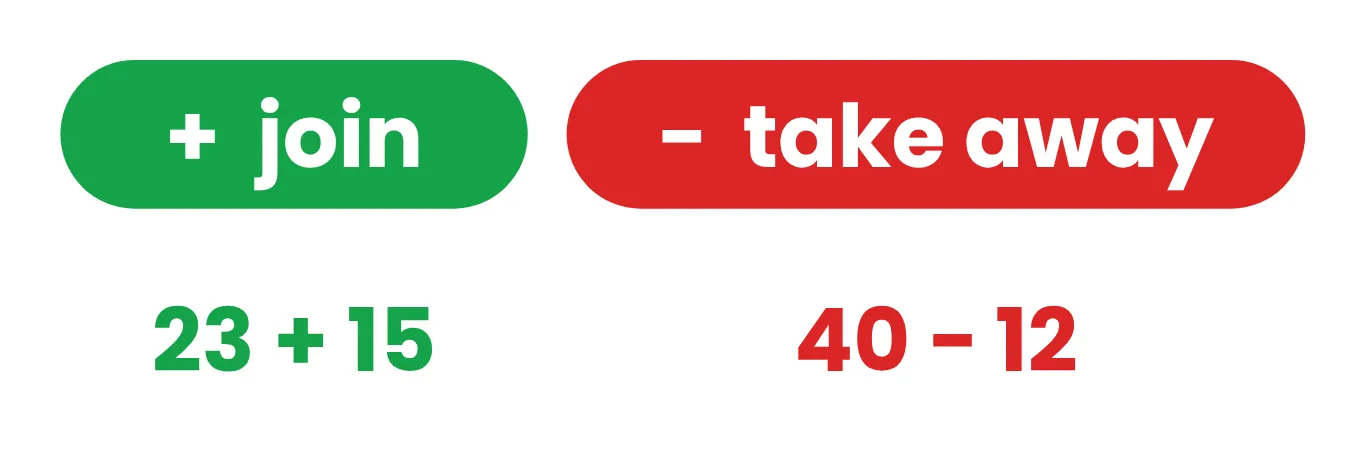
Putting groups together of any size? Add.
Taking some away, or finding a difference? Subtract.
+ join
− take away
23 + 15
40 − 12
2. Equal groups
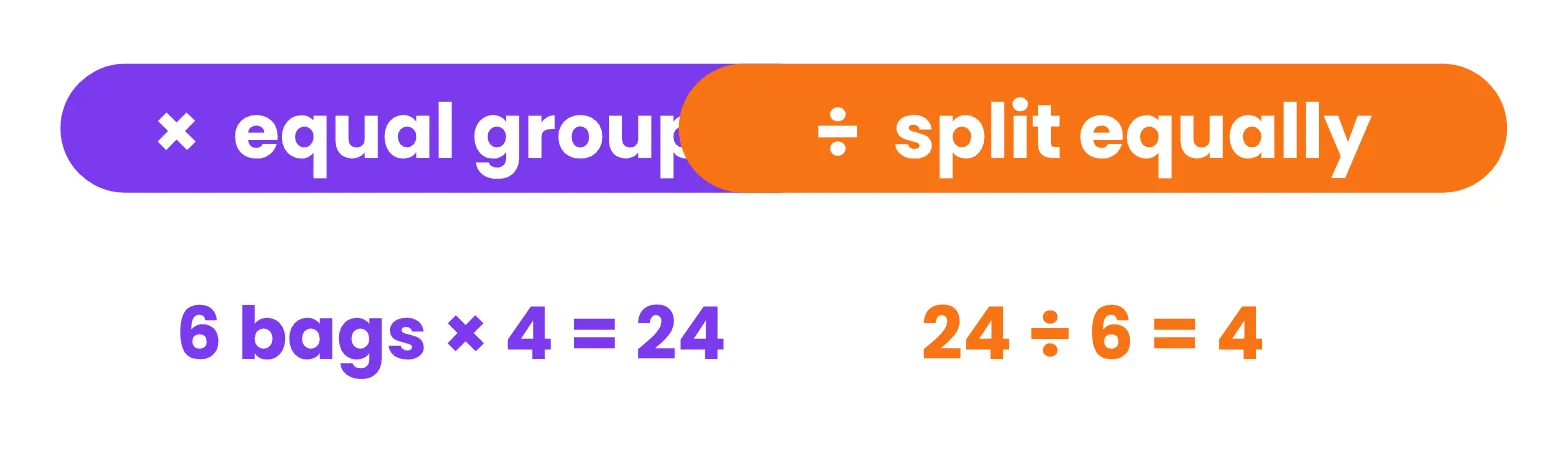
Many groups that are the same size? Multiply.
Splitting into equal groups? Divide.
× equal groups
÷ split equally
6 bags × 4 = 24
24 ÷ 6 = 4
3. Example
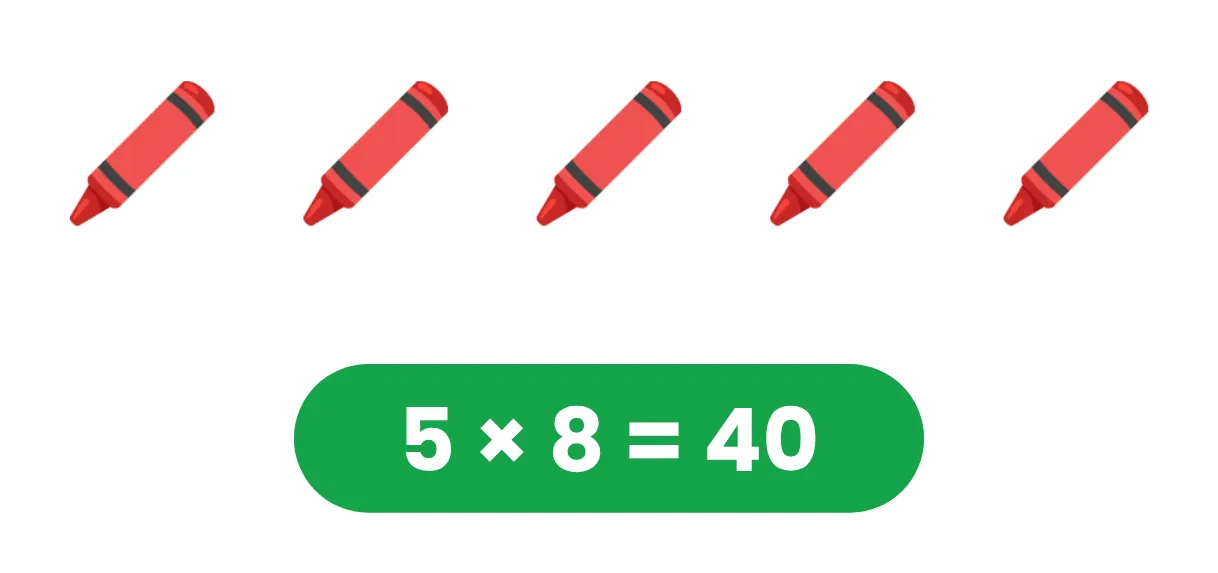
A box holds 8 crayons. How many crayons in 5 boxes?
Equal groups, so multiply: 5 × 8 is 40 crayons.
5 × 8 = 40
4. Order of steps
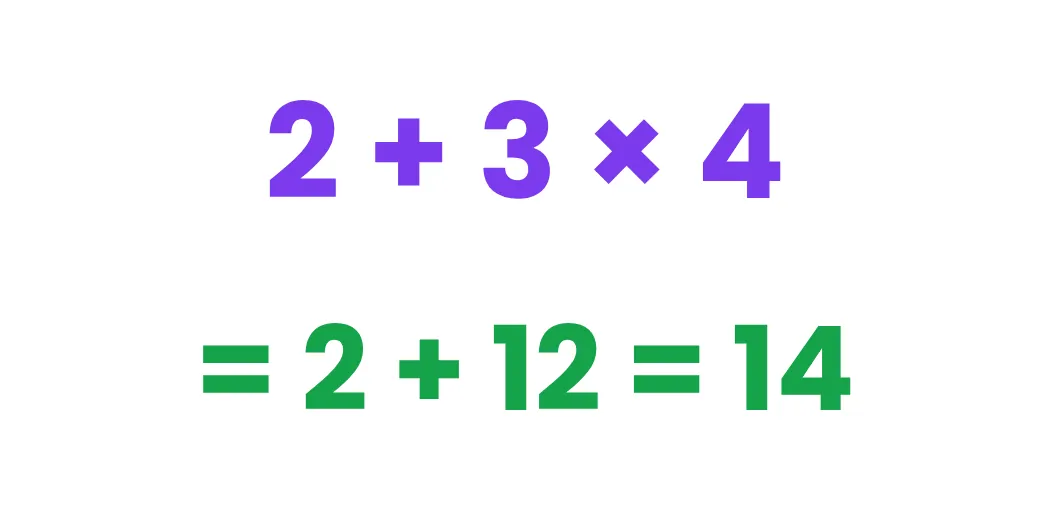
When a problem mixes operations, multiply and divide before you add and subtract.
2 plus 3 × 4 is 2 plus 12, which is 14.
2 + 3 × 4
= 2 + 12 = 14
Watch out: Don't follow key words blindly
Words like "left" don't always mean subtract. Picture what is happening first.
Wrong: see a key word, guess. Right: picture the story.
Your turn
36 marbles shared equally into 4 bags. How many in each bag?
36 marbles, 4 bags
Answer: 36 ÷ 4 = 9. Split equally, so divide. 36 ÷ 4 is 9 marbles!
Remember
Join: add. Take away: subtract.
Equal groups: multiply. Split equally: divide.
+ −
× ÷
Watch the Mixed Operations lesson and practice · Printable worksheet