Introduction to Fractions notes (3rd Grade math)
Understand parts of a whole.
The big question
¾
What does a fraction mean? Equal parts of a whole!
Learn it, step by step
1. Equal parts
A fraction names part of a whole that is split into equal parts.
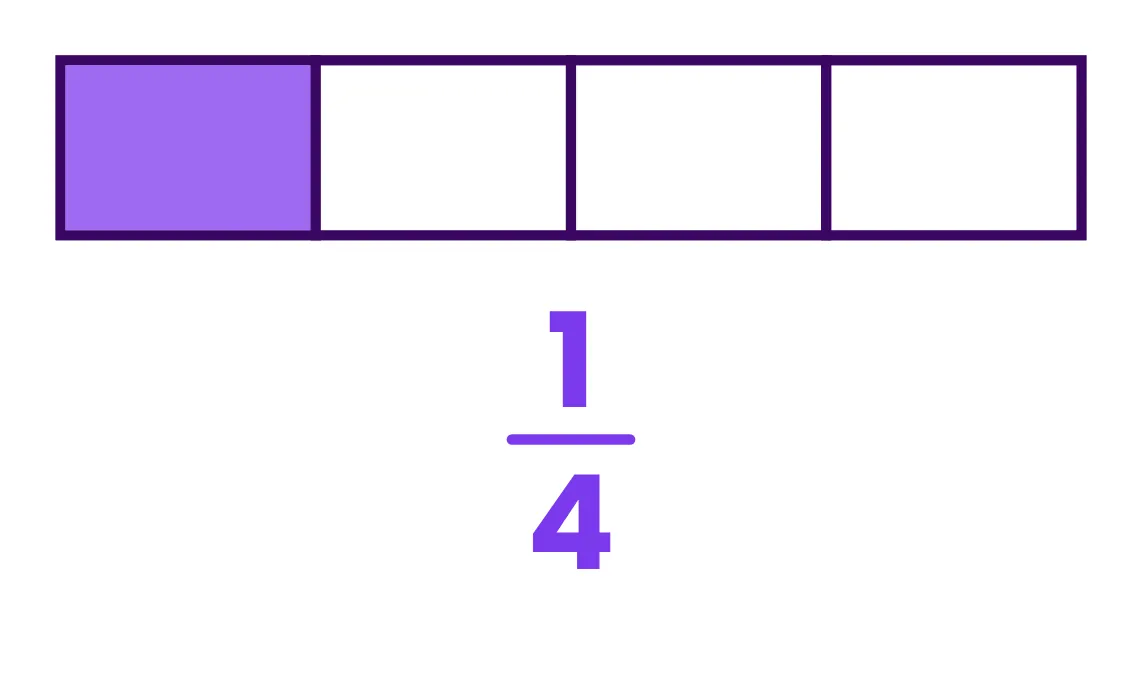
This bar has 4 equal parts. One part is one fourth.
1/4
2. Top and bottom numbers
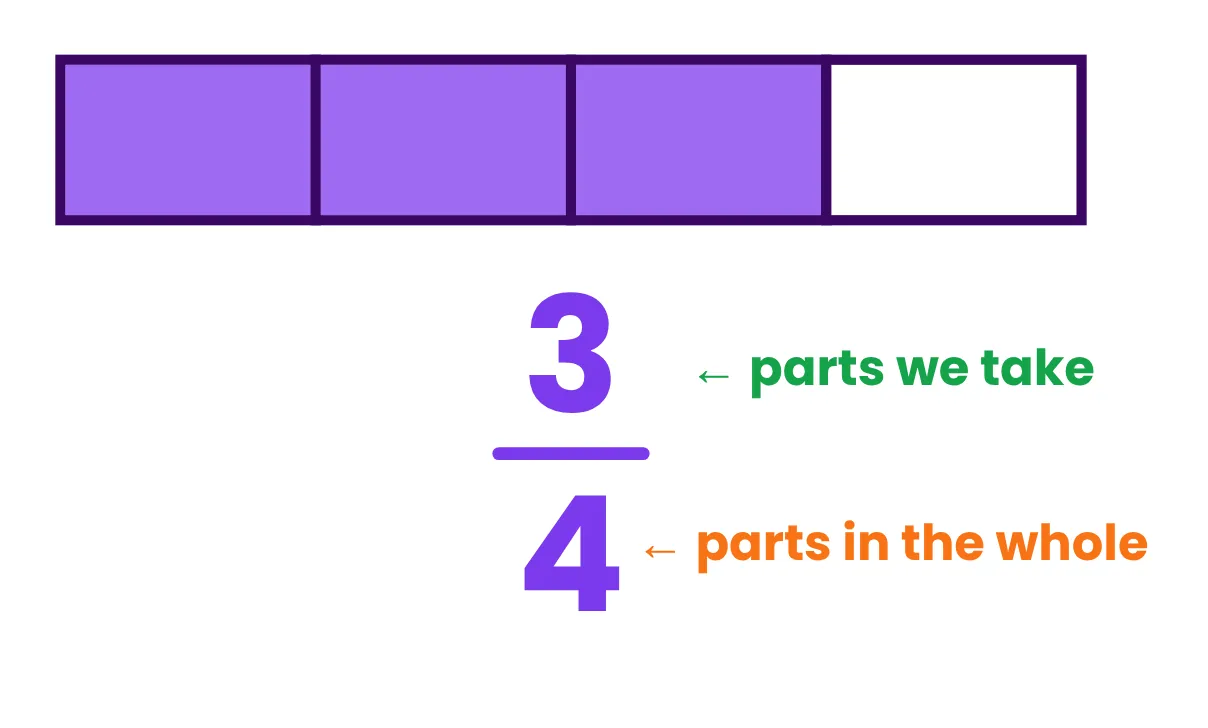
The bottom number, the denominator, says how many equal parts in the whole.
The top number, the numerator, says how many parts we take. 3 parts shaded is three fourths.
3/4
← parts in the whole
← parts we take
3. Fractions on a number line
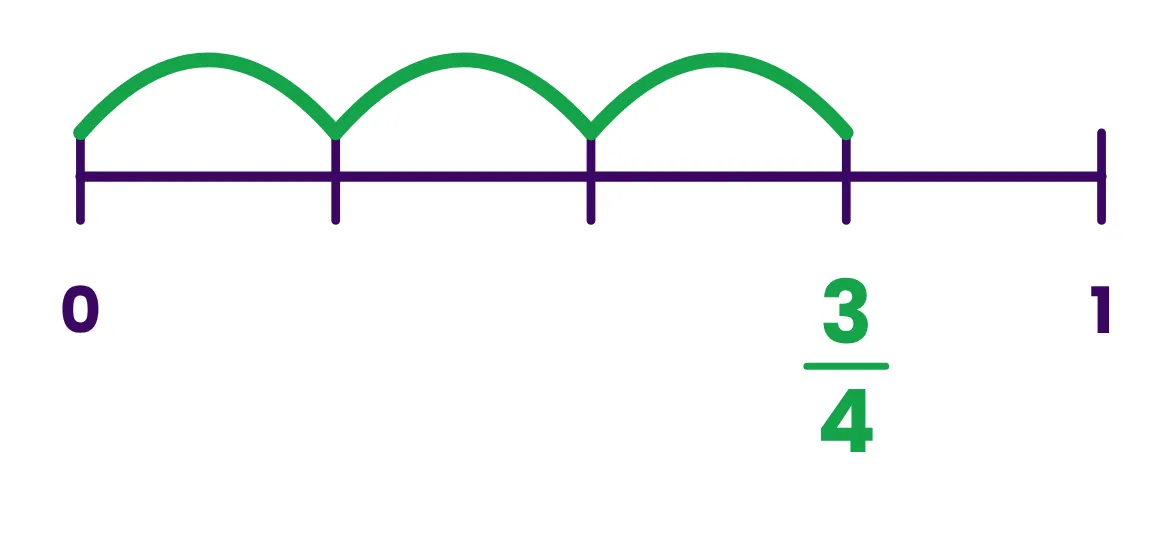
Fractions are numbers. They live between 0 and 1 on a number line.
Split 0 to 1 into 4 equal jumps. Three jumps land on three fourths.
3/4
4. Equal parts only
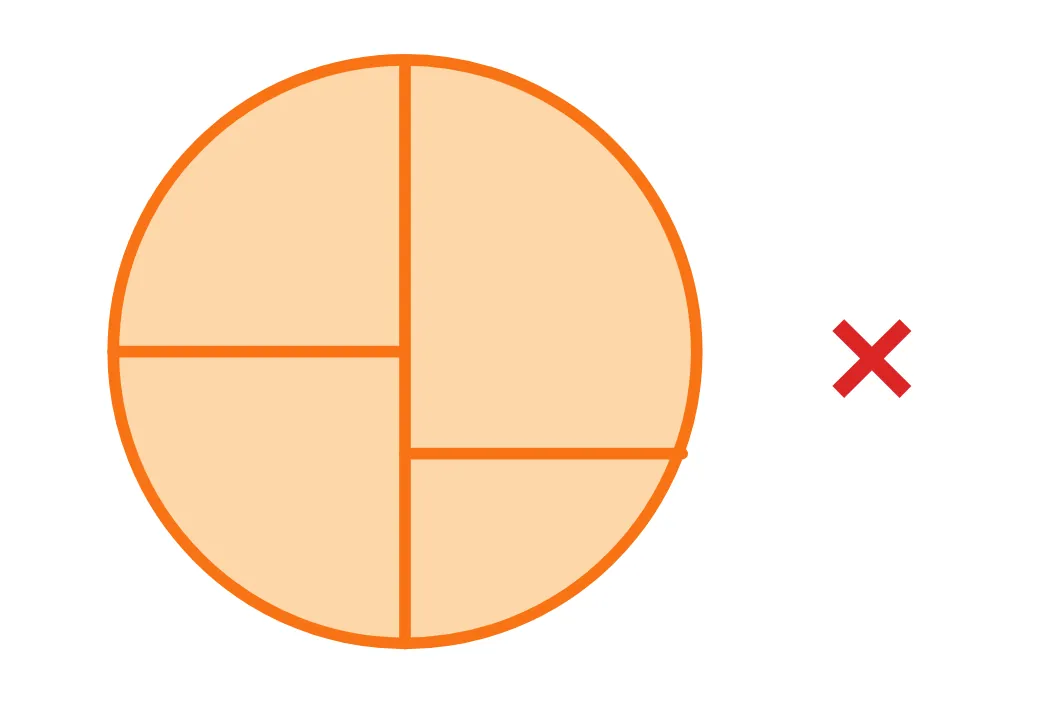
The parts must be equal. This circle has 4 parts, but they are not equal.
So one piece is not one fourth.
Watch out: Count all the parts
The bottom number counts all the parts, shaded and not shaded. 2 shaded out of 6 is two sixths, not two fourths.
Wrong: 2 shaded, 4 not: 2/4. Right: 2 shaded of 6: 2/6.
Your turn
What fraction of this bar is shaded?
Answer: 2/6. 2 of 6 equal parts are shaded. Two sixths!
Remember
A fraction is equal parts of a whole.
Bottom: how many parts in all. Top: how many we take.
2/3
Watch the Introduction to Fractions lesson and practice · Printable worksheet