Inverse Trigonometric Functions notes (Precalculus)
Evaluate and graph inverse trig functions.
The big question
sin⁻¹(½)
Which angle has a sine of ½? Inverse trig finds it!
Learn it, step by step
1. Undo the trig function
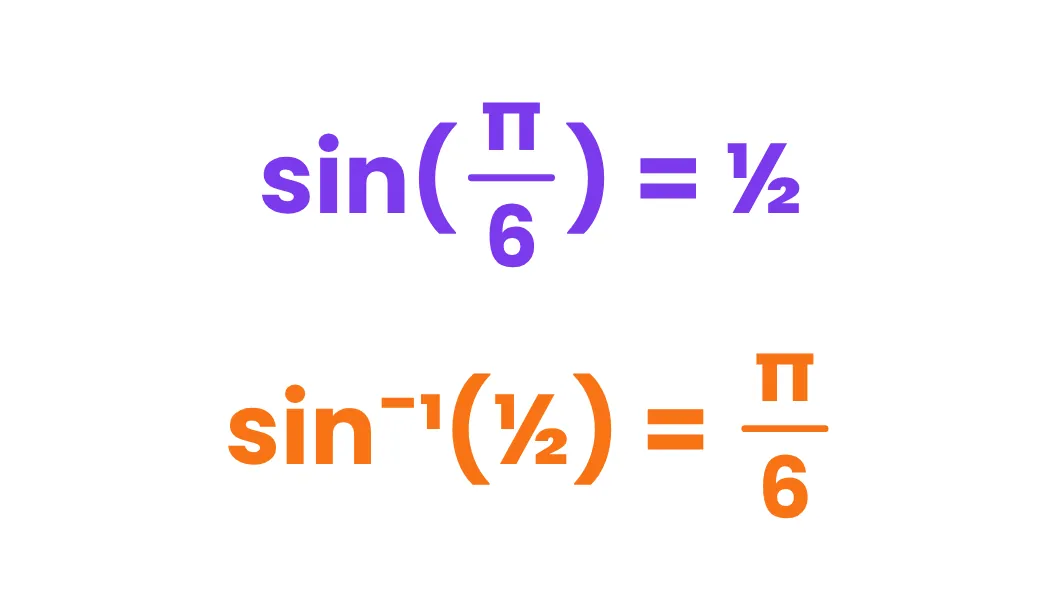
sin⁻¹(x) asks: which angle has sine x? sin⁻¹(½) = π/6, or 30 degrees.
sin(π/6) = ½
sin⁻¹(½) = π/6
2. Restricted ranges
Many angles share a sine, so the answers are limited.
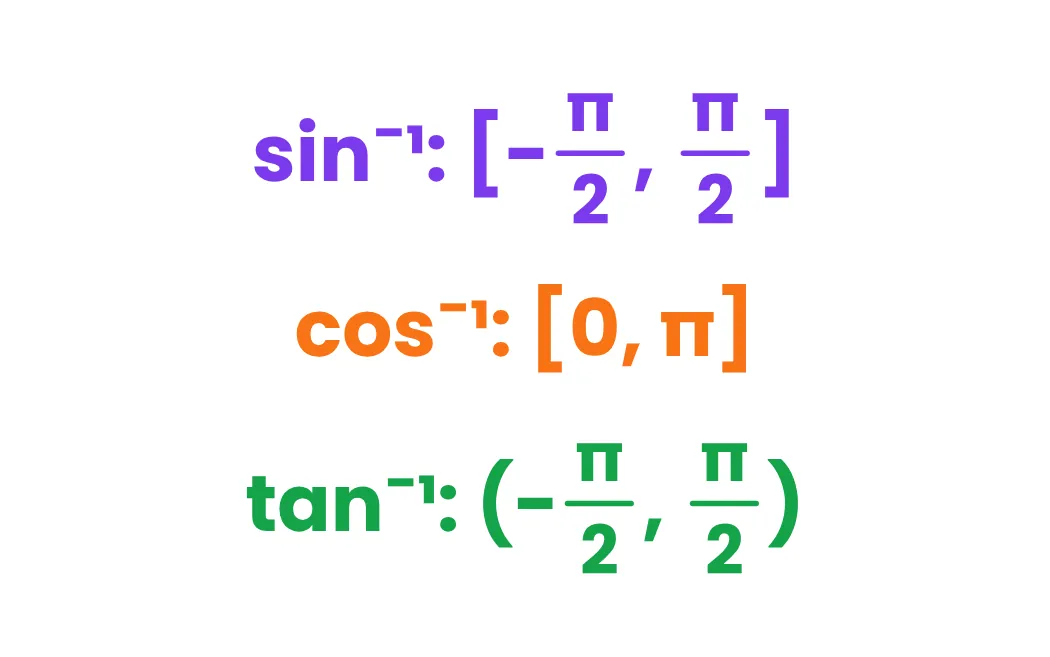
sin⁻¹: from −π/2 to π/2. cos⁻¹: from 0 to π. tan⁻¹: between −π/2 and π/2.
sin⁻¹: [−π/2, π/2]
cos⁻¹: [0, π]
tan⁻¹: (−π/2, π/2)
Watch out: Not one over
sin⁻¹ x is the inverse function, not 1 ÷ sin x (that's csc x).
Wrong: sin⁻¹ x = 1/sin x. Right: sin⁻¹ x = arcsin x.
Your turn
Find cos⁻¹(−½).
cos⁻¹(−½)
Answer: 2π/3. 2π/3, or 120 degrees!
Remember
Inverse trig returns an angle, within a restricted range.
value → angle
Watch the Inverse Trigonometric Functions lesson and practice · Printable worksheet