Polynomial End Behavior notes (Algebra 2)
Determine end behavior and graph polynomials.
The big question
↖ ↗
Where do the ends of a polynomial graph go? The leading term decides!
Learn it, step by step
1. Look at the leading term
For very big or very small x, the term with the highest power wins.
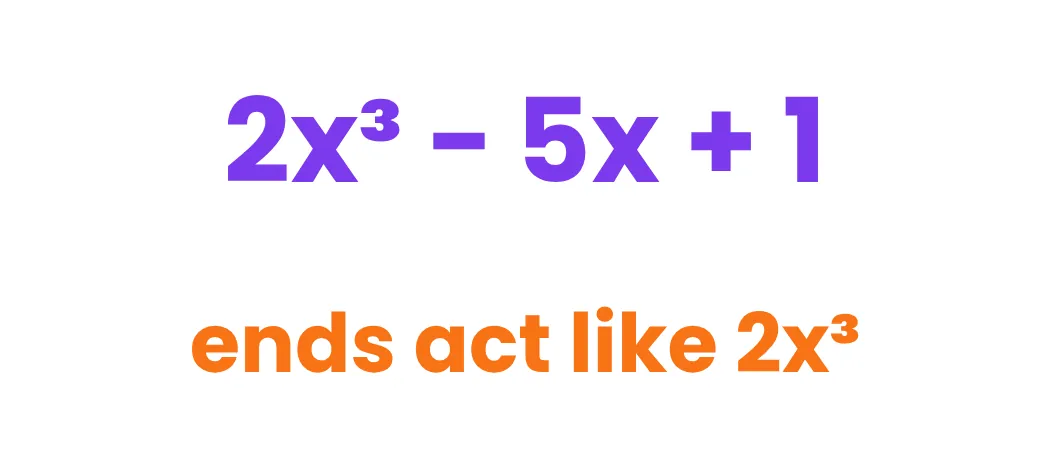
So 2x³ − 5x + 1 behaves like 2x³ at the ends.
2x³ − 5x + 1
ends act like 2x³
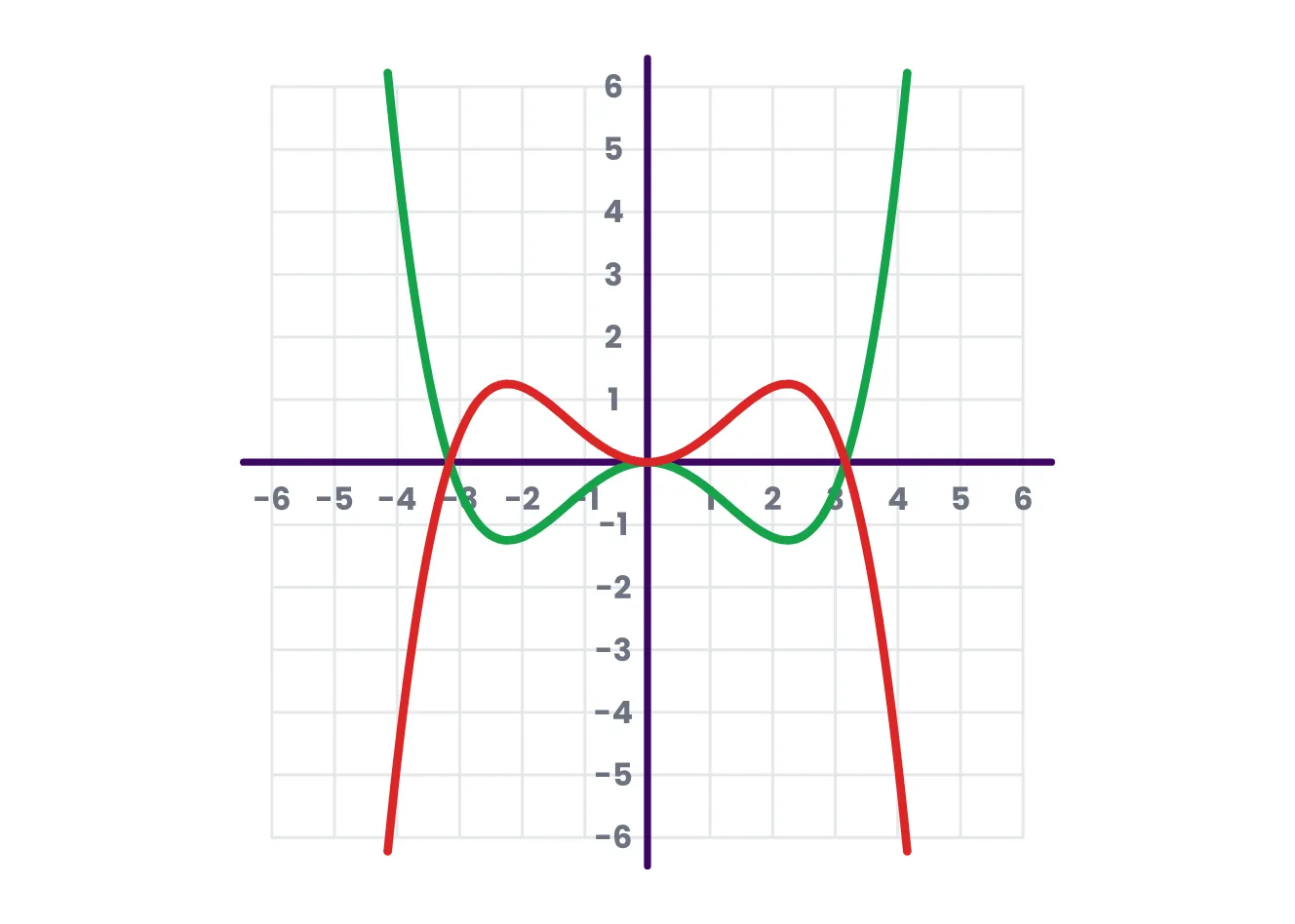
2. Even degree
Even degree, positive leading coefficient: both ends up, like x².
Negative: both ends down.
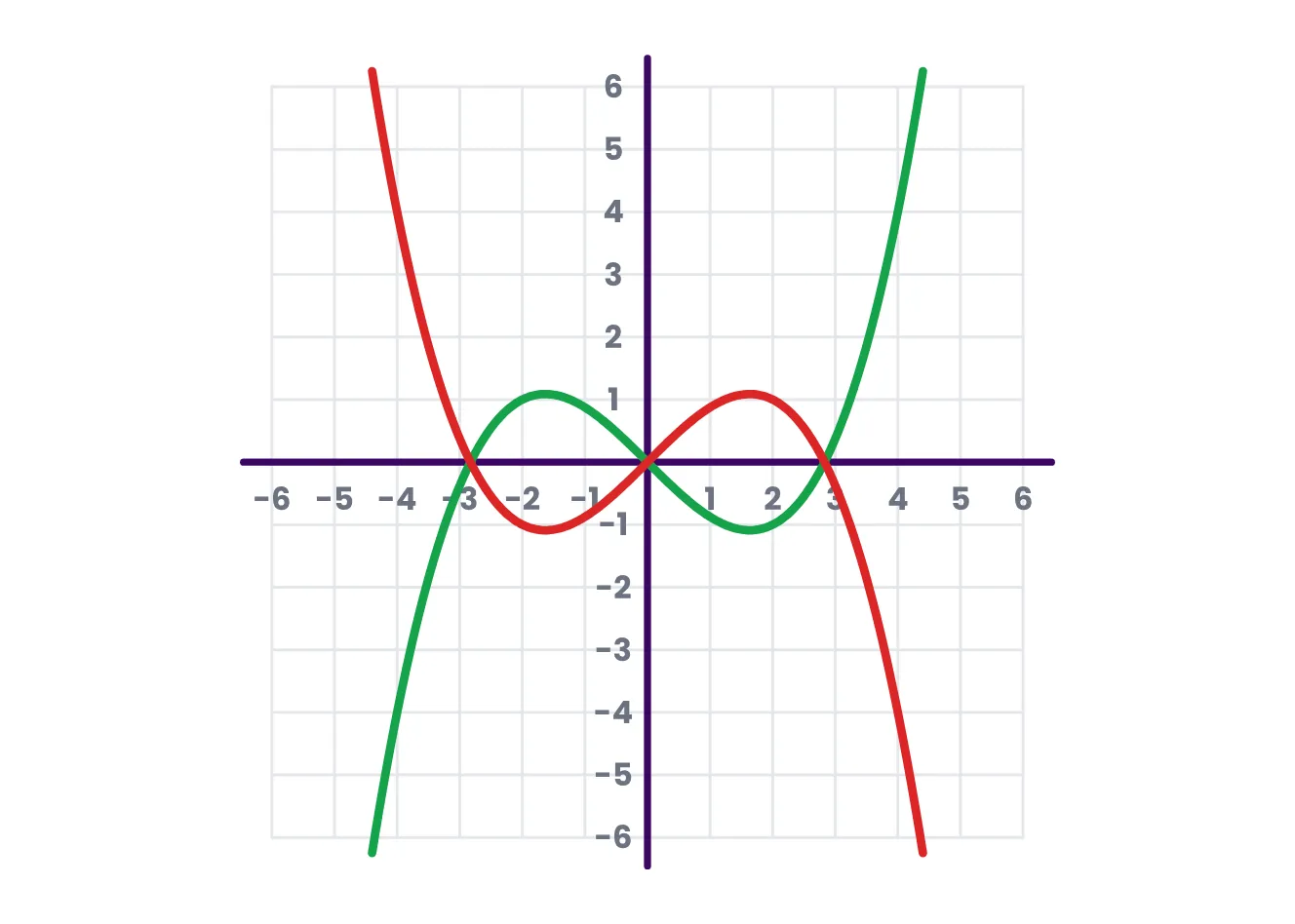
3. Odd degree
Odd degree, positive: down on the left, up on the right, like x³.
Negative: up on the left, down on the right.
Watch out: Highest power, not first
Find the term with the biggest exponent, even if it's written last.
Wrong: x + 4x² − x³: degree 1. Right: degree 3, leading −1.
Your turn
Describe the ends of y = −3x⁵ + x².
y = −3x⁵ + x²
Answer: up left, down right. Odd degree, negative: up on the left, down on the right!
Remember
Even degree: ends match. Odd degree: ends go opposite ways.
The leading coefficient's sign decides which.
degree + sign
Watch the Polynomial End Behavior lesson and practice · Printable worksheet