Divide Polynomials notes (Algebra 2)
Long division and synthetic division.
The big question
(x² + 5x + 6) ÷ (x + 2)
Can we divide polynomials like numbers? Yes: long division or synthetic division!
Learn it, step by step
1. Long division
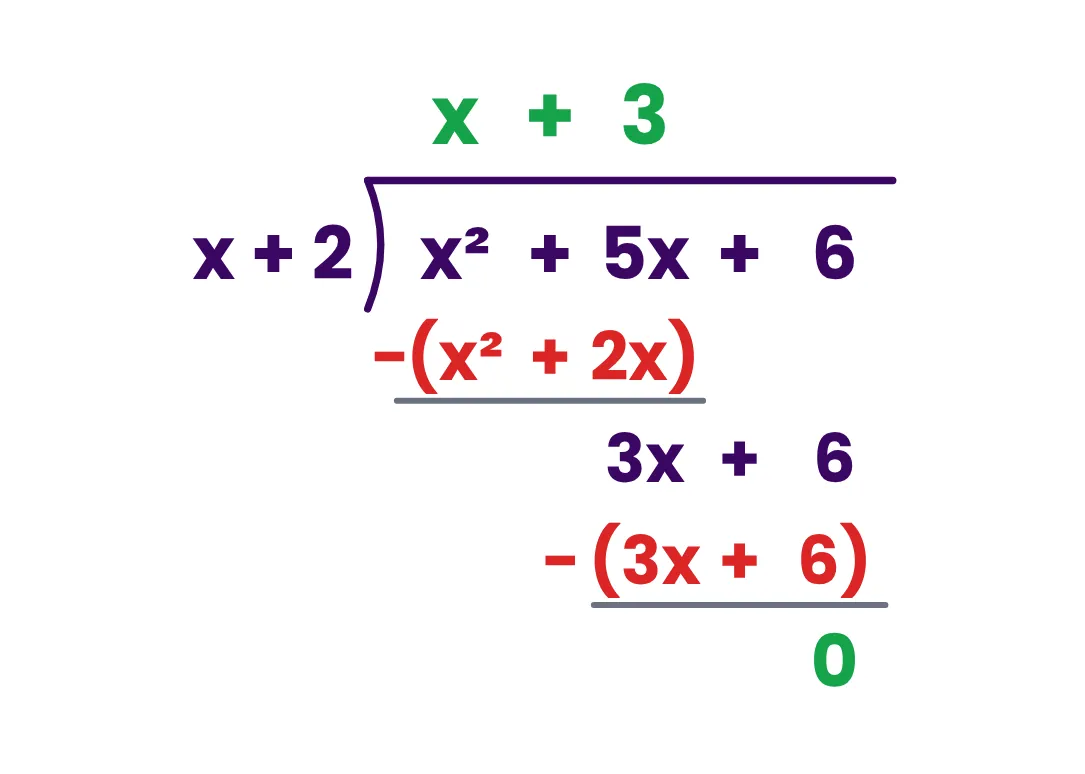
How many times does x go into x²? x times. Multiply: x(x + 2) = x² + 2x. Subtract: 3x + 6.
x goes into 3x 3 times. 3(x + 2) = 3x + 6. Remainder 0. The answer is x + 3.
x + 2
(x²
2x)
(3x
2. Synthetic division
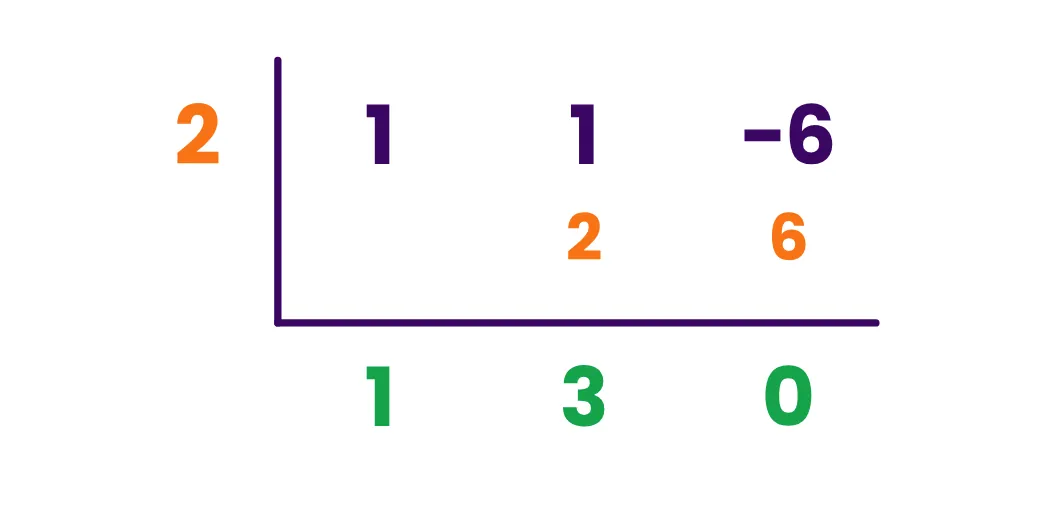
Dividing by x − 2? Use 2 and the coefficients 1, 1, −6.
Bring down 1. Multiply by 2, add: 3. Multiply by 2, add: 0. The answer is x + 3.
3. Remainder theorem
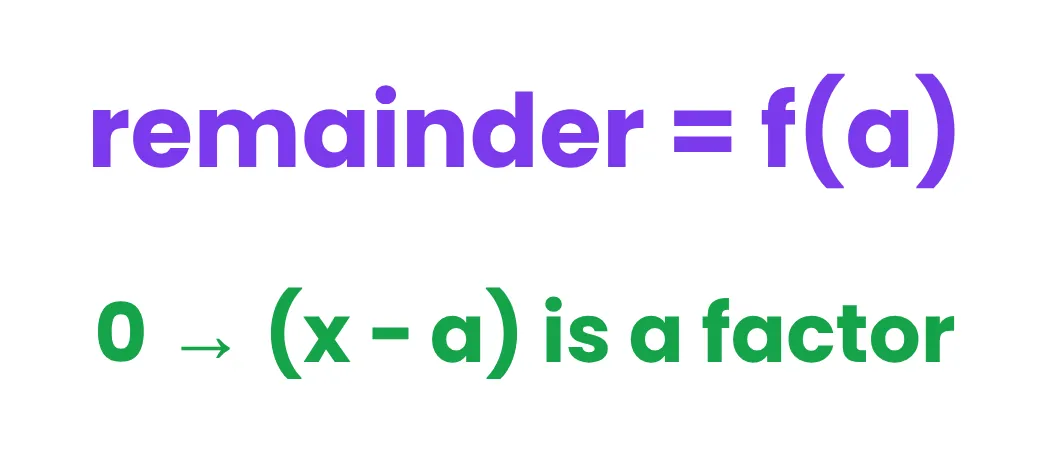
The remainder when dividing by x − a equals f(a).
A remainder of zero means x − a is a factor.
remainder = f(a)
0 → (x − a) is a factor
Watch out: Use the opposite sign
For x + 5, use −5 in synthetic division.
Wrong: x + 5 → use 5. Right: x + 5 → use −5.
Your turn
Use synthetic division: (x² + 7x + 10) ÷ (x + 5).
−5 | 1 7 10
Answer: x + 2. Bring down 1. −5, then 2. −10, then 0. The answer is x + 2!
Remember
Long division works always. Synthetic division is a shortcut for x − a.
The remainder is f(a).
divide → multiply → subtract
Watch the Divide Polynomials lesson and practice · Printable worksheet