The Discriminant notes (Algebra 2)
Use discriminant to determine nature of roots.
The big question
b² − 4ac
How many solutions does a quadratic have? The discriminant tells us before we solve!
Learn it, step by step
1. Under the square root
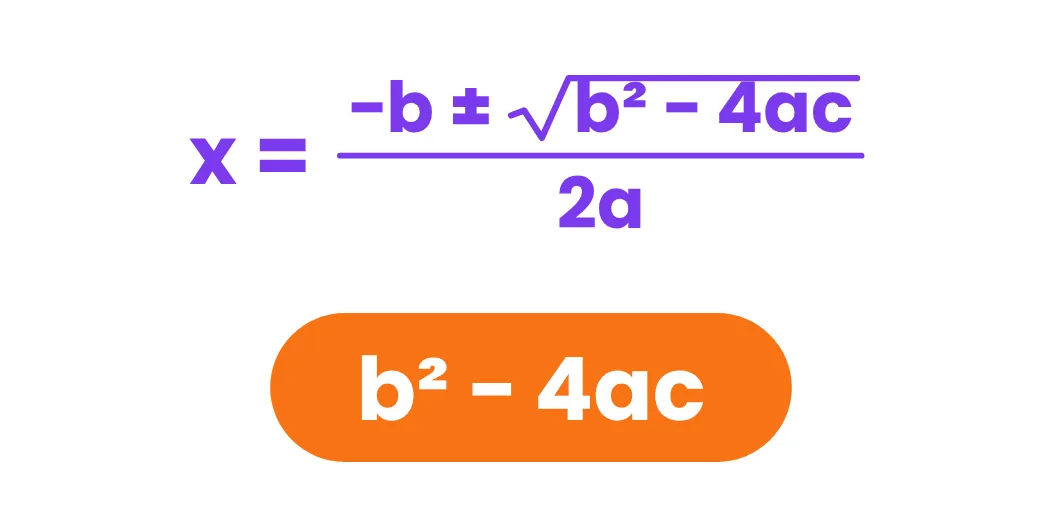
In the quadratic formula, b² − 4ac sits under the square root.
That part decides how many real solutions there are.
x = (−b ± √(b² − 4ac)) / 2a
b² − 4ac
2. Three cases
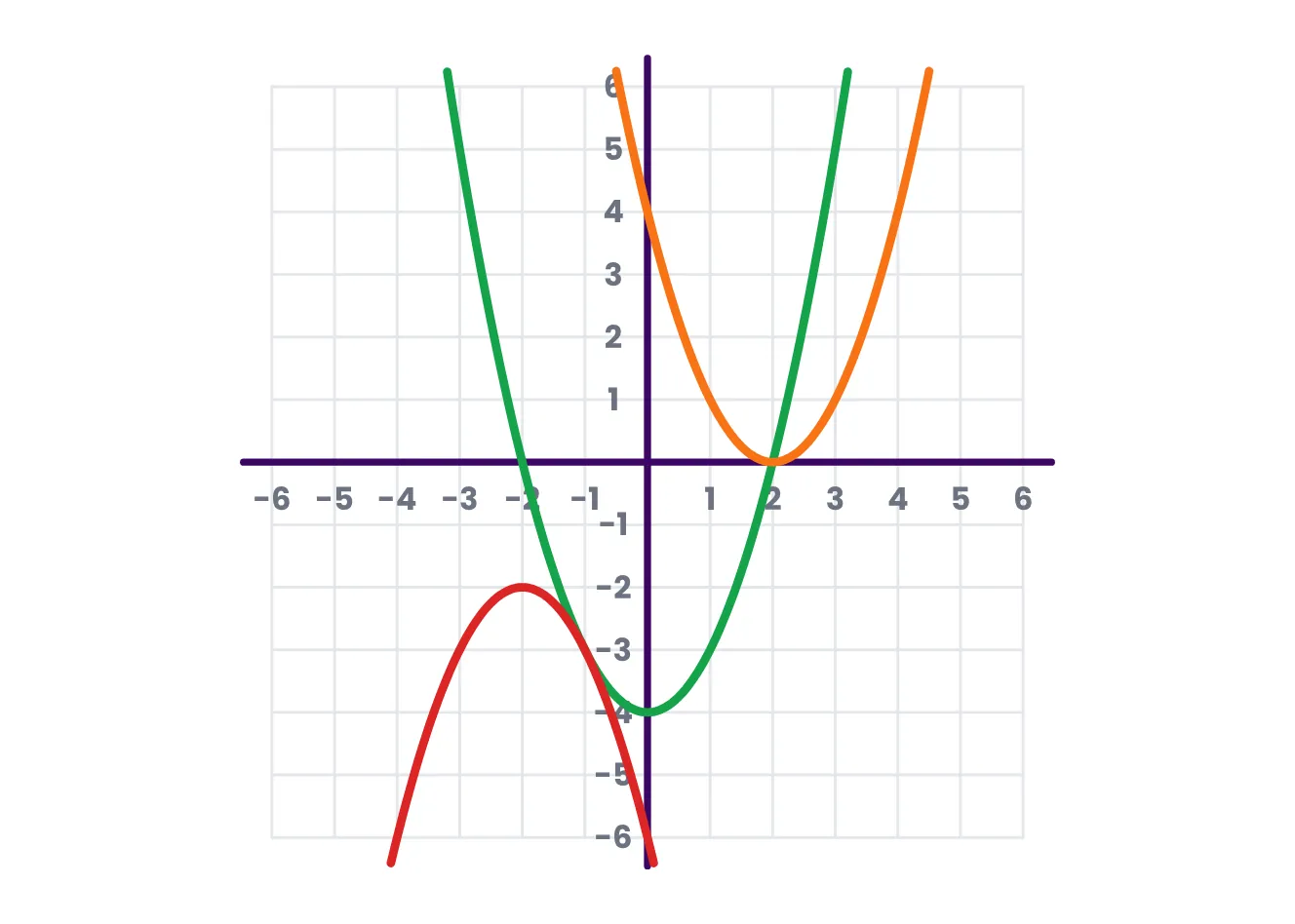
Positive: two real solutions, the parabola crosses twice.
Zero: one solution, it touches once. Negative: no real solutions, it misses the axis.
3. Example
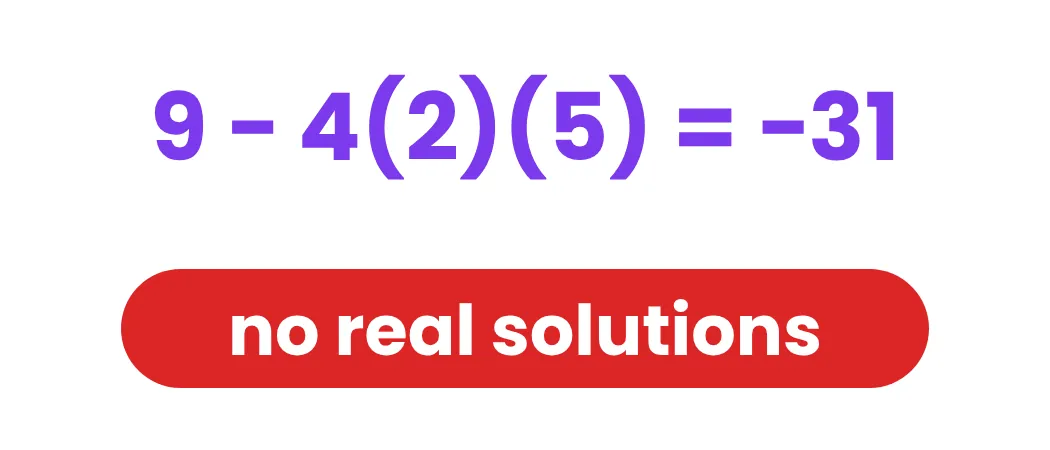
2x² + 3x + 5: b² − 4ac = 9 − 40 = −31. Negative, so no real solutions.
9 − 4(2)(5) = −31
no real solutions
Watch out: Square b, keep it positive
If b is −6, b² is 36. Squaring always gives a positive.
Wrong: (−6)² = −36. Right: (−6)² = 36.
Your turn
How many real solutions does x² − 6x + 9 = 0 have?
x² − 6x + 9 = 0
Answer: one solution. 36 − 36 = 0. Exactly one solution!
Remember
Positive: two. Zero: one. Negative: none (two complex).
b² − 4ac
Watch the The Discriminant lesson and practice · Printable worksheet