Triangle Inequalities notes (Geometry)
Apply triangle inequality theorem.
The big question
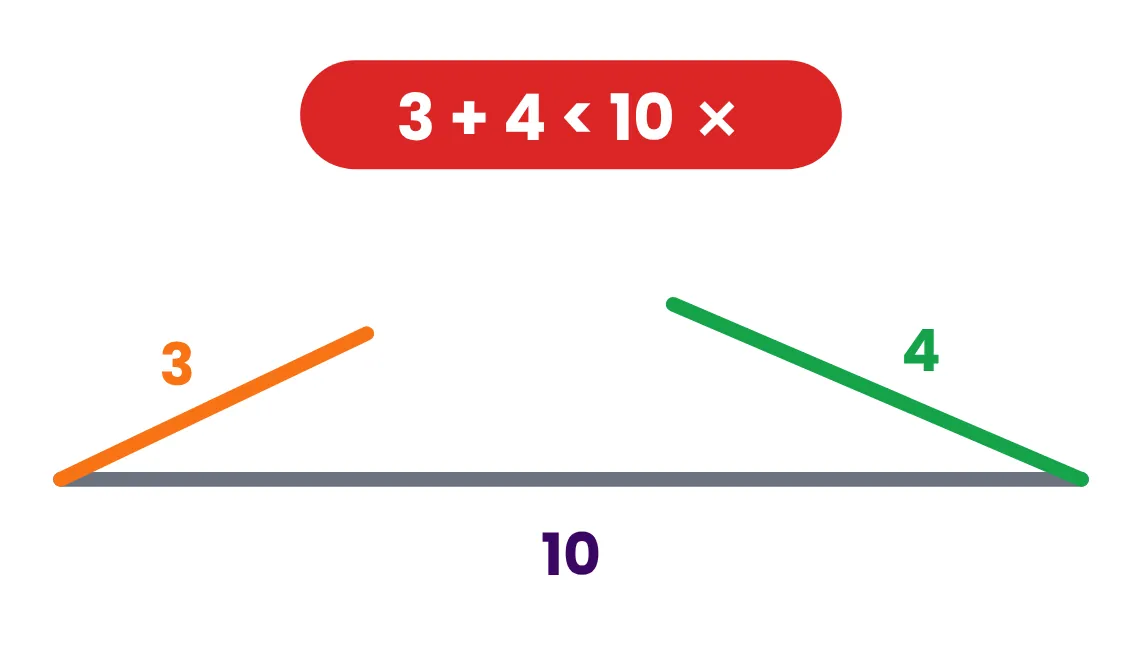
3, 4, 10?
Can any three lengths make a triangle? No! There's a rule.
Learn it, step by step
1. Try it
Sticks of 3 and 4 can't reach across 10. They fall flat.
The two shorter sides must add to more than the longest side.
3 + 4 < 10 ✗
2. The rule
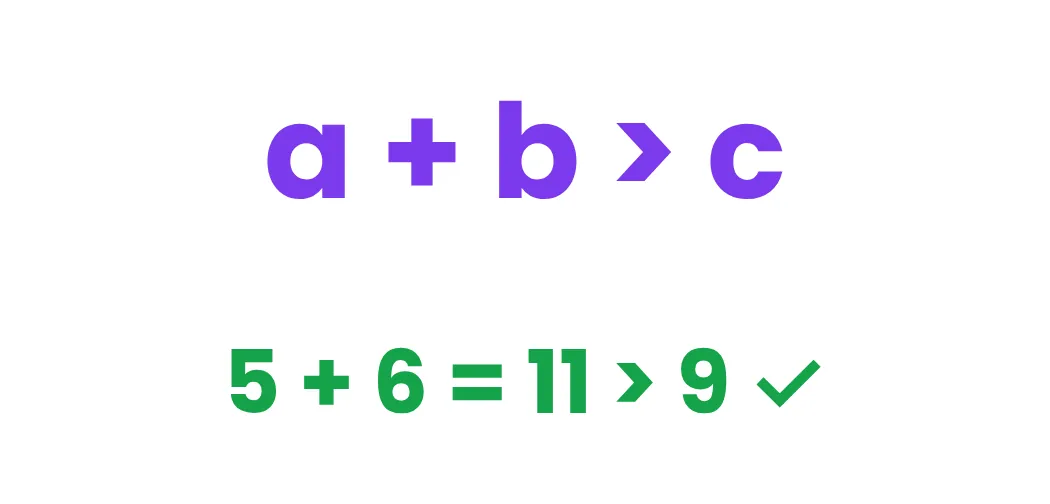
For sides a, b and c: a + b > c, for every pair.
Check the two short sides against the long one. 5, 6, 9: 5 + 6 = 11 > 9. It works!
a + b > c
5 + 6 = 11 > 9 ✓
3. Range for the third side
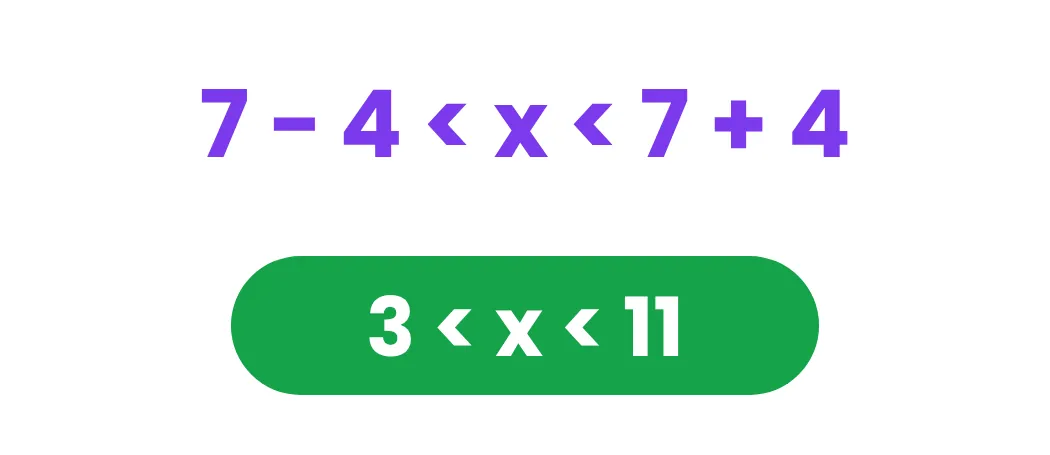
Two sides are 4 and 7. The third side must be between 7 − 4 and 7 + 4.
So 3 < x < 11.
7 − 4 < x < 7 + 4
3 < x < 11
4. Sides and angles
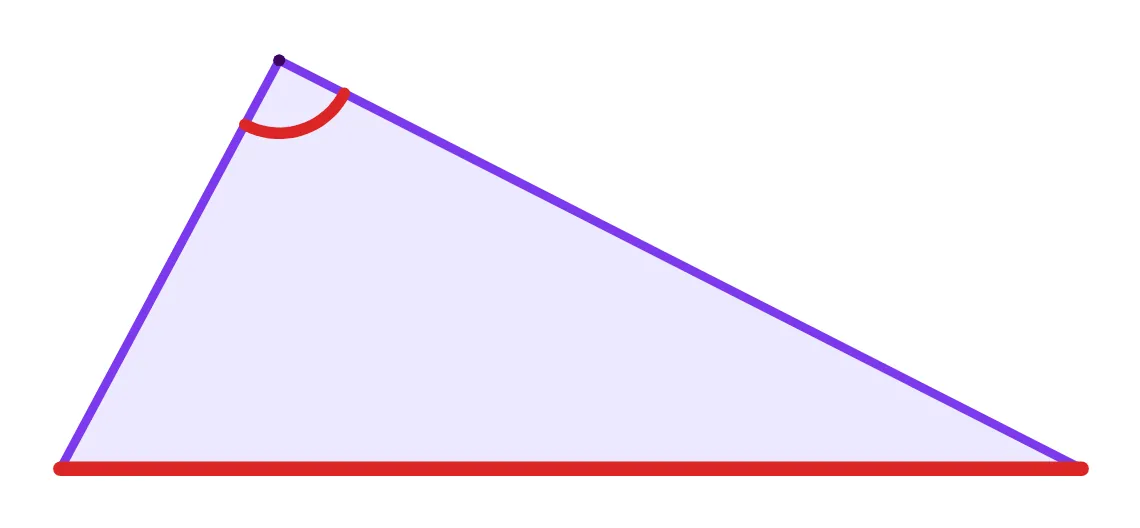
The longest side is across from the largest angle. The shortest is across from the smallest.
Watch out: Equal isn't enough
3 + 5 = 8, so 3, 5, 8 makes a flat line, not a triangle. It must be greater.
Wrong: 3 + 5 = 8 → triangle. Right: 3 + 5 = 8 → flat, no.
Your turn
Can 2, 5 and 6 make a triangle?
2, 5, 6
Answer: yes. 2 + 5 = 7, more than 6. Yes!
Remember
The two shorter sides must add to more than the longest.
The third side lies between the difference and the sum.
a + b > c
Watch the Triangle Inequalities lesson and practice · Printable worksheet