Trapezoids & Kites notes (Geometry)
Properties of trapezoids and kites.
The big question
⏢ 🪁
What about quadrilaterals that aren't parallelograms? Trapezoids and kites!
Learn it, step by step
1. Trapezoid
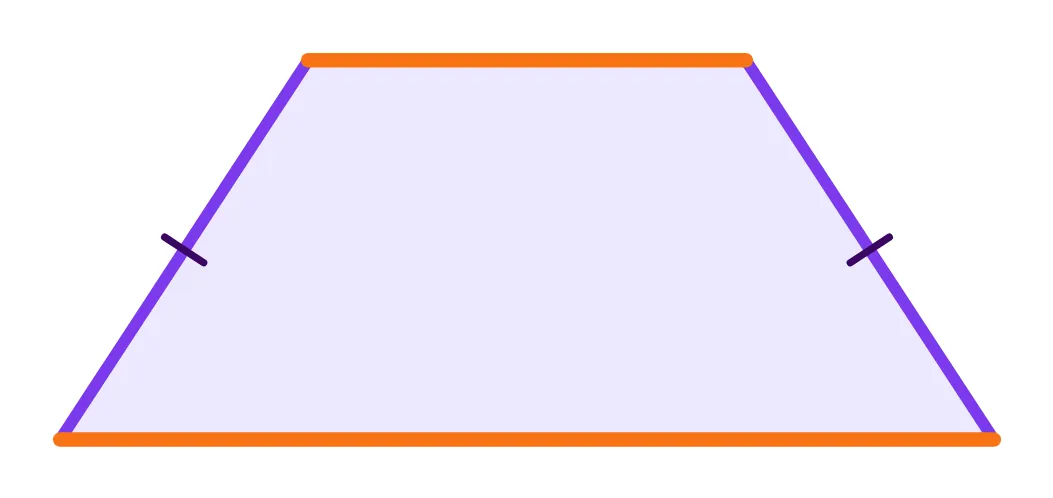
A trapezoid has exactly one pair of parallel sides, called bases.
In an isosceles trapezoid, the legs are equal and the base angles match.
2. The midsegment
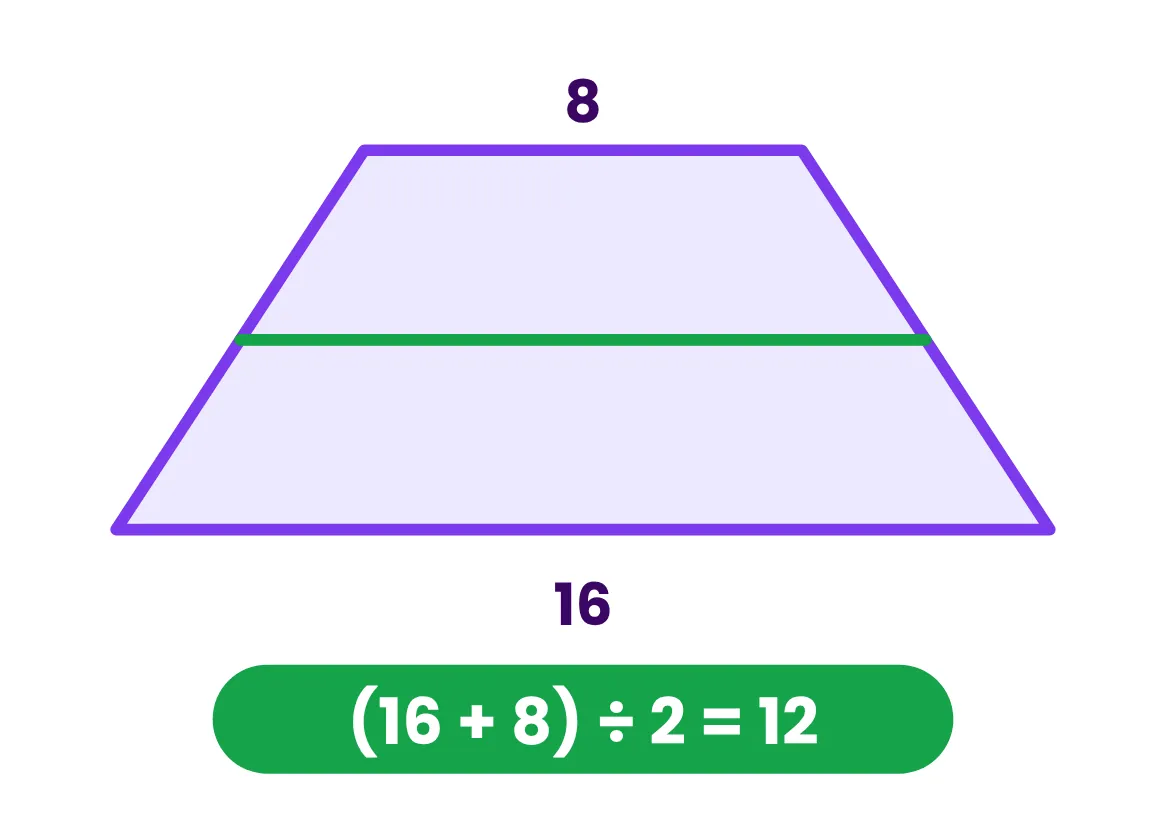
The midsegment joins the middles of the legs. Its length is the average of the bases.
Bases 16 and 8: midsegment (16 + 8) ÷ 2 = 12.
(16 + 8) ÷ 2 = 12
3. Kite
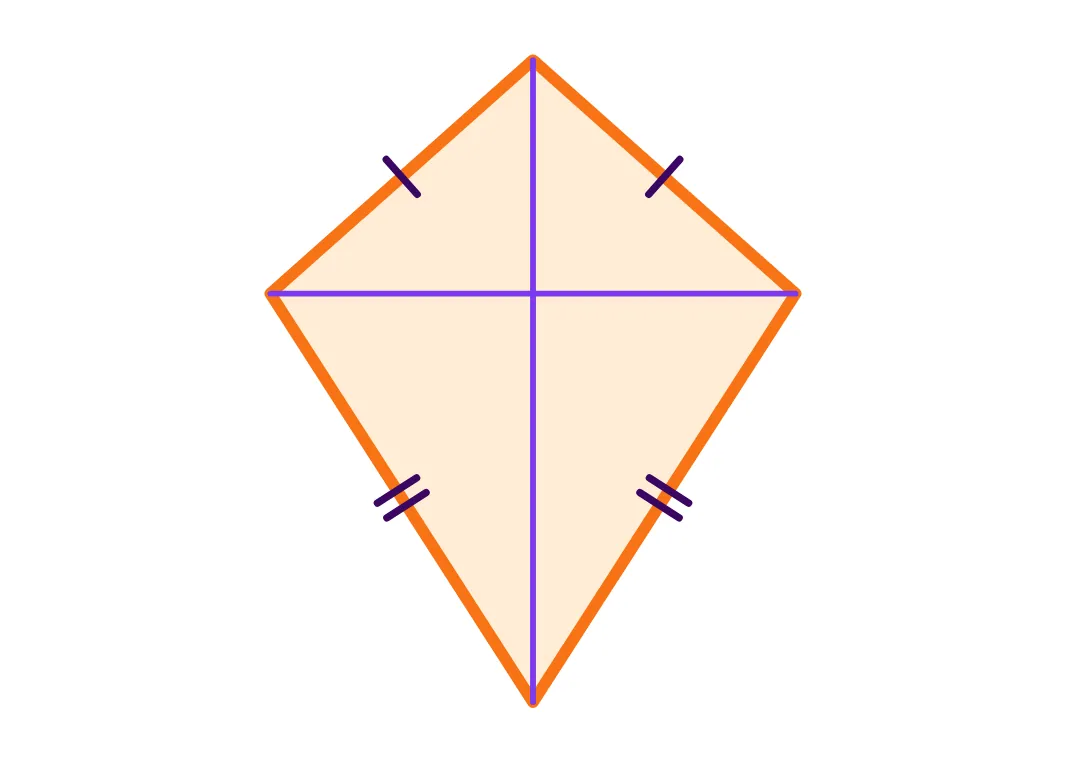
A kite has two pairs of equal neighboring sides.
Its diagonals are perpendicular.
4. Area of a trapezoid: step by step
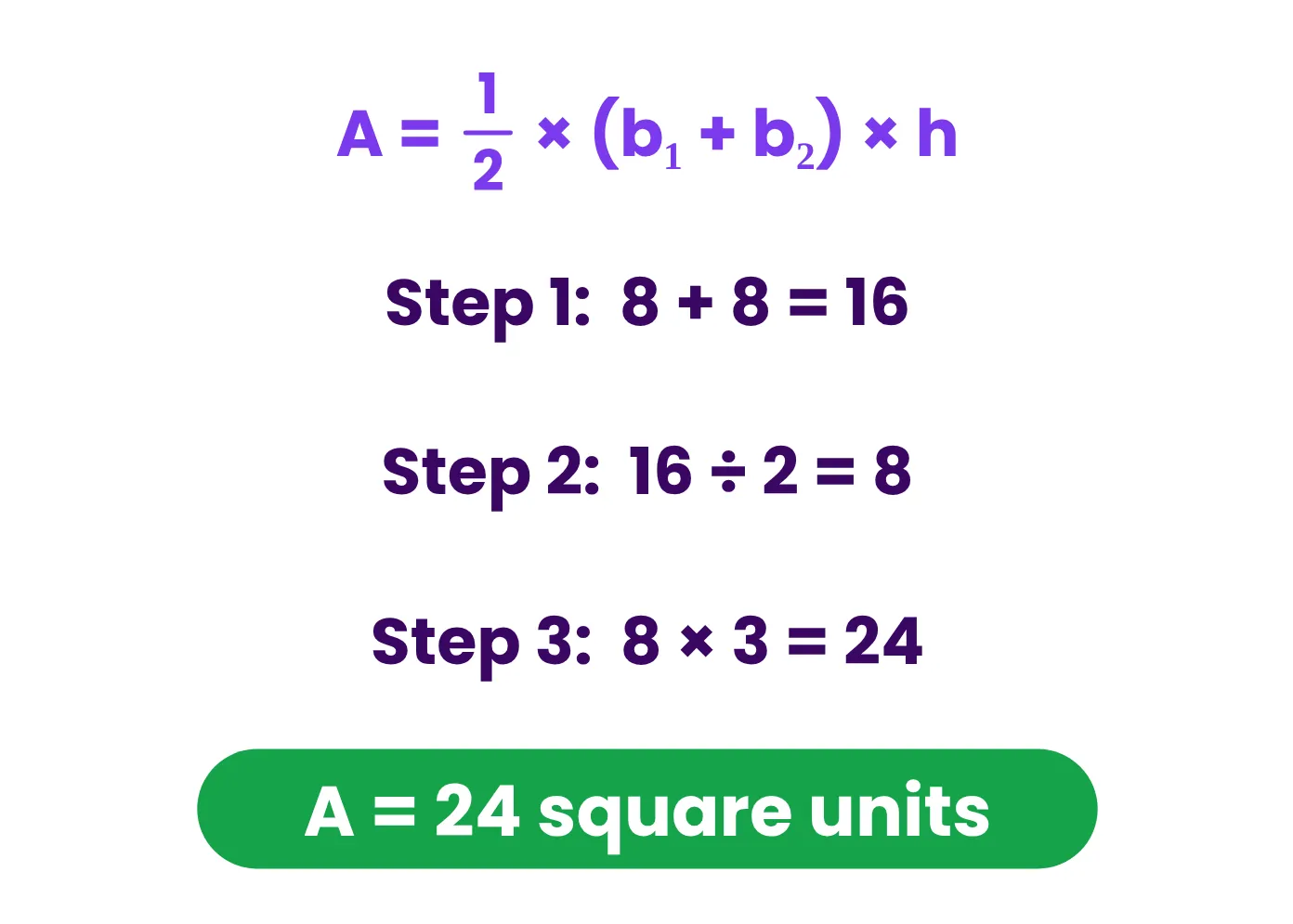
The area of a trapezoid is one half, times the sum of the bases, times the height.
The bases are 8 and 8, and the height is 3. Step 1. Add the bases: 8 + 8 = 16.
Step 2. Take half: 16 ÷ 2 = 8.
Step 3. Multiply by the height: 8 × 3 = 24 square units.
A = 1/2 × (b₁ + b₂) × h
Step 1: 8 + 8 = 16
Step 2: 16 ÷ 2 = 8
Step 3: 8 × 3 = 24
A = 24 square units
Watch out: One pair only
A trapezoid has exactly one pair of parallel sides. Two pairs makes a parallelogram.
Wrong: two pairs ∥. Right: one pair ∥.
Your turn
A trapezoid has bases 10 and 22. How long is its midsegment?
bases 10 and 22
Answer: 16. (10 + 22) ÷ 2 = 16!
Remember
Trapezoid: one pair of parallel bases, midsegment = average of bases.
Kite: two pairs of equal neighboring sides, perpendicular diagonals.
Watch the Trapezoids & Kites lesson and practice · Printable worksheet