Converses & Contrapositives notes (Geometry)
Write converses, inverses, and contrapositives.
The big question
p → q
What happens when we flip or negate a statement? We get related statements!
Learn it, step by step
1. The original
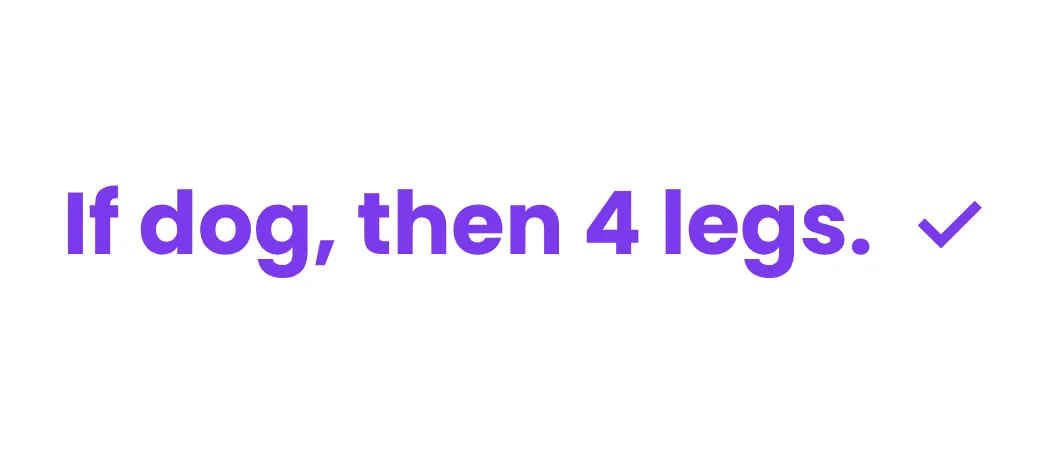
If an animal is a dog, then it has four legs. True.
If dog, then 4 legs. ✓
2. Converse: swap
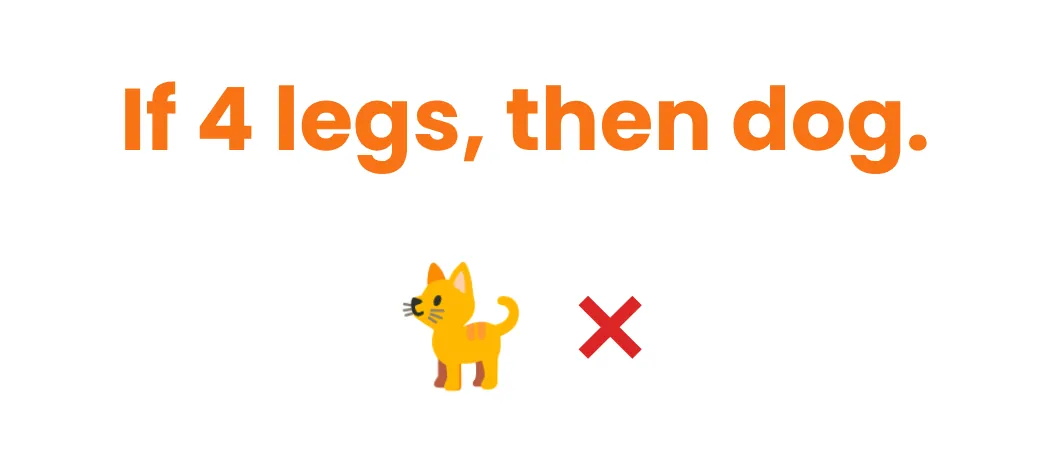
Swap the parts: If an animal has four legs, then it is a dog.
That's false: a cat has four legs. A converse can be false.
If 4 legs, then dog.
3. Inverse and contrapositive
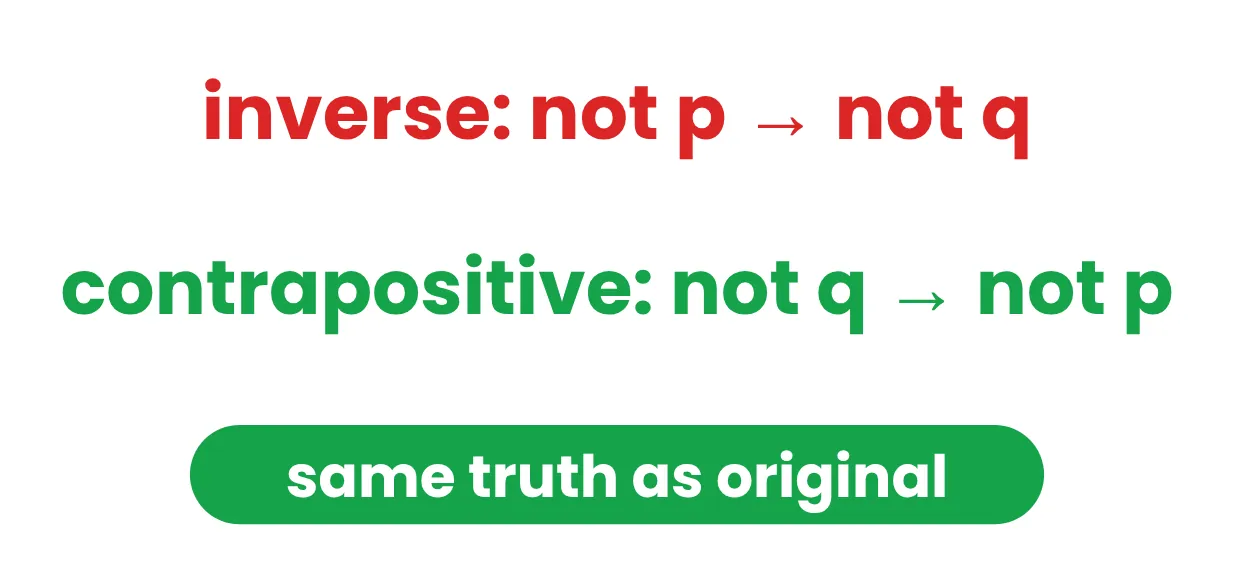
Inverse: add "not" to both. If not a dog, then not four legs. Also false.
Contrapositive: swap and negate. If not four legs, then not a dog. True, just like the original.
inverse: not p → not q
contrapositive: not q → not p
same truth as original
4. Biconditional
When a statement and its converse are both true, write "if and only if".
A triangle is equilateral if and only if all its angles are 60 degrees.

Watch out: Converse isn't automatic
A true statement can have a false converse. Check it separately.
Wrong: true → converse true. Right: check the converse.
Your turn
Write the contrapositive of "If x = 3, then x² = 9."
If x = 3, then x² = 9.
Answer: If x² ≠ 9, then x ≠ 3.. If x² is not 9, then x is not 3!
Remember
Converse: q → p. Inverse: not p → not q. Contrapositive: not q → not p.
Only the contrapositive always matches the original.
p → q ≡ ~q → ~p
Watch the Converses & Contrapositives lesson and practice · Printable worksheet