Sorting & Classifying notes (1st Grade math)
Group objects by attributes.
The big question
Sort & count
How can sorting help us answer questions? Let's sort some fruit!
Learn it, step by step
1. Sort into groups
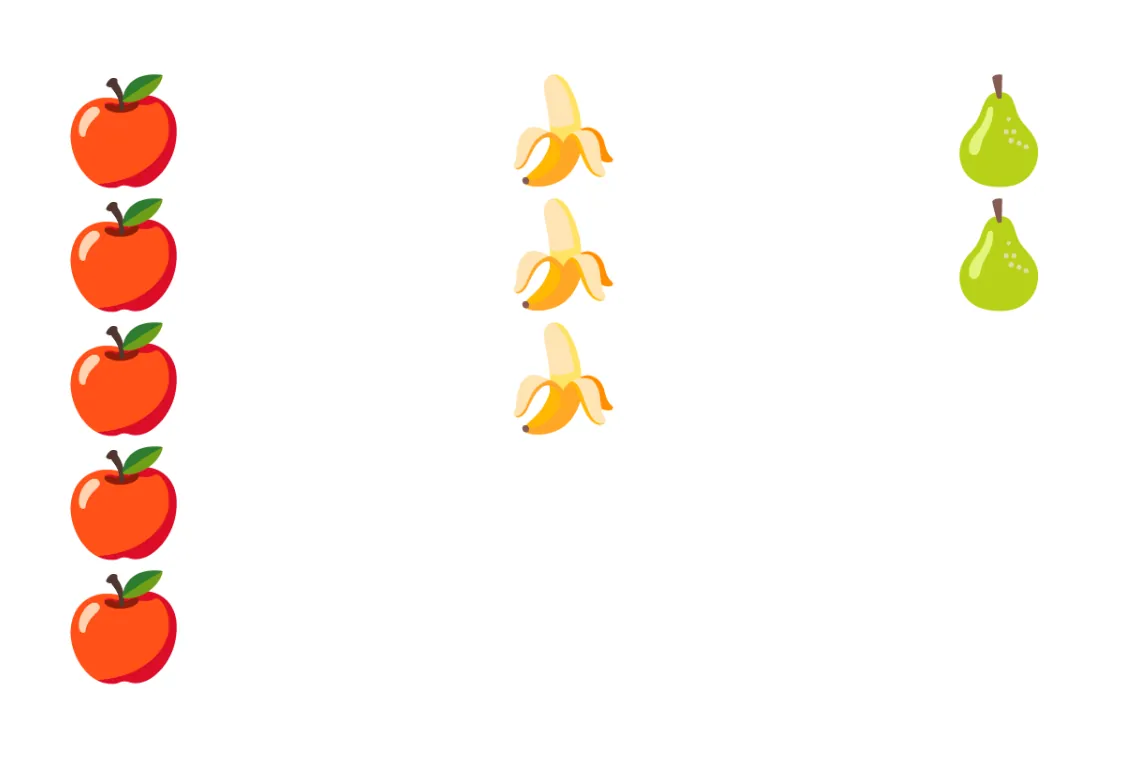
Here is a basket of fruit, all mixed up.
Sort them: apples, bananas, and pears.
2. Count each group
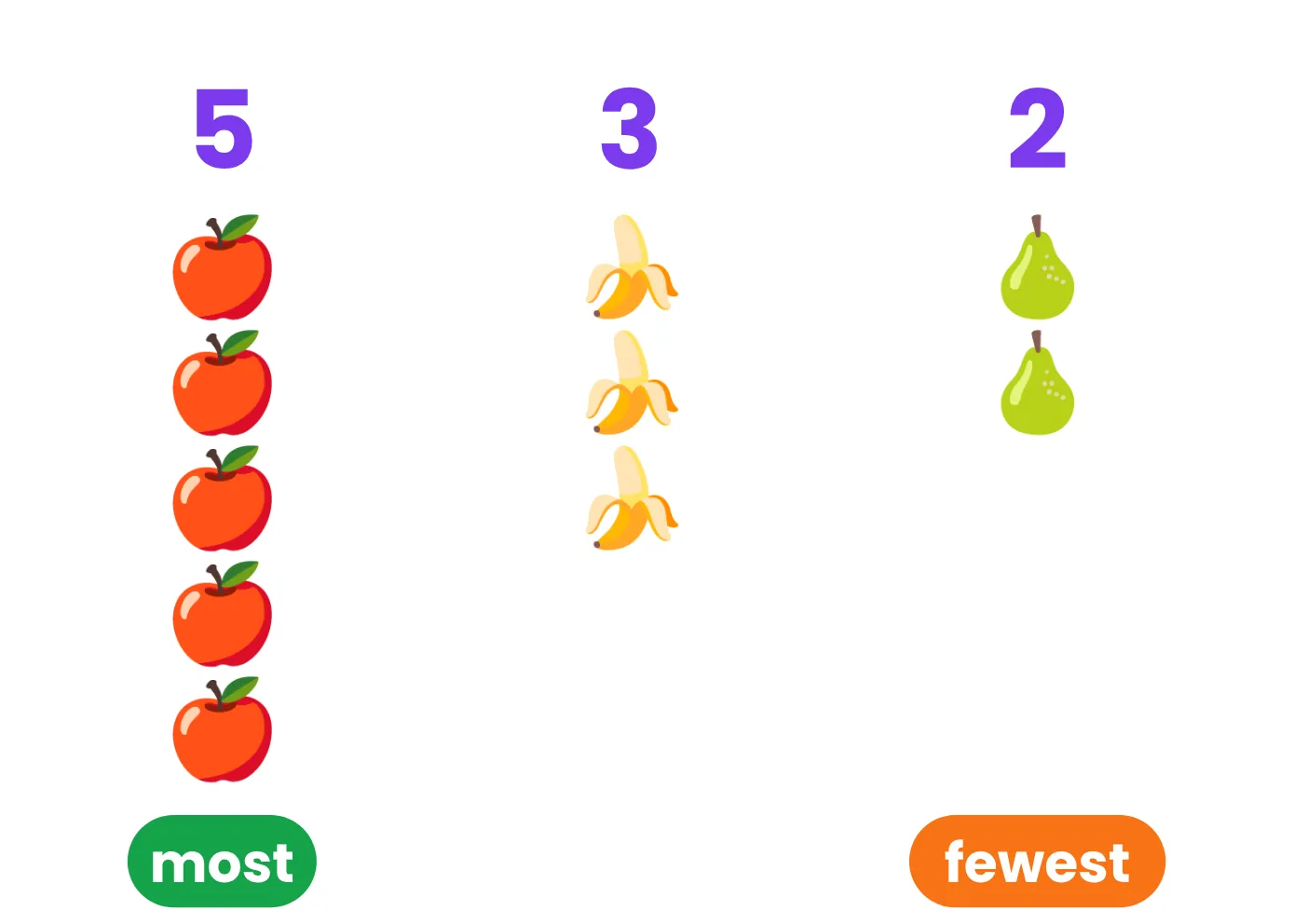
Now count each group. 5 apples, 3 bananas, 2 pears.
Apples have the most. Pears have the fewest.
fewest
3. How many more?
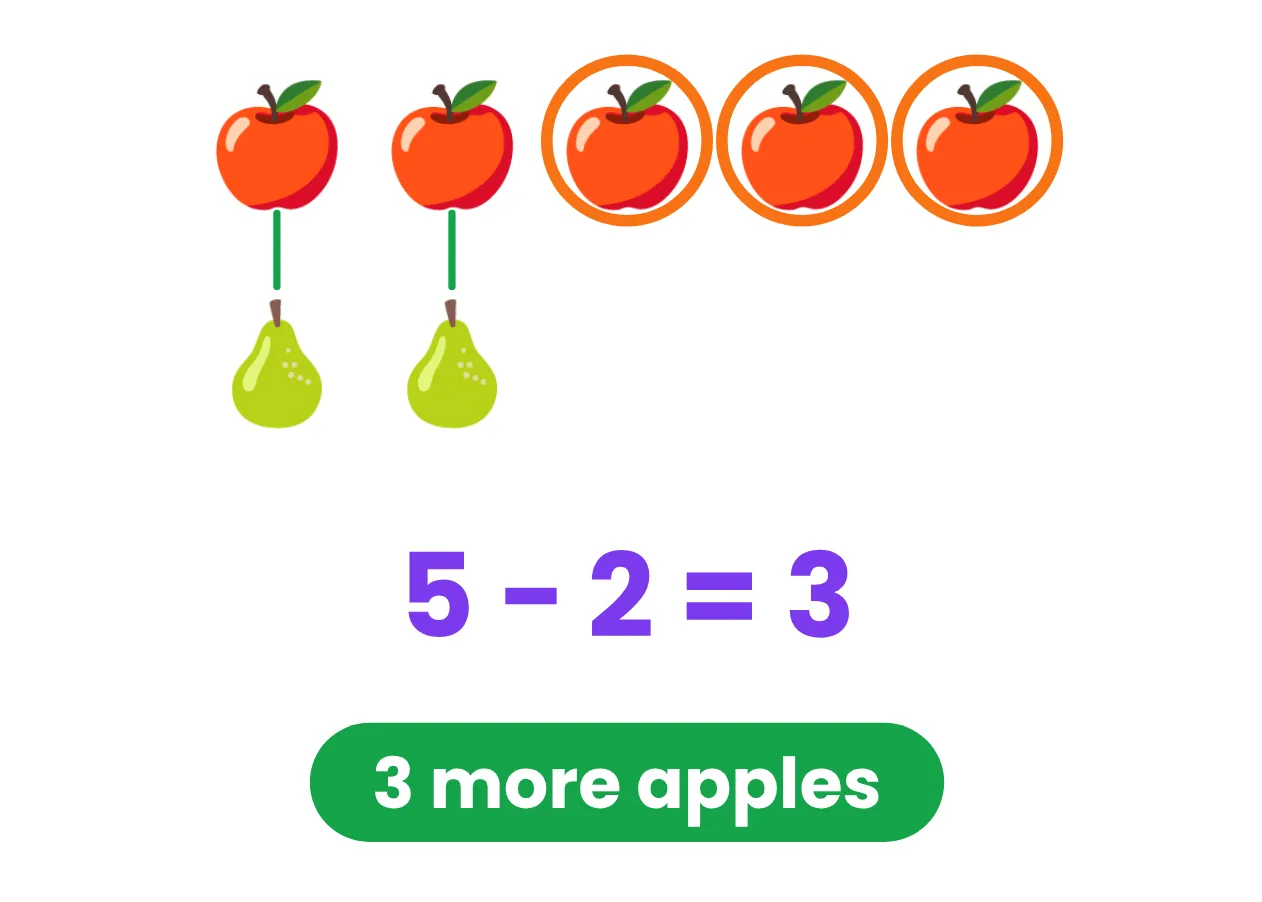
How many more apples than pears? 5 minus 2 is 3.
There are 3 more apples than pears.
5 − 2 = 3
3 more apples
Watch out: Count every group
Read the question. "In all" means add the groups. "How many more" means compare.
Wrong: "how many more": add. Right: "how many more": compare.
Your turn
4 red cars and 7 blue cars. How many cars in all?
Answer: 4 + 7 = 11. 4 plus 7 is 11 cars in all!
Remember
Sort into groups, then count each group.
Then you can answer questions about most, fewest, and how many more.
Watch the Sorting & Classifying lesson and practice · Printable worksheet