Derivative Applications notes (Calculus)
Use derivatives for rates of change and optimization.
The big question
f′
What does the derivative say about a graph? Where it rises, falls, and turns!
Learn it, step by step
1. Increasing and decreasing
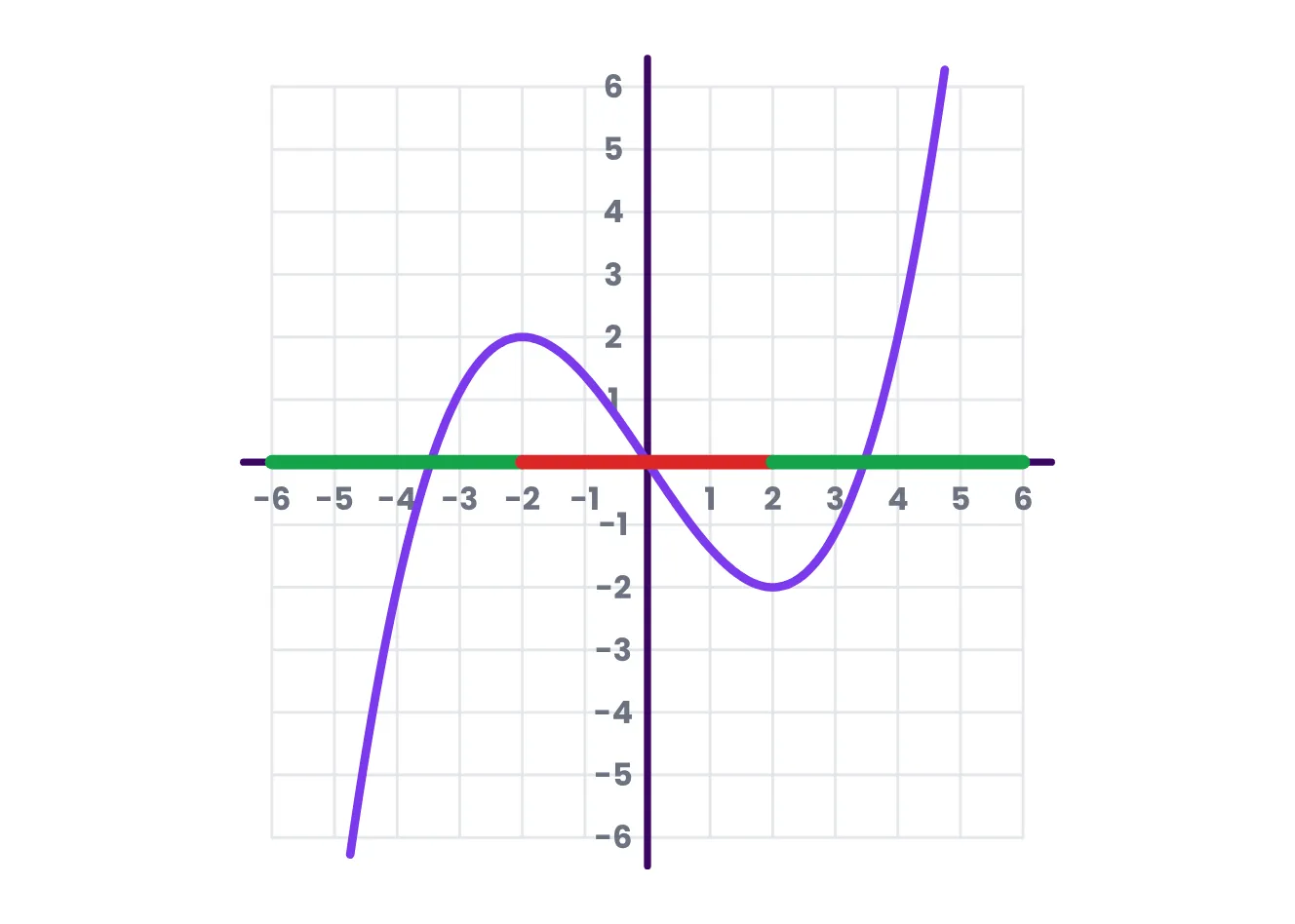
Where the derivative is positive, the graph rises. Where it is negative, the graph falls.
2. Turning points
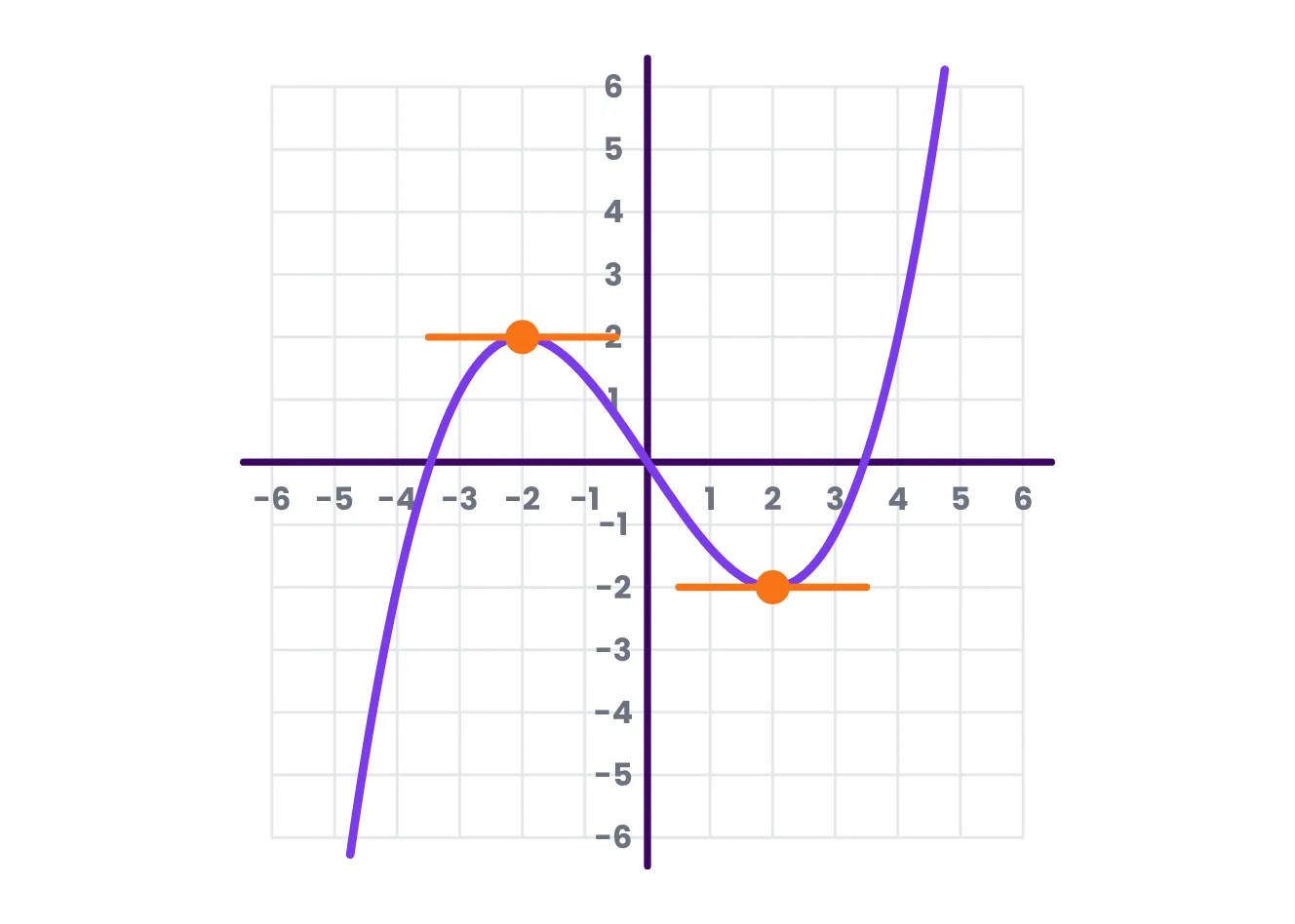
Where the derivative is zero, the tangent is flat. That can be a maximum or a minimum.
Here: a maximum at x equals negative 2 and a minimum at x equals 2.
3. Concavity
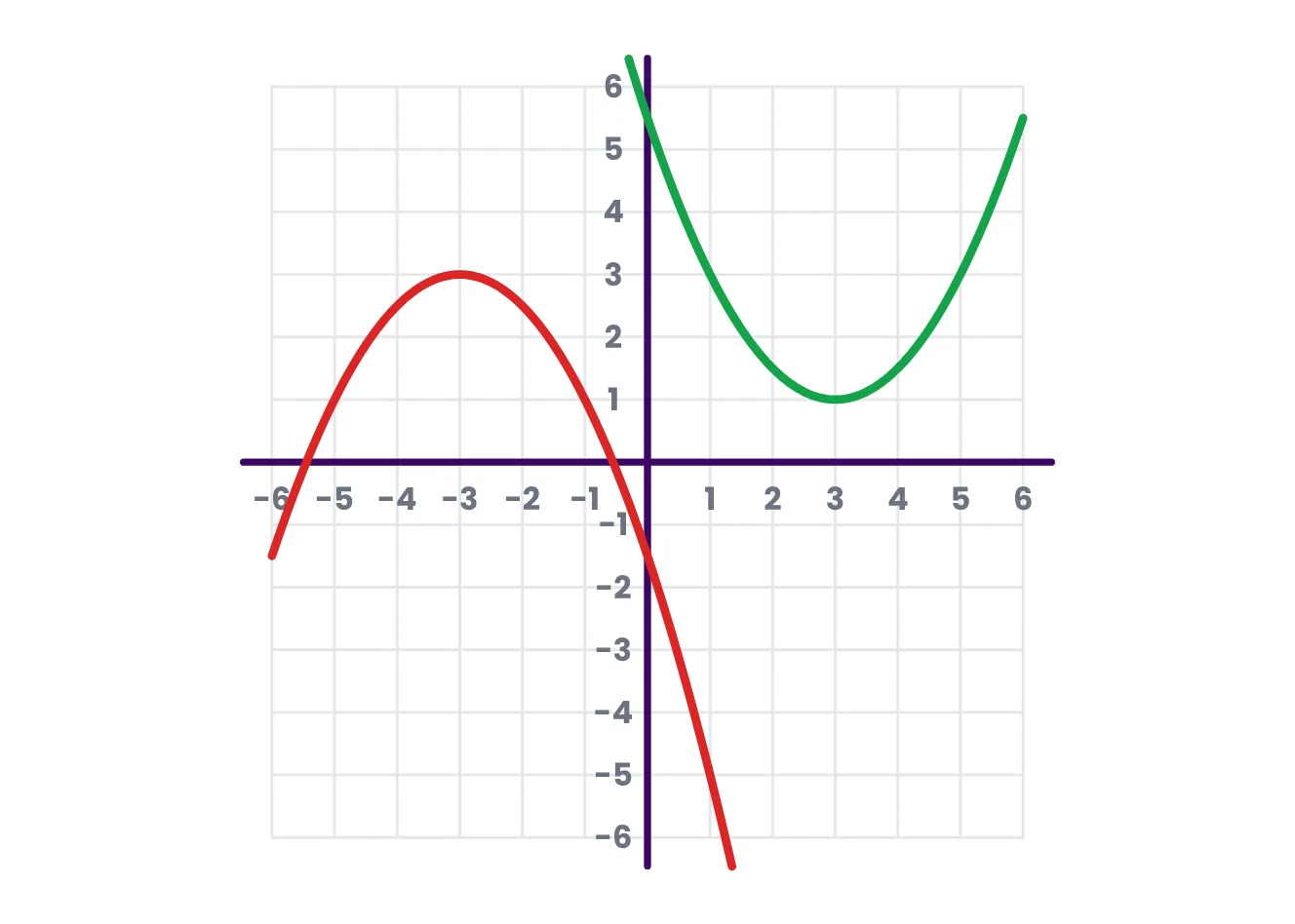
The second derivative tells the bend. Positive: cupped up. Negative: cupped down.
Watch out: Zero is not always a turn
A zero derivative can be a flat spot that keeps going, like y equals x cubed at zero.
Wrong: f′ = 0 → max or min. Right: check the sign change.
Your turn
If the derivative of f is negative before x equals 4 and positive after, what happens at 4?
f′: − then + at x = 4
Answer: minimum. The graph falls, then rises: a minimum at x equals 4!
Remember
Positive derivative rises, negative falls, sign change means a turning point.
f′ > 0 ↗ f′ < 0 ↘
Watch the Derivative Applications lesson and practice · Printable worksheet