Probability Rules notes (AP Statistics)
Addition and multiplication rules, complements.
The big question
P(A or B)
How do probabilities combine? Addition and multiplication rules!
Learn it, step by step
1. The addition rule
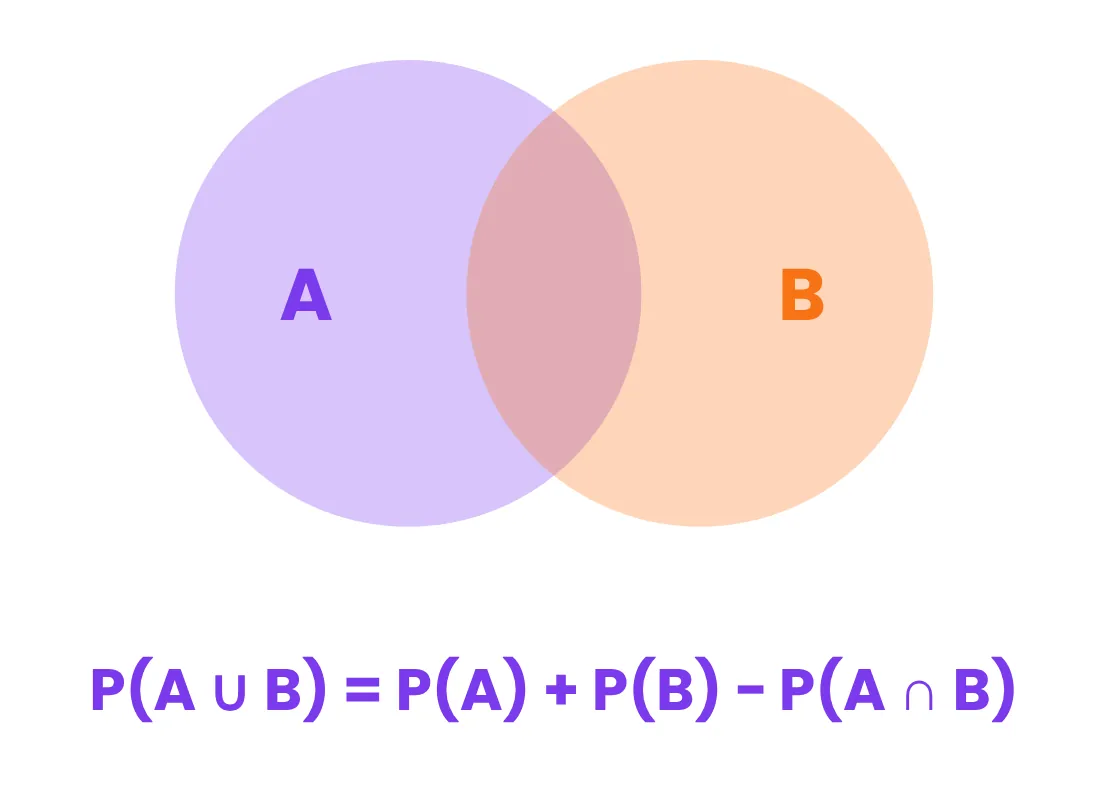
The probability of A or B is P of A plus P of B minus P of A and B.
Subtract the overlap so it is not counted twice.
P(A ∪ B) = P(A) + P(B) − P(A ∩ B)
2. The multiplication rule
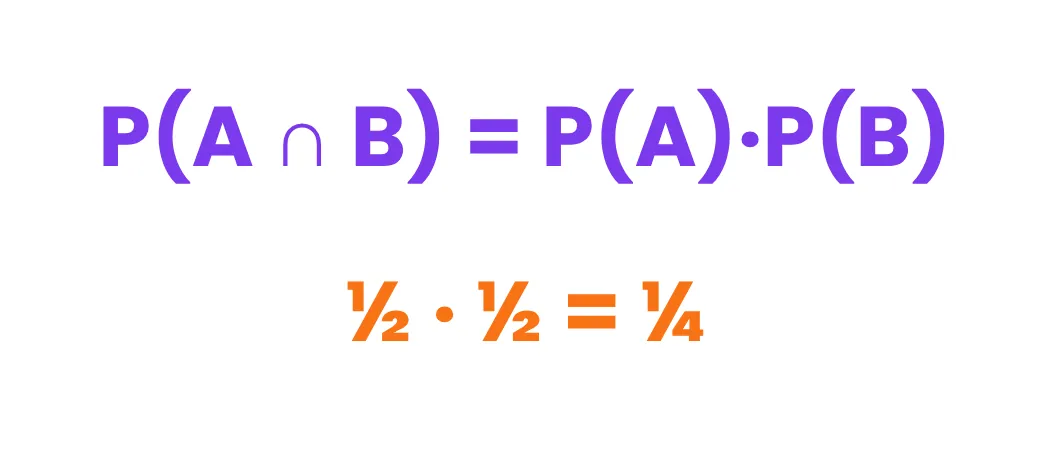
For independent events, P of A and B equals P of A times P of B.
Two coin flips both heads: one half times one half, one fourth.
P(A ∩ B) = P(A)·P(B)
½ · ½ = ¼
3. Complements
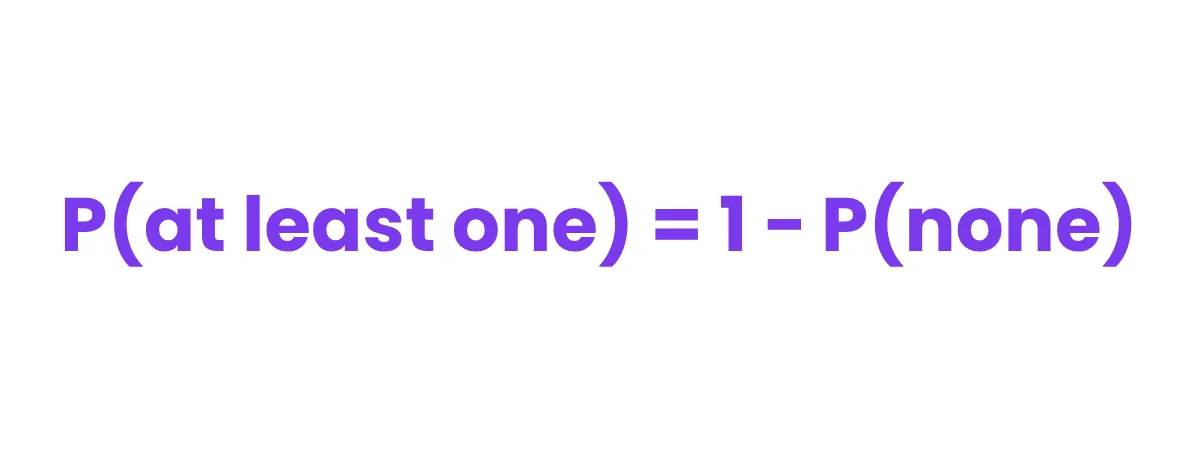
P of not A equals 1 minus P of A. Useful for at least one.
P(at least one) = 1 − P(none)
Watch out: Subtract the overlap
Adding P of A and P of B counts the overlap twice.
Wrong: 0.5 + 0.4 = 0.9. Right: 0.9 − 0.2 = 0.7.
Your turn
P of A is 0.5, P of B is 0.4, and P of A and B is 0.2. Find P of A or B.
0.5 + 0.4 − 0.2
Answer: 0.7. 0.5 plus 0.4 minus 0.2 is 0.7!
Remember
Or: add and subtract the overlap. And, if independent: multiply.
or → add, and → multiply
Watch the Probability Rules lesson and practice · Printable worksheet