Conditional Probability notes (AP Statistics)
P(A | B) from two-way tables and formulas.
The big question
P(A | B)
How does knowing one thing change a probability? Conditional probability!
Learn it, step by step
1. Given that
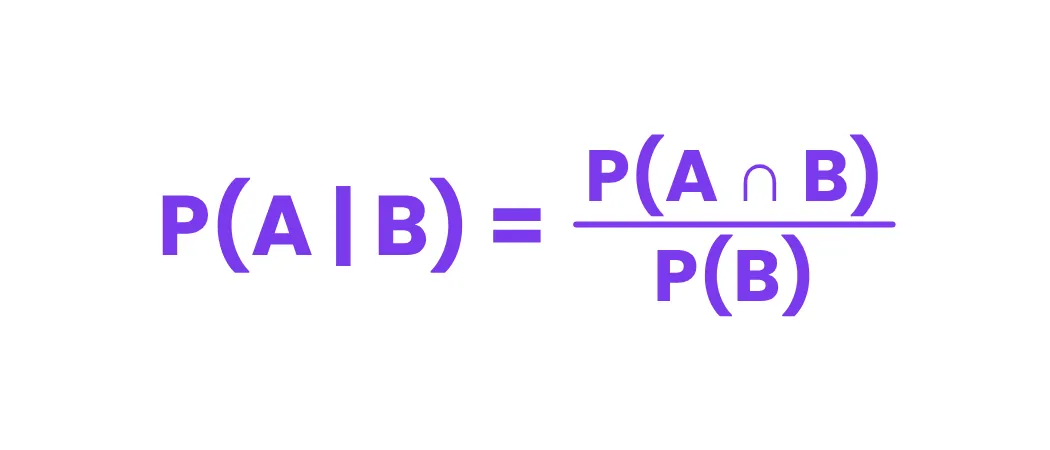
P of A given B is the probability of A when we already know B happened.
It equals P of A and B, divided by P of B.
P(A | B) = P(A ∩ B)/P(B)
2. From a two-way table
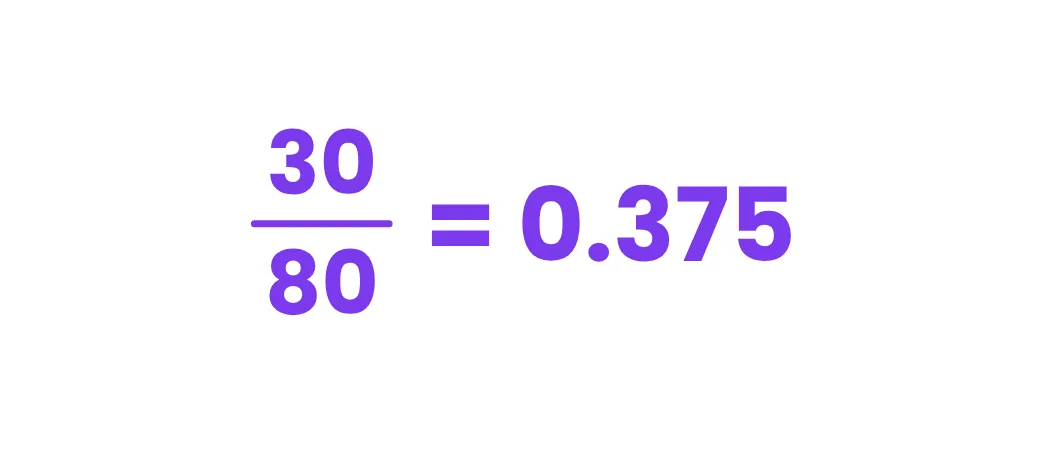
Of 200 students, 80 play sports, and 30 of those also play music.
P of music given sports is 30 over 80, which is 0.375.
30/80 = 0.375
3. Independence check
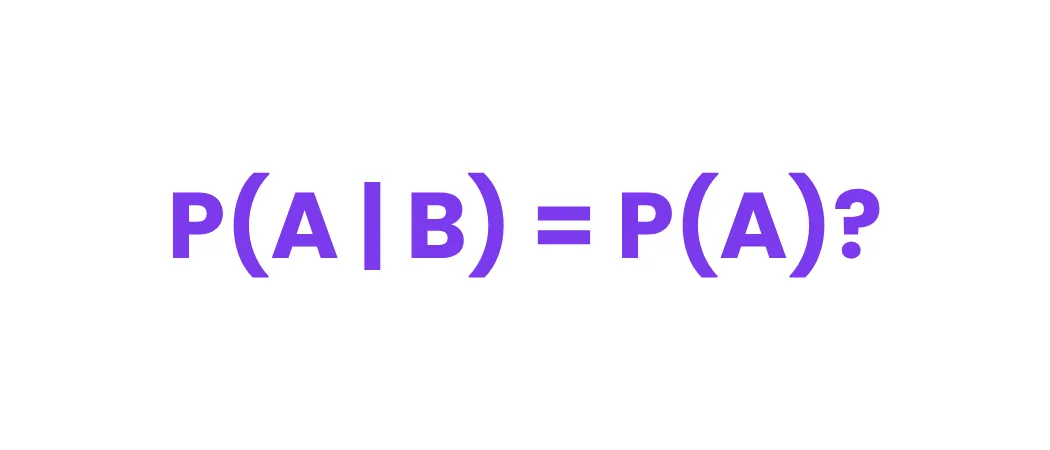
A and B are independent when P of A given B equals P of A.
P(A | B) = P(A)?
Watch out: Divide by the given group
Given B means divide by the size of B, not by everyone.
Wrong: 12/total. Right: 12/20 girls.
Your turn
In a class, 12 of 20 girls wear glasses. What is P of glasses given girl?
12 of 20 girls
Answer: 0.6. 12 over 20 is 0.6!
Remember
P of A given B equals P of A and B over P of B.
P(A|B) = P(A∩B)/P(B)
Watch the Conditional Probability lesson and practice · Printable worksheet