Chi-Square Tests notes (AP Statistics)
Expected counts, χ² statistic and degrees of freedom.
The big question
χ²
Do observed counts match what we expected? A chi-square test!
Learn it, step by step
1. Observed versus expected
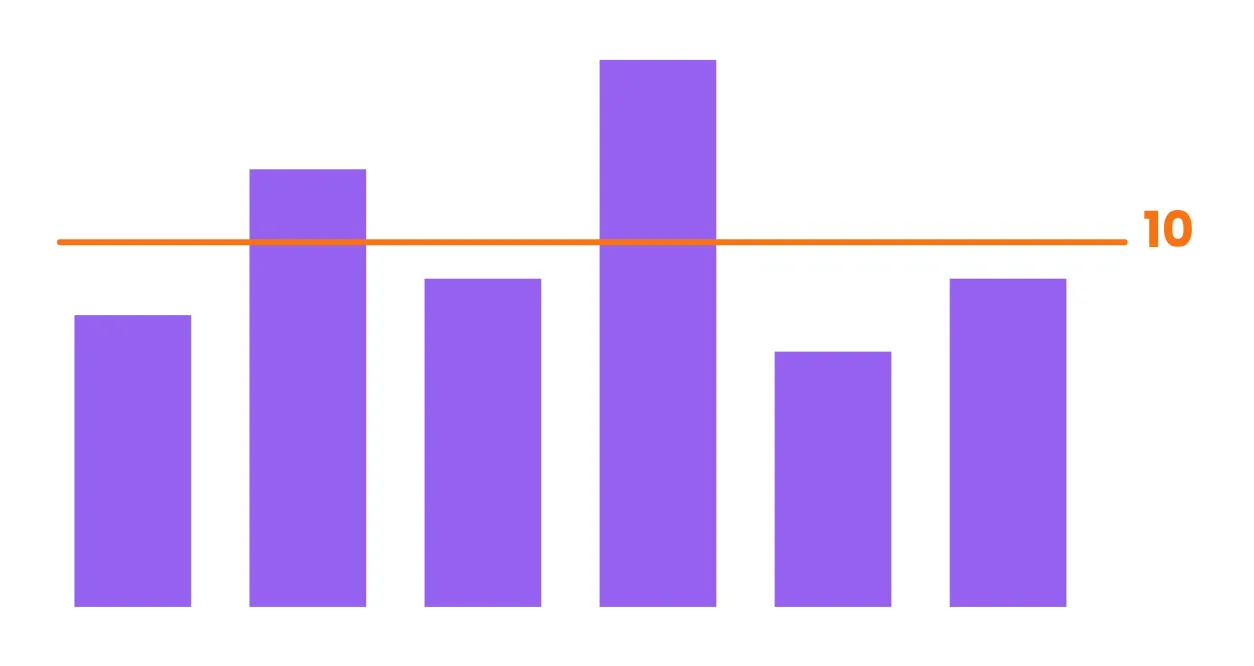
A die is rolled 60 times. If fair, each face is expected 10 times.
Compare what we observed to what we expected.
2. The statistic
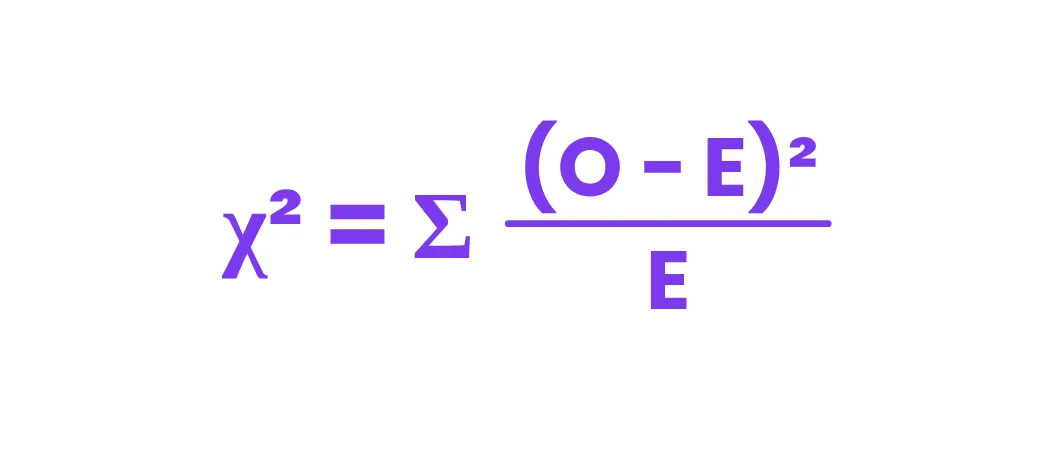
Chi-square is the sum of observed minus expected, squared, over expected.
A bigger value means a bigger mismatch.
χ² = Σ (O − E)²/E
3. Which test?
Goodness of fit: one variable against a claimed distribution.
Independence or homogeneity: two variables in a two-way table.
1 variable → goodness of fit
2 variables → independence

Watch out: Divide by expected
Each term divides by the expected count, not the observed.
Wrong: (15 − 10)²/15. Right: (15 − 10)²/10.
Your turn
Observed 15, expected 10. What does this cell add to chi-square?
O = 15, E = 10
Answer: 2.5. 5 squared is 25. 25 over 10 is 2.5!
Remember
Chi-square adds observed minus expected squared, over expected.
Σ (O − E)²/E
Watch the Chi-Square Tests lesson and practice · Printable worksheet