Hypothesis Testing notes (AP Statistics)
Null hypotheses, p-values, and statistical significance.
The big question
H₀ vs Hₐ
Is a result real or just chance? Run a significance test!
Learn it, step by step
1. The hypotheses
The null hypothesis says nothing changed. The alternative says something did.
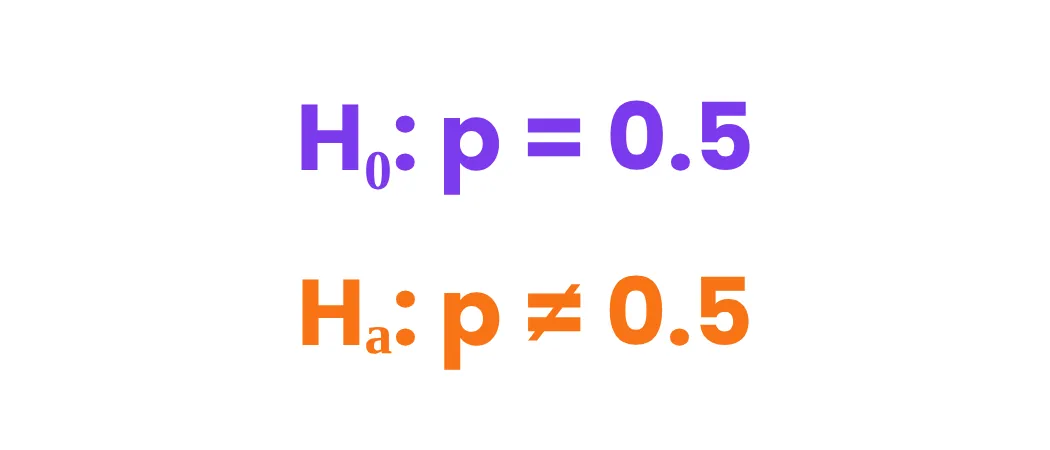
A coin: null, p equals 0.5. Alternative: p is not 0.5.
H₀: p = 0.5
Hₐ: p ≠ 0.5
2. The p-value
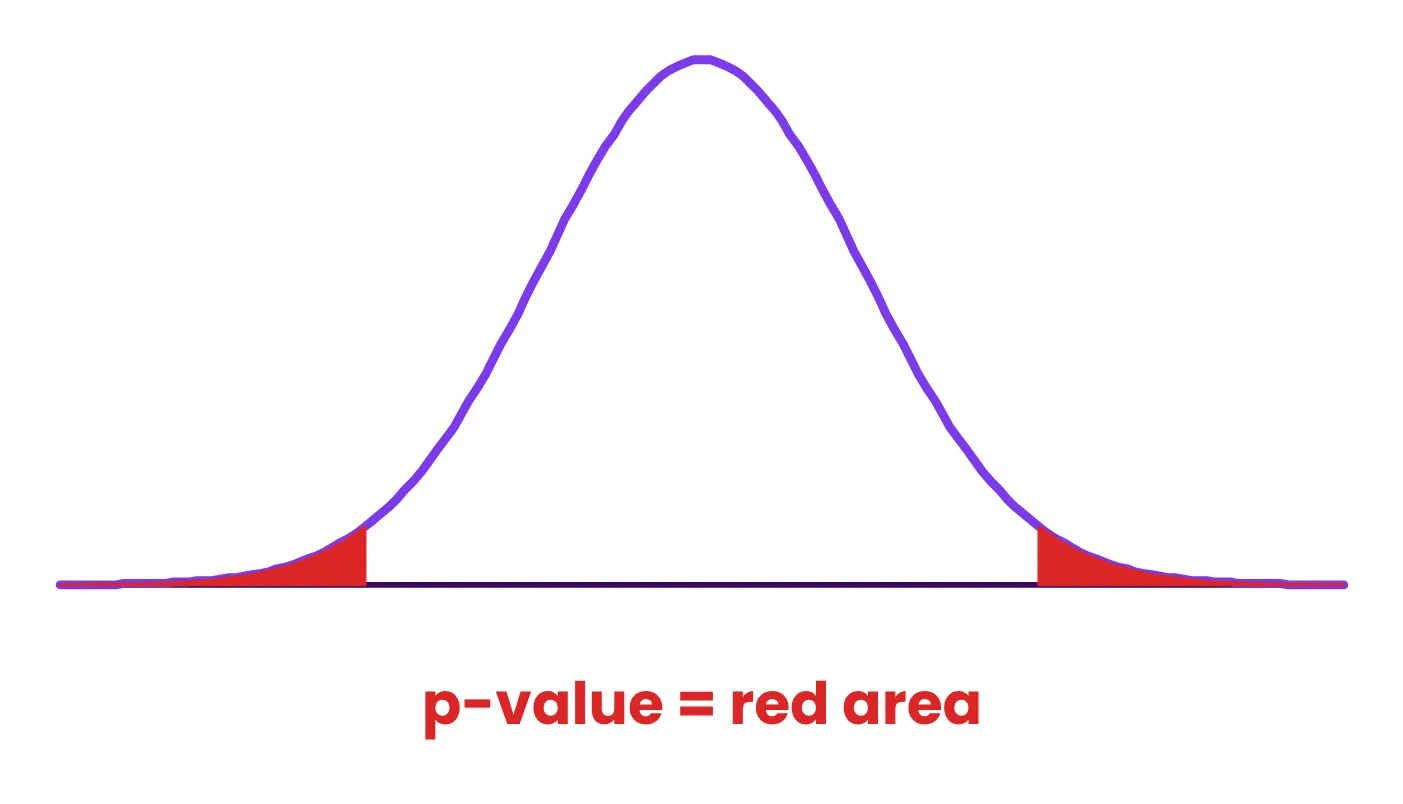
Assume the null is true. The p-value is the chance of getting a result at least as extreme as ours.
A small p-value, below alpha such as 0.05, is evidence against the null.
p-value = red area
3. The conclusion
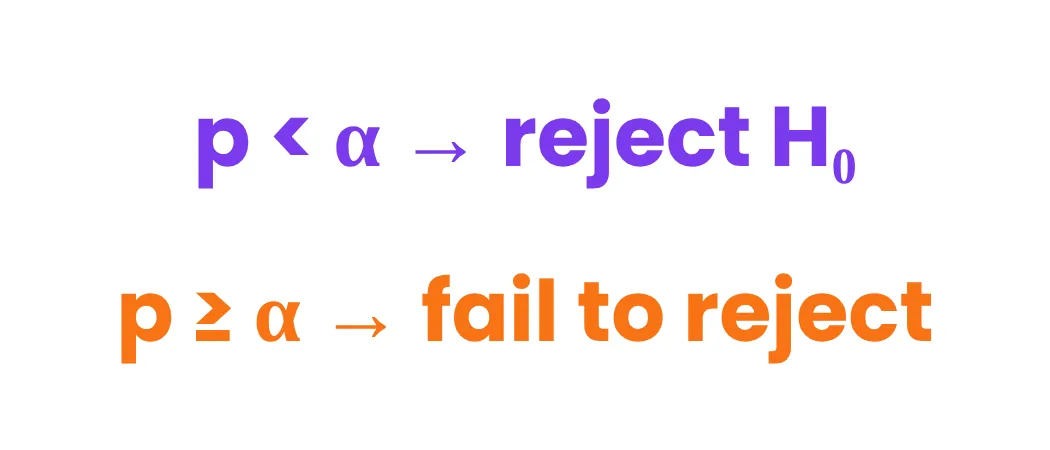
If p is less than alpha, reject the null: there is convincing evidence for the alternative.
Otherwise, fail to reject the null. We never prove the null true.
p < α → reject H₀
p ≥ α → fail to reject
Watch out: Never accept the null
A large p-value means not enough evidence, not proof that the null is true.
Wrong: accept H₀. Right: fail to reject H₀.
Your turn
A test gives p equal to 0.003 with alpha 0.05. What do you conclude?
p = 0.003, α = 0.05
Answer: reject H₀. Reject the null: there is convincing evidence for the alternative!
Remember
State hypotheses, find the p-value, compare to alpha, conclude in context.
H₀ · p-value · α
Watch the Hypothesis Testing lesson and practice · Printable worksheet