Taylor Series notes (AP Calculus BC)
Taylor and Maclaurin polynomial approximations.
The big question
eˣ ≈ 1 + x + x²/2
Can a polynomial copy a curve? Yes: a Taylor polynomial!
Learn it, step by step
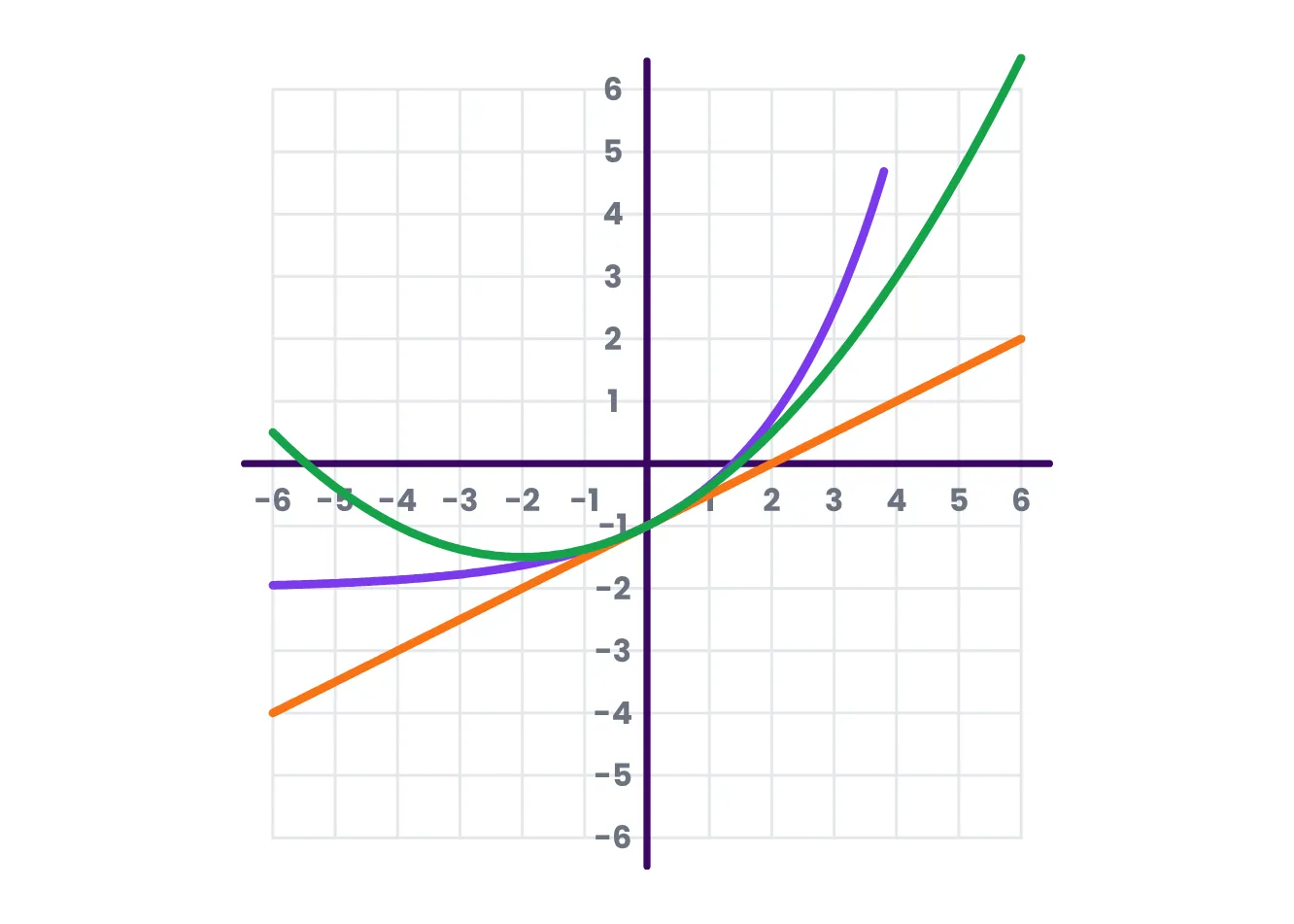
1. Match the derivatives
A Taylor polynomial matches the function's value, slope, bend and more at one point.
Each extra term hugs the curve more closely.
2. The formula
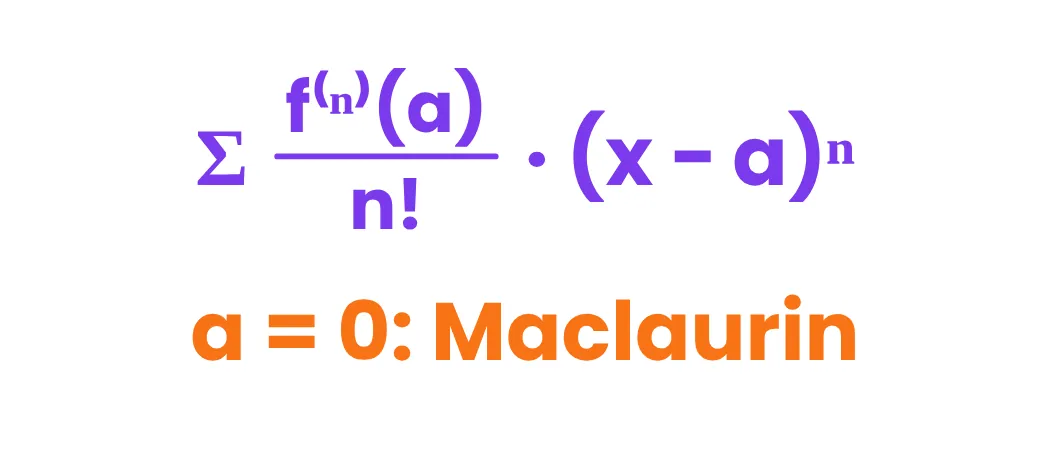
The coefficient of the n-th term is the n-th derivative at a, over n factorial.
Centered at zero, it is called a Maclaurin series.
Σ f⁽ⁿ⁾(a)/n! · (x − a)ⁿ
a = 0: Maclaurin
3. Famous series
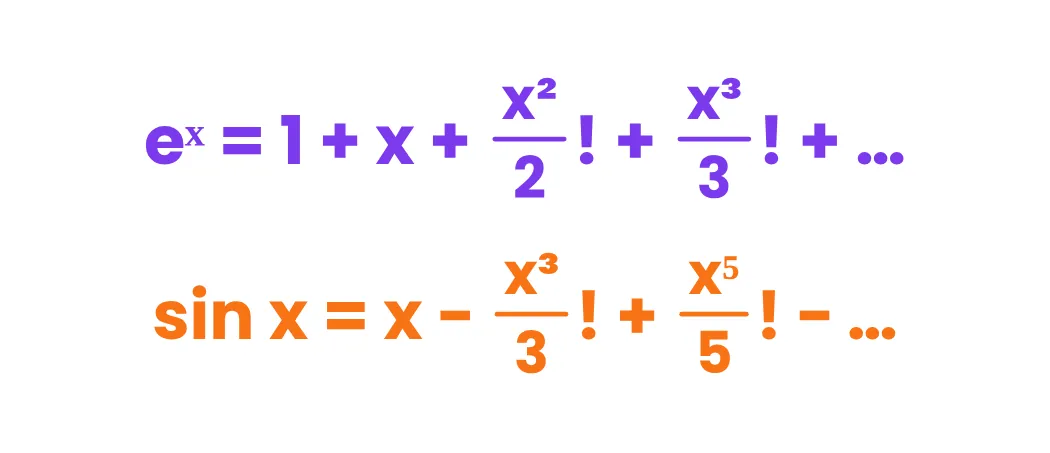
e to the x is 1 plus x plus x squared over 2 factorial plus x cubed over 3 factorial, and so on.
Sine of x is x minus x cubed over 3 factorial plus x to the fifth over 5 factorial.
eˣ = 1 + x + x²/2! + x³/3! + …
sin x = x − x³/3! + x⁵/5! − …
Watch out: Divide by the factorial
Each term divides by n factorial.
Wrong: f″(0) · x². Right: f″(0)/2! · x².
Your turn
Use the first three terms of e to the x to estimate e to the 0.1.
1 + x + x²/2, x = 0.1
Answer: ≈ 1.105. 1 plus 0.1 plus 0.005 is 1.105!
Remember
Taylor series rebuild a function from its derivatives at one point.
Σ f⁽ⁿ⁾(a)(x − a)ⁿ/n!
Watch the Taylor Series lesson and practice · Printable worksheet