Derivative Rules notes (AP Calculus BC)
Power, product, quotient, and chain rules.
The big question
d/dx
Is there a faster way than the limit? Yes: the power rule and friends!
Learn it, step by step
1. The power rule
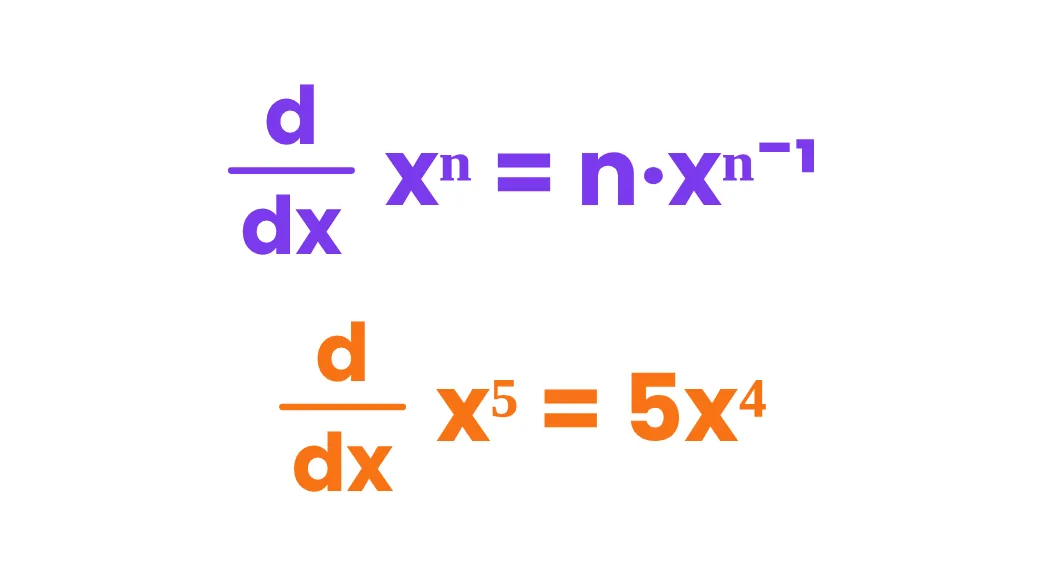
Bring the exponent down, then lower it by one.
The derivative of x to the fifth is 5x to the fourth.
d/dx xⁿ = n·xⁿ⁻¹
d/dx x⁵ = 5x⁴
2. Constants and sums
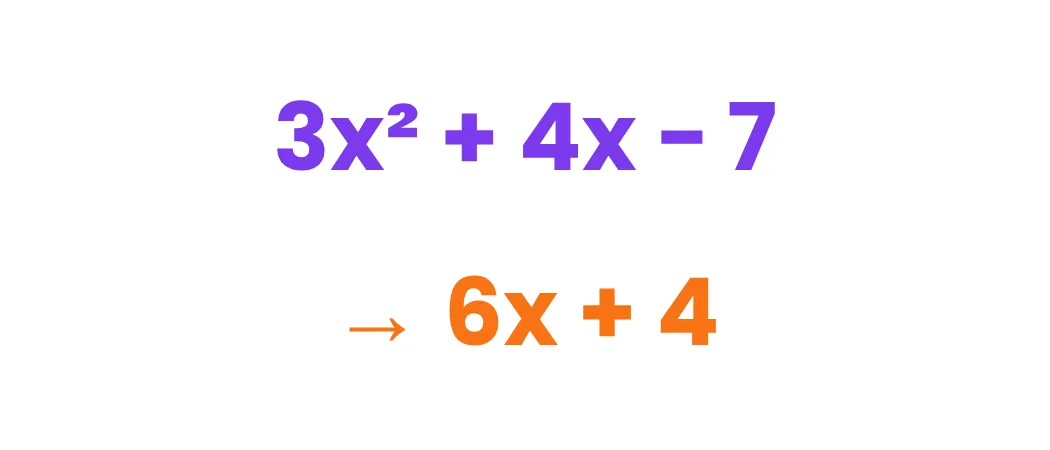
A constant's derivative is 0. Constant multiples stay. Take sums term by term.
The derivative of 3x squared plus 4x minus 7 is 6x plus 4.
3x² + 4x − 7
→ 6x + 4
3. Product and quotient
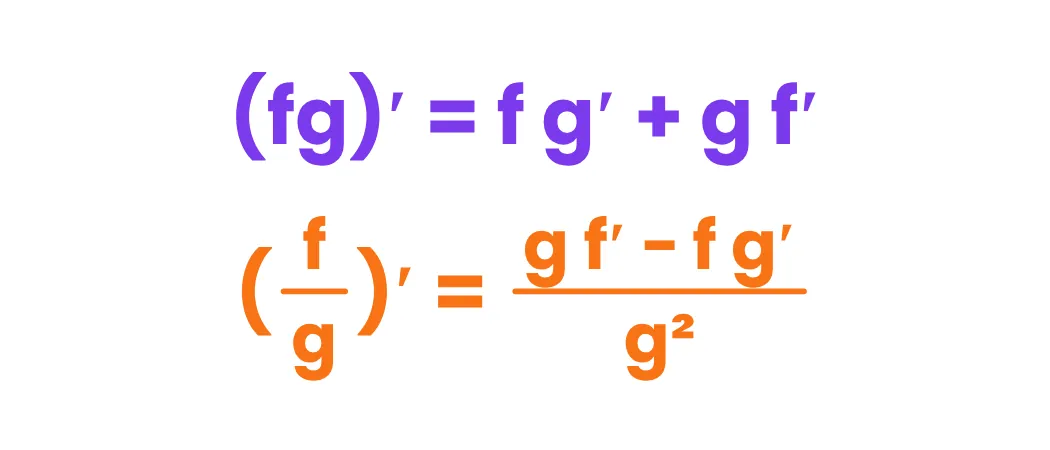
Product rule: first times derivative of the second, plus second times derivative of the first.
Quotient rule: low d high minus high d low, over low squared.
(fg)′ = f g′ + g f′
(f/g)′ = (g f′ − f g′)/g²
4. Special functions
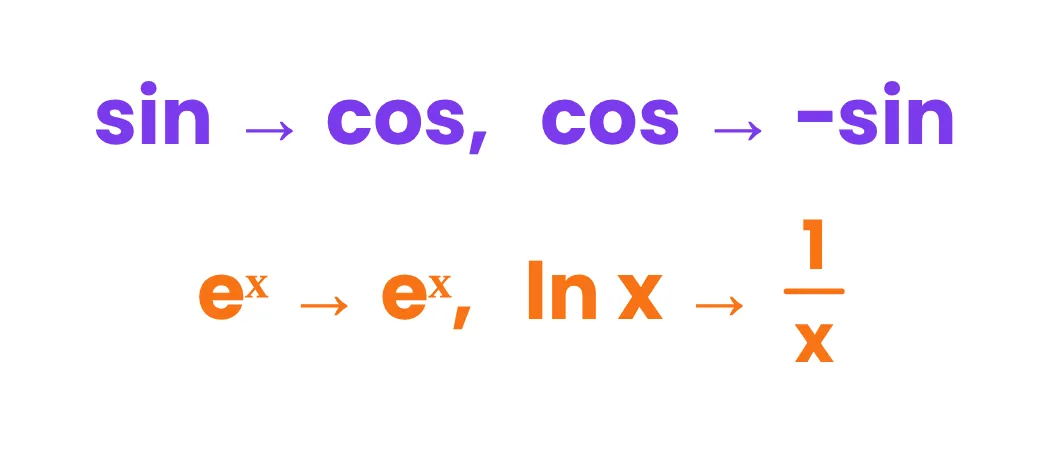
The derivative of sine is cosine. Of cosine, negative sine.
Of e to the x, e to the x. Of natural log of x, 1 over x.
sin → cos, cos → −sin
eˣ → eˣ, ln x → 1/x
Watch out: Lower the exponent
After bringing the exponent down, subtract one from it.
Wrong: x⁵ → 5x⁵. Right: x⁵ → 5x⁴.
Your turn
Find the derivative of 4x cubed minus 2x.
4x³ − 2x
Answer: 12x² − 2. 12x squared minus 2!
Remember
Power rule, constant and sum rules, product and quotient rules.
n·xⁿ⁻¹
Watch the Derivative Rules lesson and practice · Printable worksheet