Exponential Growth & Decay notes (ACT Math)
Model growth and decay situations.
The big question
× 2 × 2 × 2
What grows faster and faster? Exponential growth!
Learn it, step by step
1. Doubling
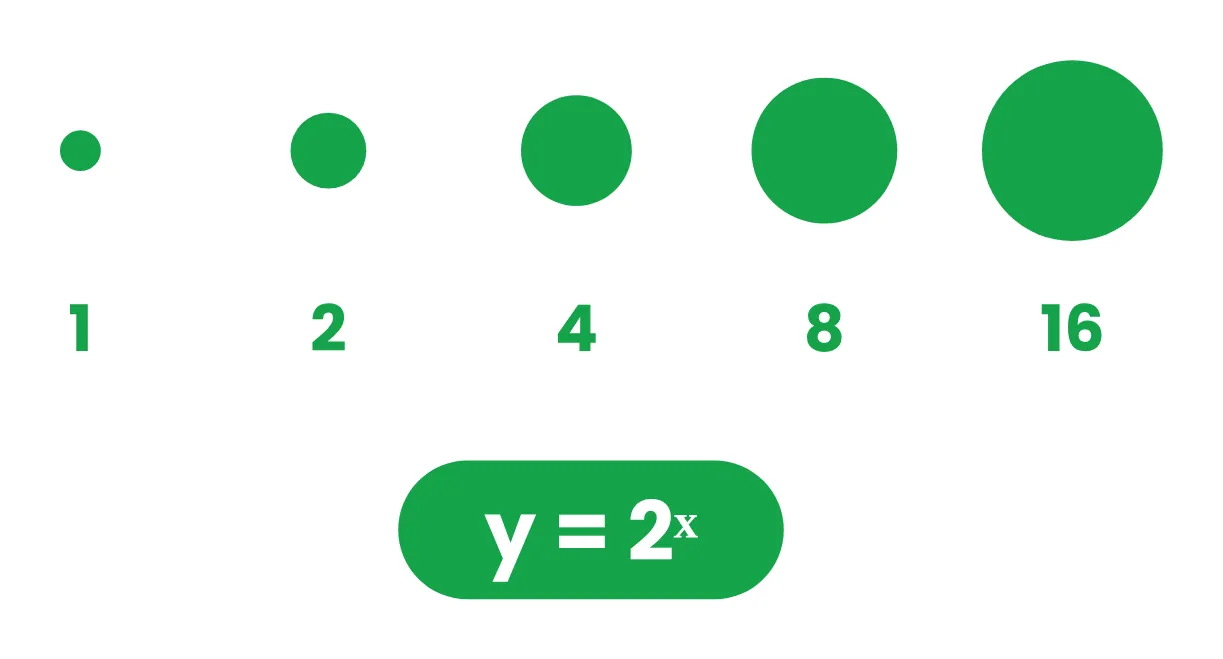
A bacteria colony doubles every hour: 1, 2, 4, 8, 16.
It multiplies by the same number each time: y = 1 × 2ˣ.
y = 2ˣ
2. The model
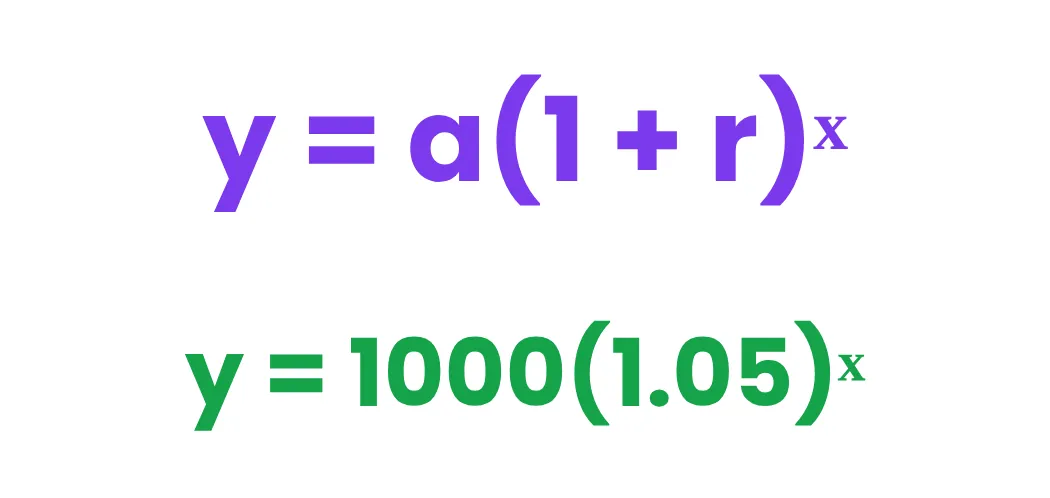
y = a(1 + r)ˣ for growth. a is the start, r is the rate.
A $1,000 account grows 5 percent a year: y = 1000(1.05)ˣ.
y = a(1 + r)ˣ
y = 1000(1.05)ˣ
3. Decay
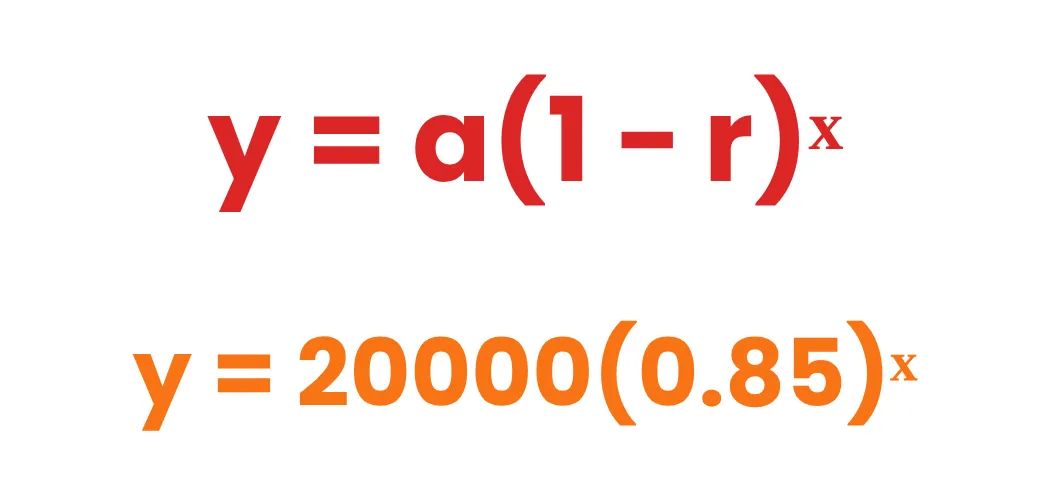
Decay shrinks by a percent: y = a(1 − r)ˣ.
A $20,000 car loses 15 percent a year: y = 20000(0.85)ˣ.
y = a(1 − r)ˣ
y = 20000(0.85)ˣ
4. Growth or decay?
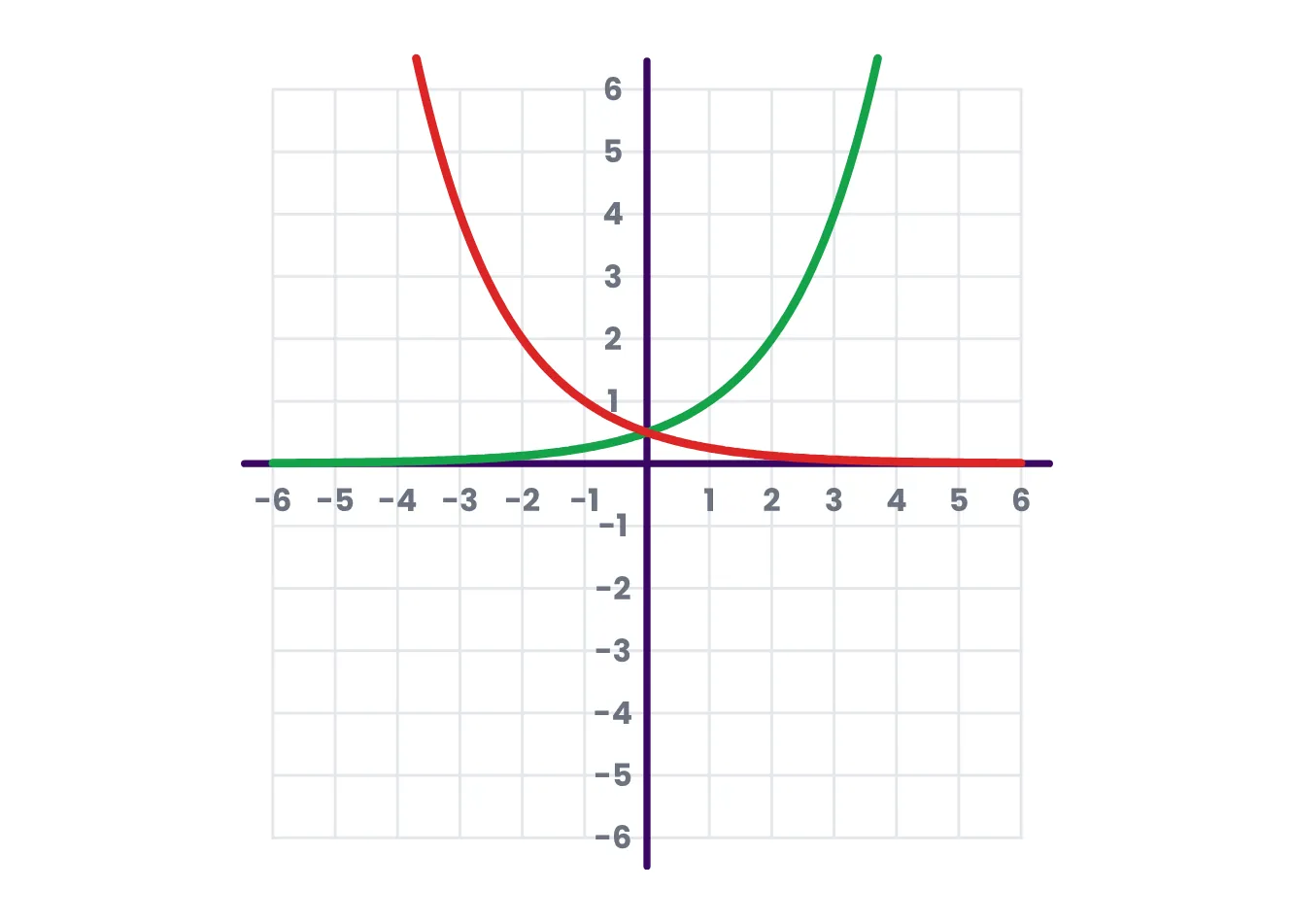
Look at the base b. If b > 1, it's growth. If 0 < b < 1, it's decay.
Watch out: Percent to decimal
A 15 percent decay uses 0.85, not 0.15 and not 1.15.
Wrong: y = 20000(0.15)ˣ. Right: y = 20000(0.85)ˣ.
Your turn
A town of 5,000 grows 2 percent a year. Write the model.
5,000 people, +2% a year
Answer: y = 5000(1.02)ˣ. y = 5000(1.02)ˣ!
Remember
Growth: a(1 + r)ˣ. Decay: a(1 − r)ˣ.
Exponential means multiplying by the same factor each step.
growth: b > 1
decay: 0 < b < 1
Watch the Exponential Growth & Decay lesson and practice · Printable worksheet