Complex Numbers notes (ACT Math)
Add, subtract and multiply complex numbers.
The big question
i = √−1
What is the square root of a negative? An imaginary number!
Learn it, step by step
1. Meet i
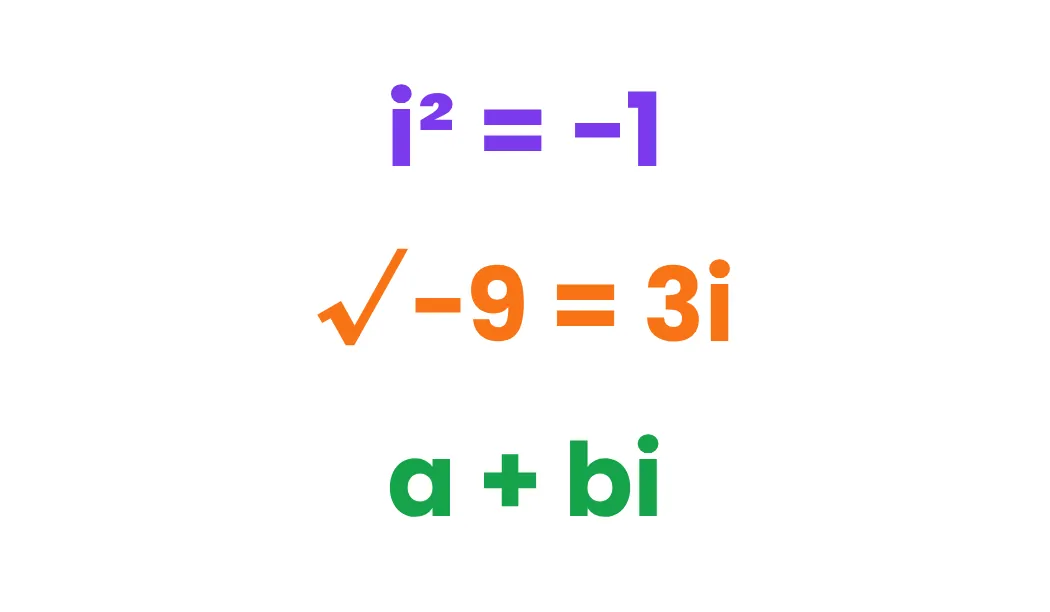
i is defined so that i² = −1. Then √−9 = 3i.
A complex number has a real part and an imaginary part: a + bi.
i² = −1
√−9 = 3i
a + bi
2. Add and subtract
Combine real parts and imaginary parts separately.
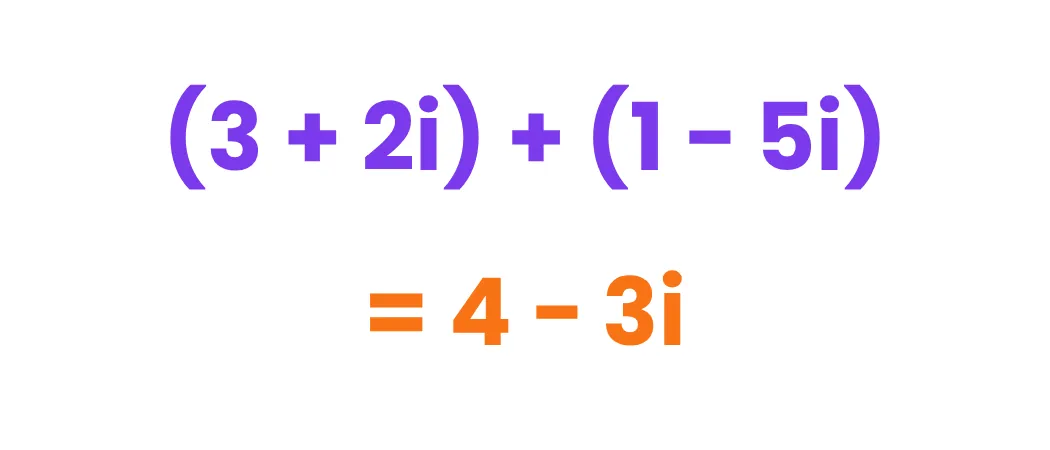
(3 + 2i) + (1 − 5i) = 4 − 3i.
(3 + 2i) + (1 − 5i)
= 4 − 3i
3. Multiply
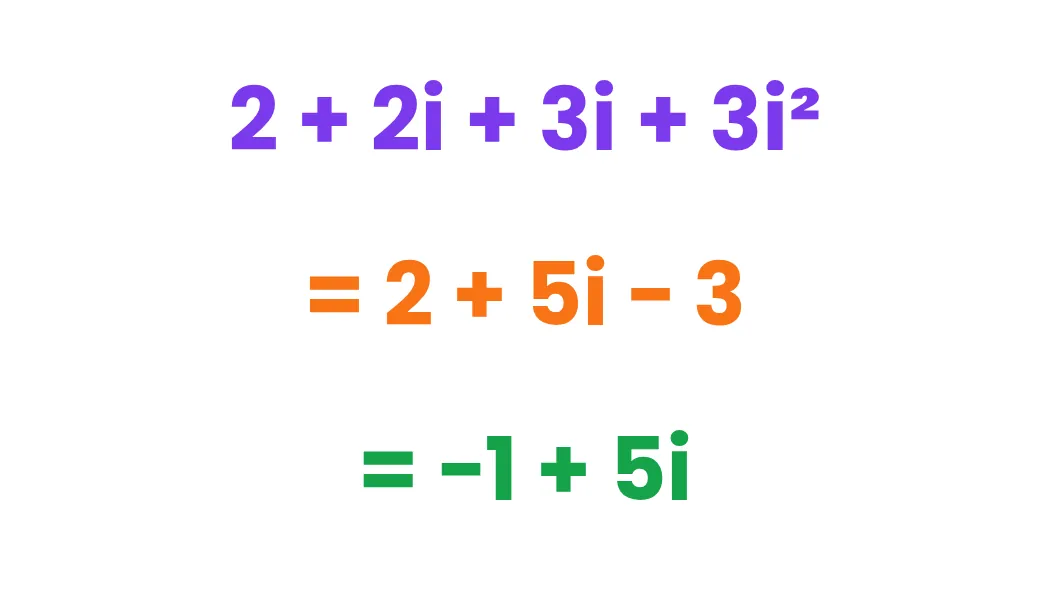
(2 + 3i)(1 + i) = 2 + 2i + 3i + 3i².
Since i² = −1: 2 + 5i − 3 = −1 + 5i.
2 + 2i + 3i + 3i²
= 2 + 5i − 3
= −1 + 5i
Watch out: Replace i²
Always change i² to −1. Leaving i² in the answer isn't simplified.
Wrong: 2 + 5i + 3i². Right: −1 + 5i.
Your turn
Multiply (4 − i)(4 + i).
(4 − i)(4 + i)
Answer: 17. 16 + 4i − 4i − i². That's 16 + 1 = 17!
Remember
i² = −1. Add like terms. Multiply with FOIL, then replace i².
a + bi
Watch the Complex Numbers lesson and practice · Printable worksheet